Which Crops Could Feed Astronauts on the Moon and Mars?
Radiation, low gravity and lunar soil make farming hard, but potatoes and dwarf wheat rank high among the best crops to grow in space for astronauts.
Main visual for Which Crops Could Feed Astronauts on the Moon and Mars?
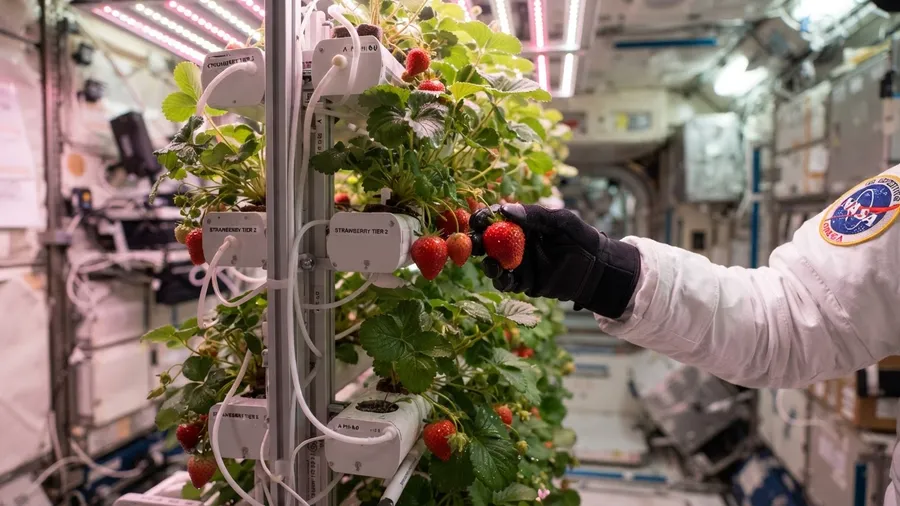
🇺🇸 Strawberries Made the List
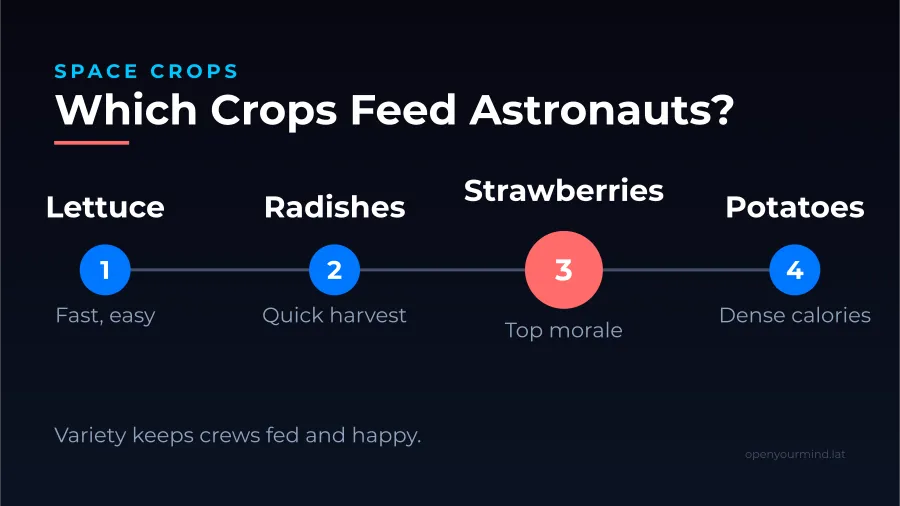
Strawberries made the list. That surprised me a little, because strawberries are fussy. The NASA summary I read cuts off right after naming them, so I cannot give you the full roster, and I would rather say that than guess. What the piece does say is that researchers are testing crops for fresh food, nutrition and variety on the Moon and Mars. Variety is the word I kept rereading. Not calories. Variety. The timing is Thanksgiving week in the United States, which makes the framing almost too neat. Still, the problem is real. A crew on a long mission eats rehydrated meals for months, and nobody wants to stare at another pouch.
🇪🇸 Las fresas entraron en la lista
Lo primero que me llamó la atención fue ver fresas en la lista. Son delicadas, así que no parecen la apuesta obvia. El resumen de la NASA que leí se corta justo después de nombrarlas, de modo que no tengo la lista completa y prefiero admitirlo antes que inventar. Lo que sí queda claro es el objetivo. Los investigadores prueban cultivos para que los astronautas tengan comida fresca, nutrientes y algo de variedad en la Luna y en Marte. Esta semana se celebra Acción de Gracias en Estados Unidos, y esa mesa llena contrasta con una misión larga. Meses de comida deshidratada. Cualquiera se cansa del mismo sobre.
Detail view related to Which Crops Could Feed Astronauts on the Moon and Mars?
🇺🇸 Nobody Starts From Zero
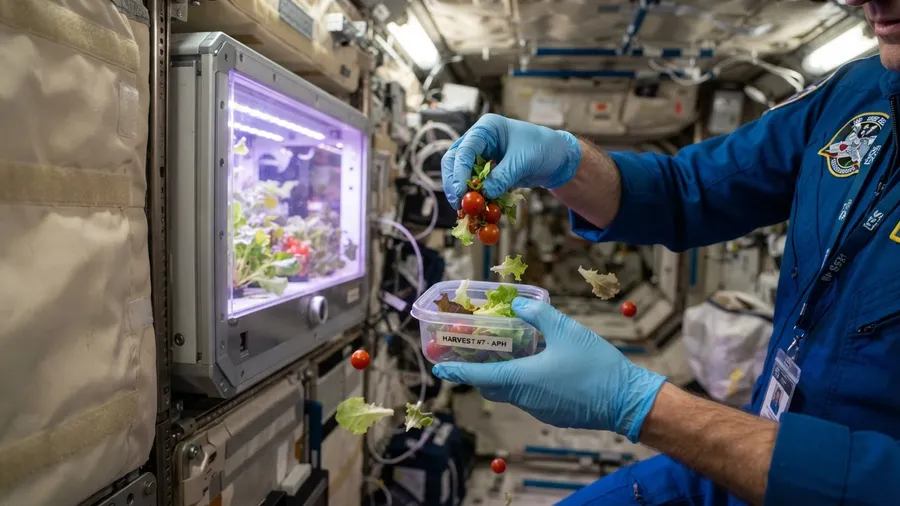
None of this starts from nothing. Astronauts on the space station ate red romaine lettuce grown in orbit back in 2015. Later came radishes, mustard greens, dwarf tomatoes and Hatch chile peppers, which ended up in tacos on the station in 2021. On the soil side, a team at the University of Florida grew a small weed called Arabidopsis in real Apollo lunar samples in 2022. The seeds sprouted, but the plants looked stressed and grew slowly. Which is strange, if you think about it. Moon dust is ground up rock, with no life in it, and the roots still tried. A weed in a lab dish is not a harvest, though.
🇪🇸 La gente ya venía practicando
Esto no empezó ahora. En 2015 los astronautas de la estación espacial comieron lechuga romana roja cultivada en órbita. Después llegaron los rábanos, la mostaza, los tomates enanos y los chiles Hatch, que acabaron en tacos en 2021. Aparte, un grupo de la Universidad de Florida sembró Arabidopsis, una maleza pequeña, en muestras reales de suelo lunar traídas por las misiones Apolo. Germinaron. Pero crecieron lentas y con señales de estrés, y eso es lo que hay que mirar. En los Países Bajos también se ha sembrado en suelo simulado de Marte. Todavía falta ver qué hacen cultivos de verdad, no una planta de laboratorio.
Scientific diagram illustrating key concepts of Which Crops Could Feed Astronauts on the Moon and Mars?
🇺🇸 A Plumbing Problem Wearing a Plant Costume
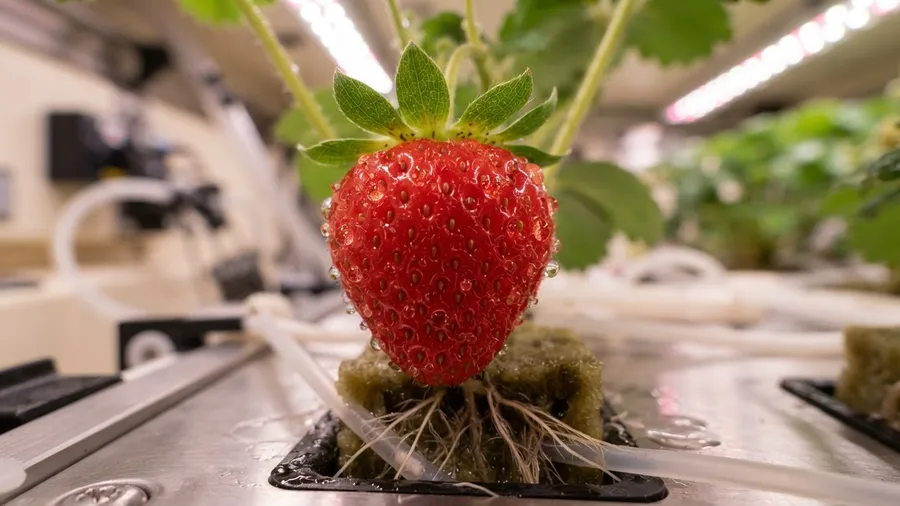
Mechanically, this is a plumbing problem. Without gravity, water does not drain down. It clings to surfaces and creeps along roots, so growers use wicks and clay based material to feed plants evenly. Get it wrong and the roots either drown or dry out. How the airflow around those roots is tuned is over my head, and I kept rereading that part. Light comes from LEDs, mostly red and blue, because plants use those colors hardest. Then Mars adds its own insult. The soil carries perchlorates, salts that are toxic to people and likely harmful to plants, and it has almost no organic matter. Strawberries also need pollination. There are no bees on a spacecraft, so someone uses a small brush.
🇪🇸 Plomería con disfraz de planta
En la práctica es un problema de plomería. Sin gravedad el agua no baja. Se pega a las superficies y se arrastra por las raíces, así que se usan mechas y un sustrato de arcilla para repartirla. Si algo falla, las raíces se ahogan o se secan. Cómo se regula el aire alrededor de ellas se me escapa un poco. La luz sale de LED rojos y azules, que son los colores que la planta aprovecha mejor. Marte añade su propio problema. El suelo trae percloratos, unas sales tóxicas para las personas, y casi no tiene materia orgánica. Las fresas, además, necesitan polinización. No hay abejas en una nave, así que alguien lo hace a mano con un pincel.
The process described in Which Crops Could Feed Astronauts on the Moon and Mars?
🇺🇸 What Changes for Real People
Nobody is going to live on strawberries. Calories will still come mostly from packaged staples, at least early on. What fresh crops change is smaller and stranger. Some vitamins in stored meals break down over months, so a garden is one way to top them up. Then there is the human side. A crew that smells fresh leaves or bites into something juicy very far from home is in a different mood than one opening pouch number four hundred. On Earth the payoff is quieter. Compact beds and tight water loops matter where soil is poor and water is scarce, and that includes some dry corners of my own island.
🇪🇸 Lo que cambia para la gente de carne y hueso
Nadie va a vivir de fresas. Las calorías seguirán viniendo de alimentos empacados, al menos al principio. Lo que cambian los cultivos frescos es más pequeño. Algunas vitaminas se degradan en la comida almacenada después de meses, y un huerto ayuda a reponerlas. También está el ánimo de la tripulación. Oler albahaca o morder algo jugoso lejos de casa no se compara con abrir el sobre número cuatrocientos. En la Tierra el beneficio es más callado. Los sistemas que reciclan agua y los cultivos en poco espacio sirven donde el suelo es pobre o el agua escasea, y en la República Dominicana tenemos zonas secas donde eso pesa.
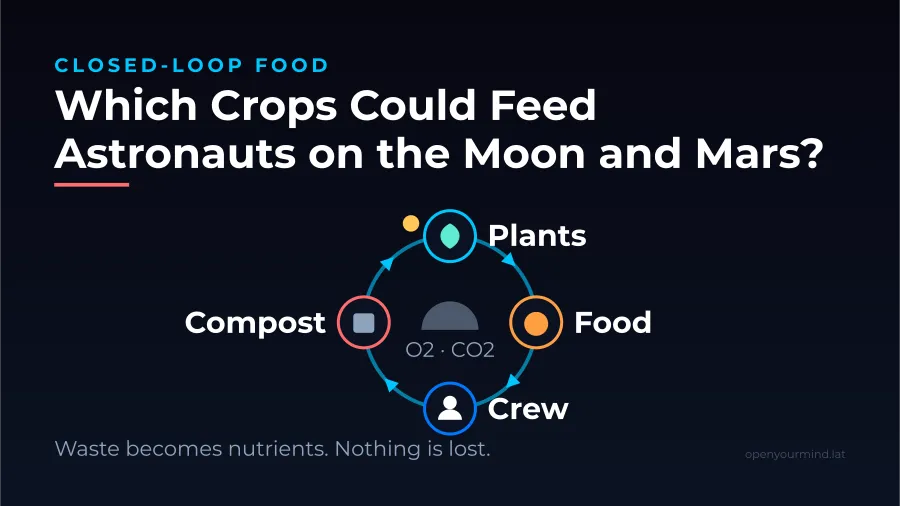
Data visualization for Which Crops Could Feed Astronauts on the Moon and Mars?
🇺🇸 Still Unanswered
Nobody has shown that strawberry plants can set fruit through a full transit to Mars, roughly seven months. Nobody has settled how much perchlorate must be washed out of Martian soil before tomatoes stop absorbing it. And the weekly crew hours a garden eats on a real long mission have never been measured.
🇪🇸 Lo que sigue sin respuesta
Nadie ha demostrado que una planta de fresa pueda dar fruto durante un viaje completo a Marte, de unos siete meses. Tampoco está claro cuánto perclorato hay que lavar del suelo marciano para que los tomates dejen de absorberlo. Y las horas semanales que un huerto le quita a la tripulación en una misión larga real nunca se han medido.
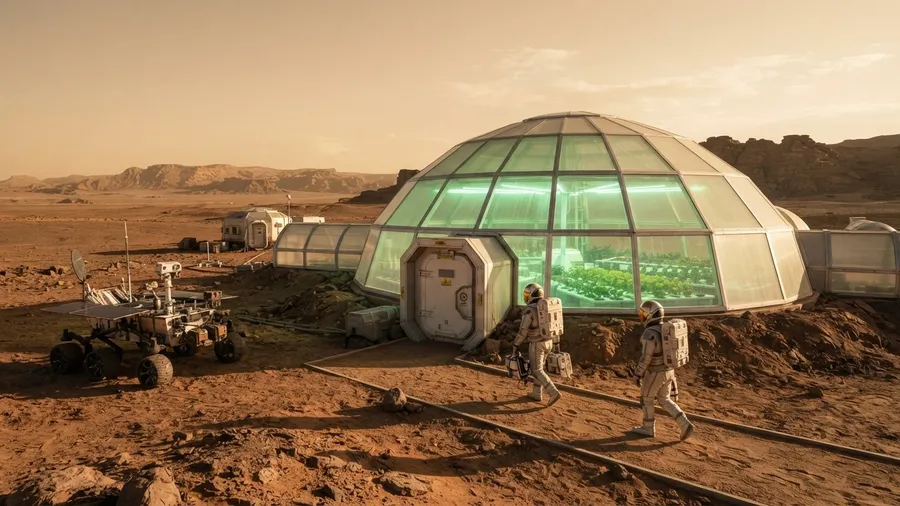
Real world context for Which Crops Could Feed Astronauts on the Moon and Mars?
🔗 Related Articles | Artículos Relacionados
Nuestro canal transmite datos curiosos de ciencia, IA, espacio y tecnología las 24 horas. | Our channel streams science facts, AI, space and technology around the clock.
▶ Ver transmisión | Watch liveOPEN YOUR MIND
Source: Source
Join the conversation