How Mastodons Helped Turn Bitter Gourds Into Pumpkin Pie
Extinct mastodons may have spread wild Cucurbita seeds across ancient North America, a clue to how pumpkins were domesticated from wild toxic gourds.
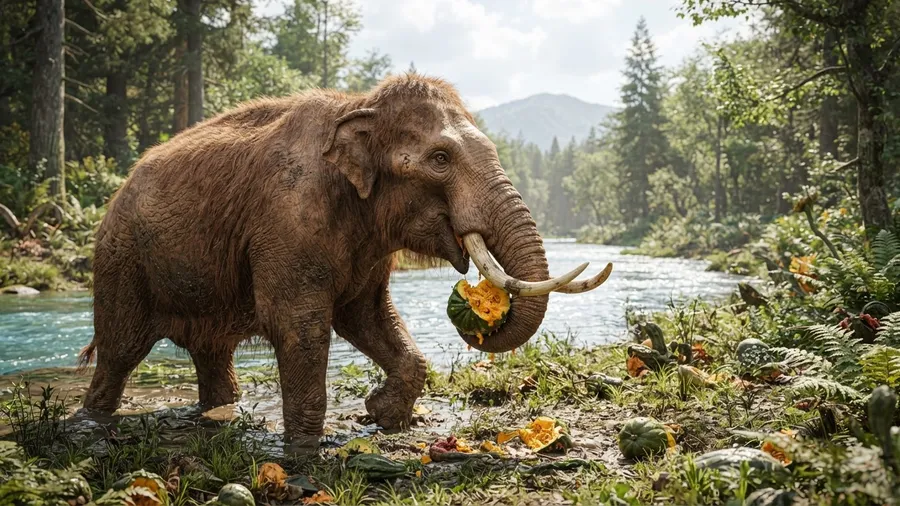
A mastodon stands near wild squash vines in a prehistoric North American landscape.
🇺🇸 A gourd that should have gone extinct
Picture a gourd the size of a tennis ball, hard as wood, and so bitter it makes your jaw ache. Now picture a mastodon eating it anyway. That is the story a team led by Logan Kistler pieced together in 2015, using DNA from wild and domesticated squash and a long look at where the plants grew. Their argument was that wild gourds in North America were built to be eaten by animals the size of trucks. Mastodons, giant ground sloths, relatives of elephants. The animals swallowed the fruit, walked off, and dropped the seeds somewhere else. Then, roughly 12,000 years ago, those animals mostly vanished. The gourds should have vanished too. Some didn't, which is strange, if you think about it.
🇪🇸 Una calabaza que debió desaparecer
Hace unos 12,000 años, a las calabazas silvestres de Norteamérica se les murieron los repartidores. Mastodontes, perezosos gigantes, bestias enormes que se tragaban el fruto entero y soltaban las semillas lejos, ya envueltas en abono. Casi todos esos animales se extinguieron. Lo lógico era que las plantas se fueran detrás. El equipo de Logan Kistler publicó en 2015 un análisis de ADN de calabazas silvestres y domesticadas, y propuso que la domesticación las rescató, porque los humanos terminaron haciendo el trabajo de los gigantes. Eso explicaría por qué todavía hay poblaciones silvestres en lugares como Texas, pegadas a los ríos. No sé si sea la única explicación. Pero es una idea bonita.
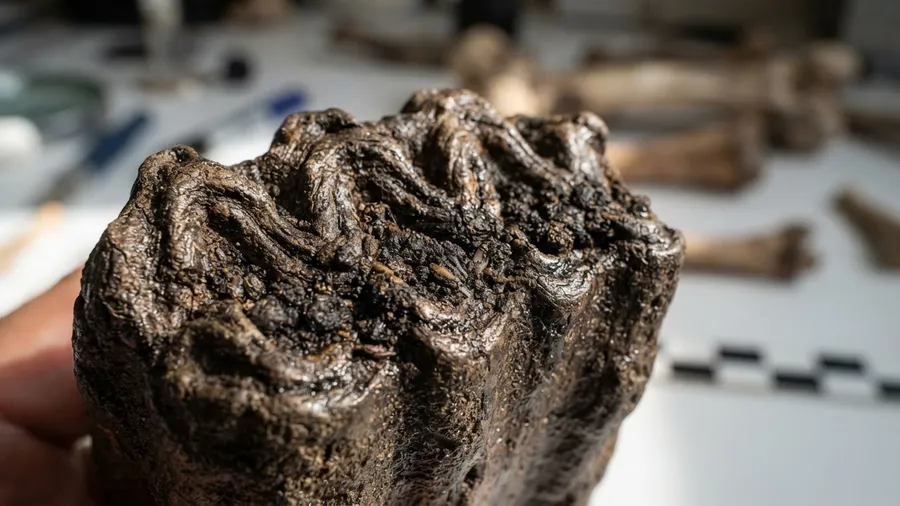
Close-up of a bitter
🇺🇸 Bitter on purpose
The bitterness is chemical. Cucurbitacins are a family of compounds that taste awful to most mammals and can make people sick. Plants make them as a warning label. Wild squash relatives carry plenty. Meanwhile, people in what is now Oaxaca, Mexico, were already working with Cucurbita pepo about 10,000 years ago, going by seeds and stem pieces from Guilá Naquitz cave. That puts squash ahead of maize and beans. What those early farmers wanted first is still argued. Seeds, maybe. Rinds as bowls, maybe. The flesh that a modern pie depends on may have come later. I kept rereading that timeline, because it means people lived with bitter fruit for a very long time.
🇪🇸 El amargor era una defensa
La amargura viene de unos compuestos llamados cucurbitacinas. A casi todos los mamíferos nos saben horrible, y en dosis altas enferman. Es la forma que tiene la planta de decir que no la toques. Aun así, en Oaxaca ya había gente cultivando calabaza hace unos 10,000 años, según semillas encontradas en la cueva de Guilá Naquitz. Eso es más viejo que el maíz y el frijol en esa región. Los arqueólogos todavía discuten qué buscaban primero. Quizás las semillas, quizás la cáscara para hacer recipientes. La pulpa dulce, la que lleva el pastel, pudo llegar después. Es raro pensar que alguien se comió algo así de amargo, y encima insistió.
🇺🇸 What a mastodon does for a seed
Here is the mechanism as best I can tell. A large animal swallows a whole fruit. The seeds have tough coats, so they ride through the gut mostly intact. Out they come, packed in dung, which works as fertilizer. Small rodents tend to chew seeds and destroy them, and bitterness probably kept some of those animals off the pulp. Why mastodons tolerated it is a guess. On the genetic side, cucumbers and melons use a master switch gene called Bi to turn bitterness on. Domestication flipped that switch off in the fruit. Whether pumpkins use the exact same switch, I honestly cannot say. The biochemistry is over my head.
🇪🇸 Del estómago del mastodonte al campo
Piensa en un animal de varias toneladas que se come una calabaza completa. Las semillas tienen una cubierta dura, así que atraviesan el intestino casi enteras. Salen en medio de un montón de abono, listas para germinar lejos de la planta madre. Un ratón, en cambio, mastica la semilla y la destruye. Quizás el amargor espantaba a los ratones, pero no sabemos por qué no molestaba a los gigantes. Eso es hipótesis. En pepino y melón existe un gen interruptor llamado Bi que enciende la producción de amargor. En las variedades domesticadas, ese interruptor quedó apagado en el fruto. No tengo claro si la calabaza usa el mismo. La bioquímica se me escapa.
🇺🇸 What lands on your plate
So what changes for someone holding a fork. At the table, nothing. The pie is fine. Most canned pumpkin in the United States actually comes from a tan Dickinson squash, a different species than the carving pumpkin on your porch. But the bitterness never left the genome. Gardeners who save seed from a zucchini that crossed with an ornamental gourd sometimes grow fruit bitter enough to cause vomiting and stomach cramps. Doctors have reported cases. The rule is plain. If it tastes bitter, spit it out and throw the rest away. Wild gourds in Texas and the Ozarks matter too, since breeders can borrow disease resistance from them. That is a practical reason to care about plants that outlived their partners.
🇪🇸 Lo que cambia para quien cocina
En la mesa, casi nada. El pastel está bien. Lo curioso es que gran parte de la calabaza enlatada en Estados Unidos no viene de la calabaza de Halloween, sino de una variedad color beige llamada Dickinson, de otra especie. Pero el amargor sigue escondido en los genes. Si guardas semillas de un zucchini que se cruzó con una calabaza decorativa, puedes cosechar frutos que provocan vómito y retortijones. Hay casos documentados. La regla es sencilla: si sabe amargo, escúpelo y bota el resto. Y las calabazas silvestres de Texas y los Ozarks sirven a los mejoradores, que pueden sacar de ahí resistencia a enfermedades. Un buen motivo para cuidar plantas que sobrevivieron a sus socios.
🇺🇸 Still open
I could not find a study measuring how many wild gourd seeds germinate after passing through an elephant gut, the closest living stand in for a mastodon. The fossil evidence is thin too, with few dung deposits holding gourd seeds. And nobody can say how many generations of selection it took to switch off bitterness in the fruit at those Oaxaca sites 10,000 years ago.
🇪🇸 Lo que falta saber
No encontré un estudio que mida cuántas semillas de calabaza silvestre germinan después de pasar por el intestino de un elefante, el pariente vivo más cercano al mastodonte. La evidencia fósil también es escasa, porque hay pocos depósitos de excremento con semillas. Y nadie sabe cuántas generaciones tardó la selección en apagar el amargor del fruto en Oaxaca hace 10,000 años.
🔗 Related Articles | Artículos Relacionados
Nuestro canal transmite datos curiosos de ciencia, IA, espacio y tecnología las 24 horas. | Our channel streams science facts, AI, space and technology around the clock.
▶ Ver transmisión | Watch liveOPEN YOUR MIND
Source: Source
Join the conversation