How AI Designs Robot Bodies and Brains to Work Together
How AI Designs Robot Bodies and Brains to Work Together
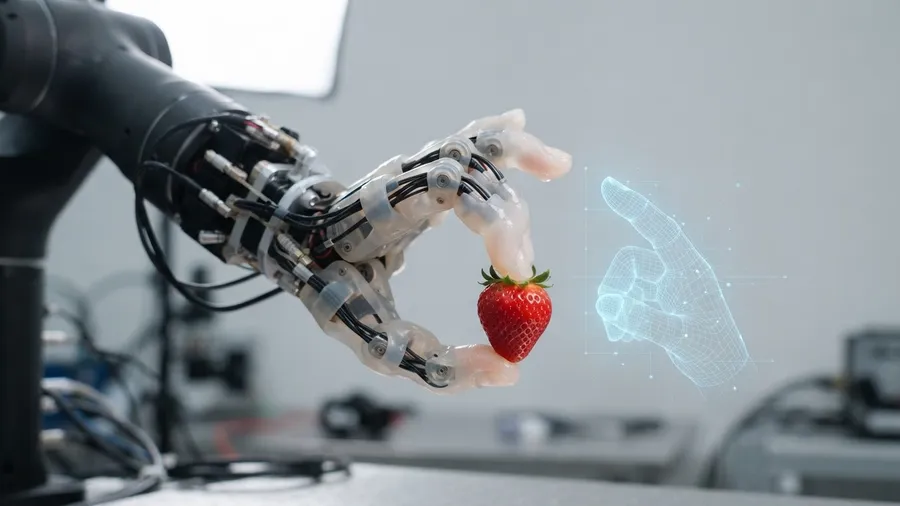
A bio-inspired robotic hand with soft fingers gently grips a ripe strawberry.
🇺🇸 Building the body and the brain in one go
Here is what happened, as plainly as I can put it. Claire sat down with Rika Antonova, an Associate Professor at the University of Cambridge, and they talked about letting AI shape a robot's body and its software at the same time. Not one, then the other. Both. Antonova works on codesign, which is the name for that idea, and on automated algorithm discovery, where a machine searches for the learning method itself. I only have the outline of the conversation, so I will not pretend to quote her. But the outline alone made me stop. Most robots I have read about got a body first, then years of teaching. That order might be the problem.
🇪🇸 Cuerpo y cerebro, diseñados juntos
Piensa en cómo se construye un robot normal. Alguien dibuja el cuerpo, lo manda a fabricar y después otro equipo pasa meses, a veces años, enseñándole a moverse. Rika Antonova, profesora asociada en la Universidad de Cambridge, trabaja justo para romper ese orden. Habló con Claire sobre usar inteligencia artificial para que el cuerpo y el programa se afinen a la vez, algo que se llama codiseño. Ella también estudia cómo una máquina puede descubrir por su cuenta el método de aprendizaje, no solo aplicarlo. Yo tengo el resumen y no la conversación completa, así que no voy a ponerle palabras en la boca. Todavía me pregunto por qué tardamos tanto en probar el camino contrario.
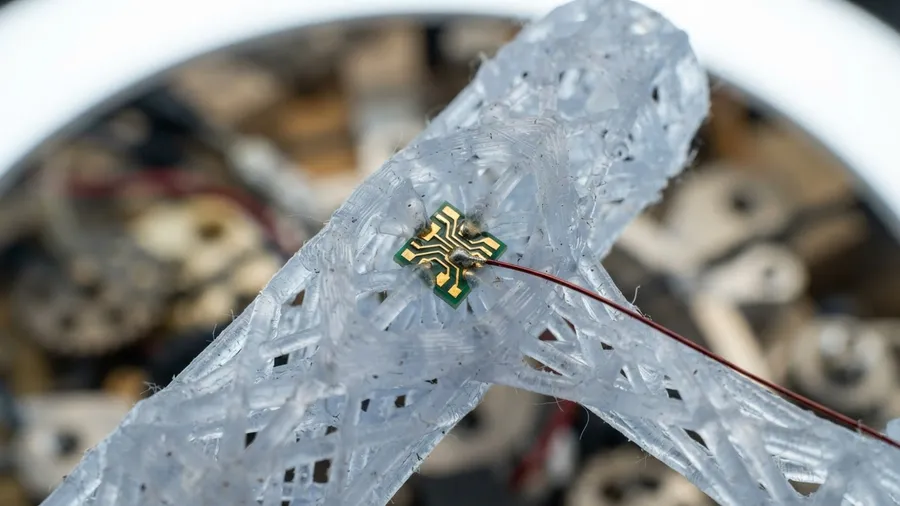
A 3D-printed lattice finger joint holds a tiny tactile sensor board within flexible struts.
🇺🇸 Why this was never easy
None of this started yesterday. In 1994 Karl Sims showed virtual creatures whose bodies and movement rules evolved together inside a computer, and they swam and crawled in ways nobody had programmed. Cute, and a little eerie. The trouble was always cost. Reinforcement learning, where a robot improves by trial and error, usually needs enormous numbers of attempts. Real hardware wears out. Simulation is cheaper, but a simulated robot is never quite the physical one, and that mismatch eats results alive. This is why Antonova's other interests matter here. Data efficient learning, exploration, active learning. All of them ask the same stubborn thing, which is which trial to run next so that as few as possible get wasted.
🇪🇸 El problema de fondo es el costo
El problema de fondo es el costo. Un robot real se desgasta, se rompe, necesita que alguien lo reinicie después de cada caída. Por eso el aprendizaje por refuerzo, que funciona a base de prueba y error, se vuelve tan caro fuera de la pantalla. La simulación ayuda, claro, aunque un robot simulado nunca es del todo el robot físico. Es como practicar dominó contra la computadora y luego perder en el patio. La idea de evolucionar cuerpo y cerebro juntos tampoco es nueva. Karl Sims la mostró en 1994 con criaturas virtuales que nadaban y se arrastraban solas. Lo que busca gente como Antonova es gastar muy pocas pruebas.
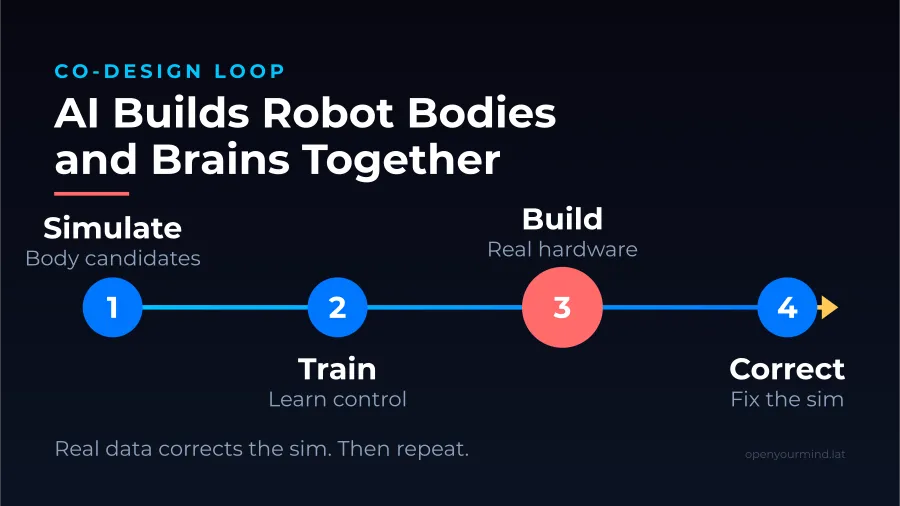
The co-design loop cycles through simulating body designs, training control, and testing results.
🇺🇸 Two loops and a guess
The mechanism, as I understand it, has two loops, and I may have details wrong. The outer loop proposes a body. Say longer fingers, a stiffer wrist, a different joint angle. The inner loop takes that body and learns a controller for it, usually in simulation. The score from the inner loop travels back out, and a statistical model guesses which body to try next. That guess is where active learning comes in. Instead of sampling blindly, the system picks designs that look promising or that it knows little about. I kept rereading how algorithm discovery fits in, because it adds a third layer where even the learning rule is up for search. I could not fully picture it.
🇪🇸 El truco es no empezar de cero
El truco está en no entrenar desde cero cada vez. Cada cuerpo nuevo necesita su propio aprendizaje, y eso, multiplicado por cientos de diseños, se come semanas de cómputo. Así que el sistema lleva una especie de apuesta estadística. Un modelo estima qué diseño merece probarse, mira el resultado, corrige la estimación y vuelve a escoger. Es como un cocinero que ajusta la sazón sin botar la olla entera. Dentro de cada prueba, el robot aprende su control, normalmente en simulación. Y luego está la capa del descubrimiento automático de algoritmos, donde hasta la regla de aprendizaje se busca sola. No sé cómo lo resuelven en detalle, y prefiero decirlo.
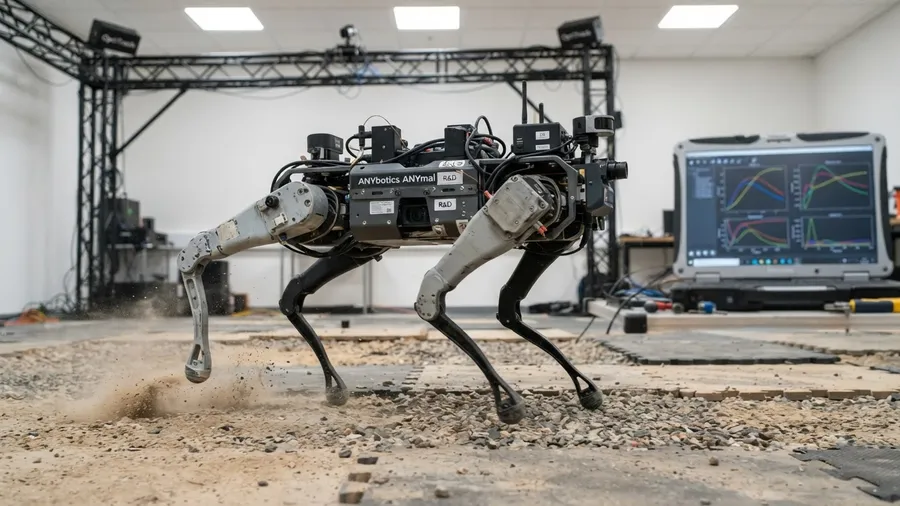
A quadruped robot with swapped leg segments strides across mixed test terrain.
🇺🇸 What changes for people, and what does not
Do not expect a new robot in your kitchen next year. I have seen no evidence of that, and I distrust anyone who promises it. What changes is quieter. An engineer designing a gripper for tomatoes, or for bolts, no longer starts from a blank page. The search hands over a few candidate bodies already paired with a working controller, and the human argues with them. Fewer months go into dead ends. Smaller labs and companies, the ones without a hundred technicians, get a shot at hardware that fits one job. I think about workshops back home in Santo Domingo that build for a single odd task. Tools tuned like that matter more to me than another humanoid.
🇪🇸 Lo que cambia de verdad
Nadie va a tener un robot nuevo en la cocina el año que viene, y desconfío de quien lo prometa. Lo que cambia es más callado. Un ingeniero que diseña una pinza para tomates, o para tornillos, ya no empieza con la hoja en blanco. La búsqueda le entrega varios cuerpos candidatos, cada uno con su controlador funcionando, y él los discute, los descarta, los mejora. Se pierden menos meses en callejones sin salida. Y los talleres pequeños, sin cien técnicos, pueden aspirar a hardware hecho a la medida de una sola tarea. Eso me parece más útil que otro humanoide de vitrina.
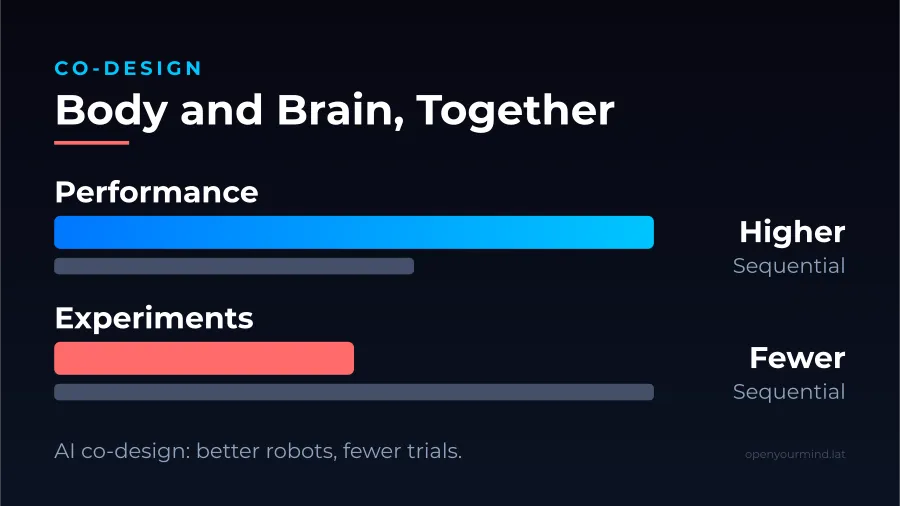
Sequential design limits performance, while AI co-design speeds up trial-and-error iteration.
🇺🇸 What nobody has settled
Nobody has shown how many simulated trials a design needs before it survives the jump to a physical build. Ten thousand grasps on real fingers is a test I would like to see. It is also unclear whether a body found for tomatoes still works once the task changes to bolts. And I do not know how long one full codesign search takes on a single graphics card.
🇪🇸 Lo que sigue sin respuesta
Nadie ha mostrado cuántas pruebas simuladas hacen falta para que un diseño sobreviva al paso a la versión física. Diez mil agarres con dedos reales sería una prueba que me gustaría ver. Tampoco está claro si un cuerpo hallado para tomates sirve cuando la tarea cambia a tornillos. Y no sé cuánto tarda una búsqueda completa de codiseño en una sola tarjeta gráfica.
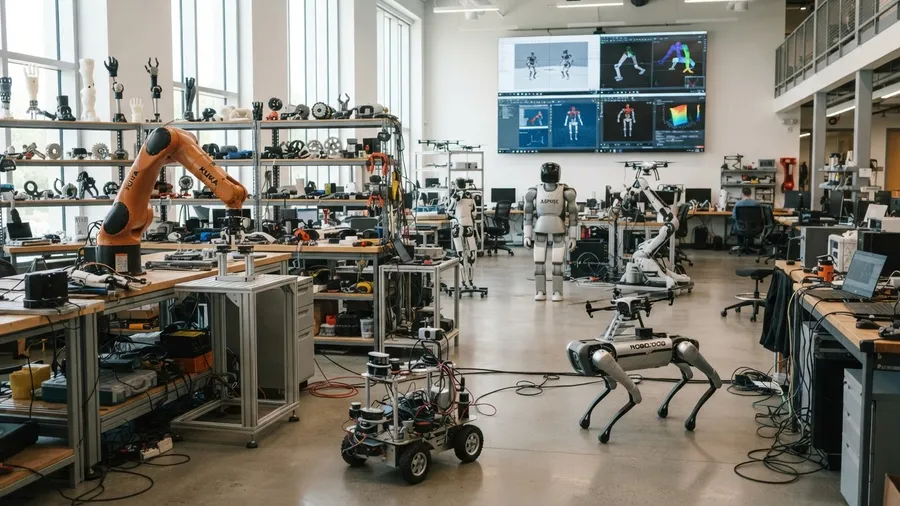
A university robotics lab displays prototype limbs and robots at different design stages.
🔗 Related Articles | Artículos Relacionados
Nuestro canal transmite datos curiosos de ciencia, IA, espacio y tecnología las 24 horas. | Our channel streams science facts, AI, space and technology around the clock.
▶ Ver transmisión | Watch liveOPEN YOUR MIND
Source: Source
Join the conversation