Can GLP-1 Weight-Loss Drugs Trigger Anorexia and Bulimia?
Can GLP-1 Weight-Loss Drugs Trigger Anorexia and Bulimia?

Main visual for Can GLP-1 Weight-Loss Drugs Trigger Anorexia and Bulimia?
🇺🇸 A Number That Stopped Me
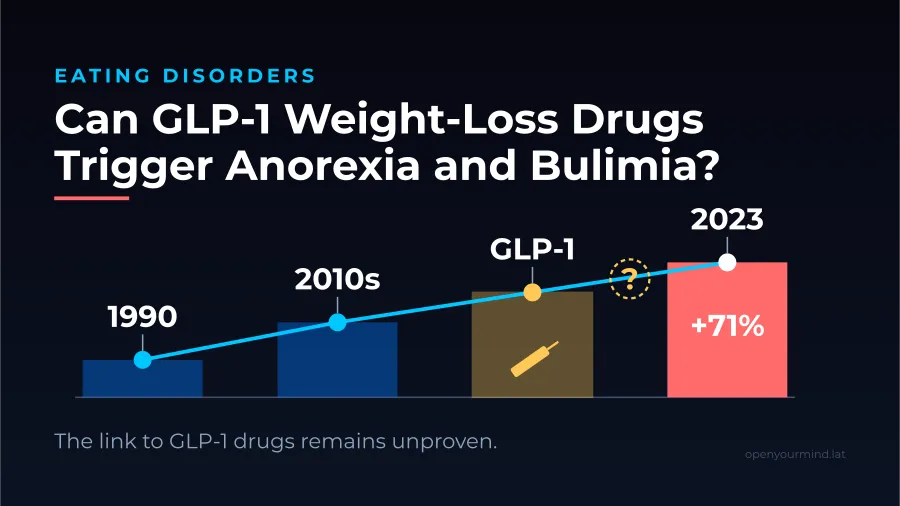
The number landed on my screen and I stopped scrolling. A new report says the global incidence of anorexia nervosa and bulimia nervosa rose 71% between 1990 and 2023. A rise like that does not happen overnight. It shows up across decades and across very different food cultures. Now put it next to the other thing happening in that window, which is the arrival of GLP1 drugs like semaglutide and tirzepatide. Careful here. The report covers thirty three years, and these drugs only went mainstream in the last few. So they cannot explain the climb. What worries some clinical psychologists is what comes next, with millions of new prescriptions landing on a population already under strain.
🇪🇸 Un 71% que no se puede ignorar
Entre 1990 y 2023, los casos nuevos de anorexia nerviosa y bulimia nerviosa en el mundo subieron un 71%, según un informe reciente. Eso es mucho. Treinta y tres años de crecimiento, en países con culturas de comida muy distintas. Y aquí viene lo incómodo. Los medicamentos GLP1, como la semaglutida y la tirzepatida, se volvieron masivos hace apenas unos años, así que no pueden explicar ese aumento. Lo que preocupa a algunos psicólogos clínicos es lo que viene después, con millones de recetas nuevas cayendo sobre una población que ya venía vulnerable. Todavía nadie demuestra que la inyección cause el trastorno. Pero la sospecha ya está sobre la mesa.

Detail view related to Can GLP-1 Weight-Loss Drugs Trigger Anorexia and Bulimia?
🇺🇸 What Doctors Already Knew
Eating disorders were never a rare corner of medicine. Anorexia carries one of the highest death rates among psychiatric illnesses, and bulimia can disturb the heart rhythm through lost electrolytes. The strongest known behavioral risk factor is dieting itself, especially severe dieting that starts young. Then there is the drug history. Semaglutide began life as a diabetes treatment, and the obesity trials that followed mostly screened out people with active eating disorders. So the safety data comes from the people least likely to struggle. Which is strange, if you think about it, because those are exactly the people now walking into clinics and asking for the shot.
🇪🇸 Lo que ya se sabía
Antes de estos fármacos ya había un patrón claro. Hacer dieta estricta, sobre todo desde joven, es uno de los factores de riesgo más sólidos para desarrollar un trastorno alimentario. La anorexia tiene una de las tasas de mortalidad más altas entre las enfermedades psiquiátricas. La bulimia, por su parte, puede alterar el ritmo del corazón porque el cuerpo pierde potasio. La semaglutida nació como tratamiento para la diabetes tipo 2. Cuando llegaron los ensayos para obesidad, en general se dejó fuera a quienes tenían un trastorno alimentario activo. Esa es la parte rara. Los datos de seguridad vienen de las personas con menos probabilidad de tener problemas.
Scientific diagram illustrating key concepts of Can GLP-1 Weight-Loss Drugs Trigger Anorexia and Bulimia?
🇺🇸 How a Gut Hormone Reaches the Mind
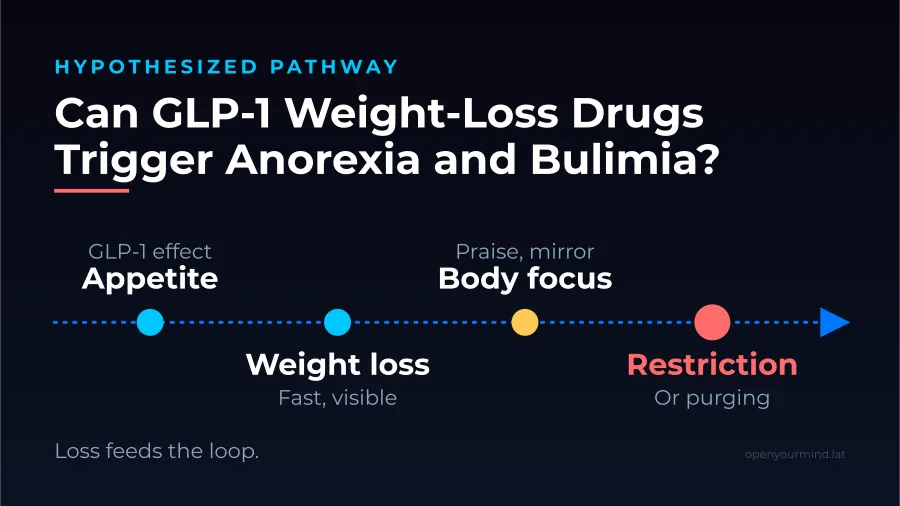
GLP1 is a hormone your gut releases after you eat. The drugs copy it, only they last days instead of minutes. They slow how fast the stomach empties, so you feel full longer. That part is simple. The harder part is the brain, where receptors in the hypothalamus and the brainstem signal that you have had enough. Patients also describe the mental chatter about food going quiet, and researchers suspect reward circuits are involved. I will admit that part is over my head. Nausea and vomiting, both common side effects, could also blur the line with purging. For someone with restrictive tendencies, a silenced appetite might remove the last internal alarm. Nobody has shown that. I kept rereading it as a hypothesis.
🇪🇸 El mecanismo, hasta donde se entiende
Piénsalo así. Después de comer, el intestino suelta una hormona llamada GLP1, y estos fármacos la imitan, pero duran días en vez de minutos. El estómago se vacía más lento y la saciedad dura más. Hasta ahí es fácil. Lo difícil está en el cerebro, en el hipotálamo y el tronco encefálico, donde hay receptores que avisan que ya es suficiente. Muchos pacientes cuentan que el ruido mental sobre la comida se apaga. Los circuitos de recompensa parecen participar, pero ahí confieso que no me alcanza el conocimiento para explicarlo bien. Otro detalle son las náuseas y los vómitos, efectos frecuentes que podrían confundirse con conductas de purga. Todo esto es hipótesis, no resultado.

Real world context for Can GLP-1 Weight-Loss Drugs Trigger Anorexia and Bulimia?
🇺🇸 What Changes in the Exam Room
For a person with a history of anorexia, rapid weight loss on these drugs looks, from the outside, like a prescription working. Friends compliment it. Doctors chart it as success. That is the trap clinicians describe. Someone in recovery may stop eating enough, and the medication gives the behavior a respectable cover. Screening is the practical change. Asking about eating history, bingeing, and purging before the first dose costs a few minutes. Then there are online sellers and compounded versions, where nobody asks anything at all. Parents and partners also need to watch for restriction that gets passed off as a side effect. Small changes, but they land on real kitchen tables.
🇪🇸 Lo que cambia en la consulta
Imagina a alguien que estuvo en recuperación de anorexia. Empieza la inyección y baja de peso rápido. Desde afuera parece que el tratamiento funciona. La familia lo felicita y el médico lo anota como éxito. Ese es el problema que describen los clínicos, porque el fármaco le da a la restricción una excusa respetable. Lo práctico es preguntar antes de la primera dosis por historial de atracones, purgas o dietas extremas. Son unos minutos de consulta. En las farmacias en línea y las versiones preparadas por encargo nadie hace esas preguntas. Y en casa conviene mirar si lo que parece efecto secundario, como comer poquísimo, en realidad es otra cosa.
Data visualization for Can GLP-1 Weight-Loss Drugs Trigger Anorexia and Bulimia?
🇺🇸 What Nobody Has Measured Yet
Nobody knows whether people with a past diagnosis relapse more often on semaglutide, because the big trials screened them out. I could not find a study that followed new eating disorder diagnoses beyond two years of use. And nobody has measured binge and purge frequency in the weeks after someone stops injecting. The first gap would need someone to ask about eating history before the first dose.
🇪🇸 Lo que nadie ha medido todavía
Nadie sabe si las personas con un diagnóstico previo recaen más con semaglutida, porque los ensayos grandes las excluyeron. No encontré ningún estudio que siga los diagnósticos nuevos más allá de dos años de uso. Y nadie ha medido la frecuencia de atracones y purgas en las semanas después de suspender la inyección. La primera brecha exigiría preguntar por el historial alimentario antes de la dosis inicial.
🔗 Related Articles | Artículos Relacionados
Nuestro canal transmite datos curiosos de ciencia, IA, espacio y tecnología las 24 horas. | Our channel streams science facts, AI, space and technology around the clock.
▶ Ver transmisión | Watch liveOPEN YOUR MIND
Source: Source
Join the conversation