Bladder Cancer Detection Through RNA Found in Your Urine
Bladder Cancer Detection Through RNA Found in Your Urine
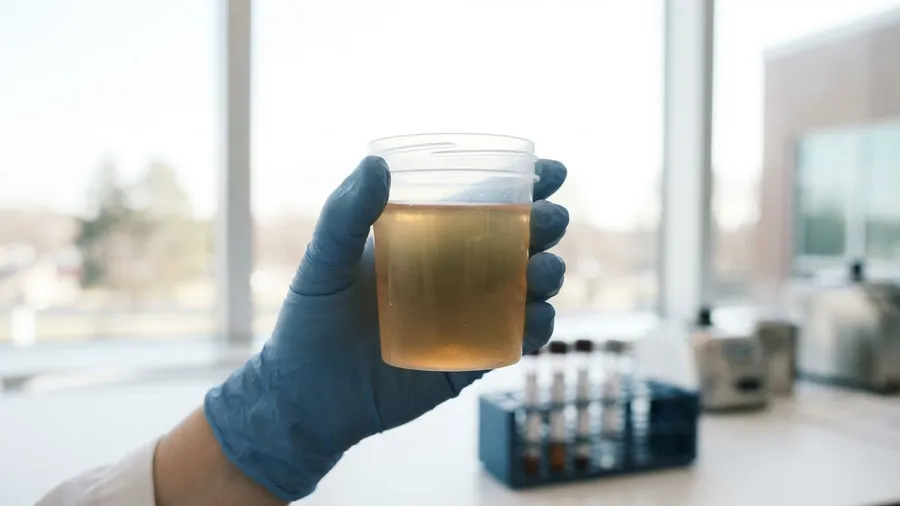
A patient's urine sample is collected in a cup for the RNA-based bladder cancer test.
🇺🇸 A Cup of Urine Gave Away the Tumor
A urine sample. That is what the test needs, and from it a team read fragments of RNA and picked out people who had bladder cancer. Not all of them, and not perfectly, and I will come back to that. But the signal was there. Tumor cells leak genetic material into urine, and the researchers built a way to read the pattern in that leak. It is a proof of concept, which means a small first run meant to show the idea can work at all. I kept rereading the methods because the idea sounds almost too simple. Cancer showed up in a cup. That is strange, if you think about it, since we usually picture detection as a scope or a scan.
🇪🇸 Orina, ARN y un tumor que se delata
Lo primero que me llamó la atención fue el material de trabajo, que es solo orina. Un grupo de investigadores tomó muestras y buscó pedacitos de ARN, y con eso logró identificar casos de cáncer de vejiga. No es una prueba terminada. Es una prueba de concepto, o sea, un primer intento a pequeña escala para ver si la idea funciona. Las células del tumor sueltan material genético y este termina en la orina, mezclado con todo lo demás. Lo difícil es separar esa señal del ruido. Confieso que me costó creer que algo tan básico diera resultados, y por eso releí el estudio dos veces.
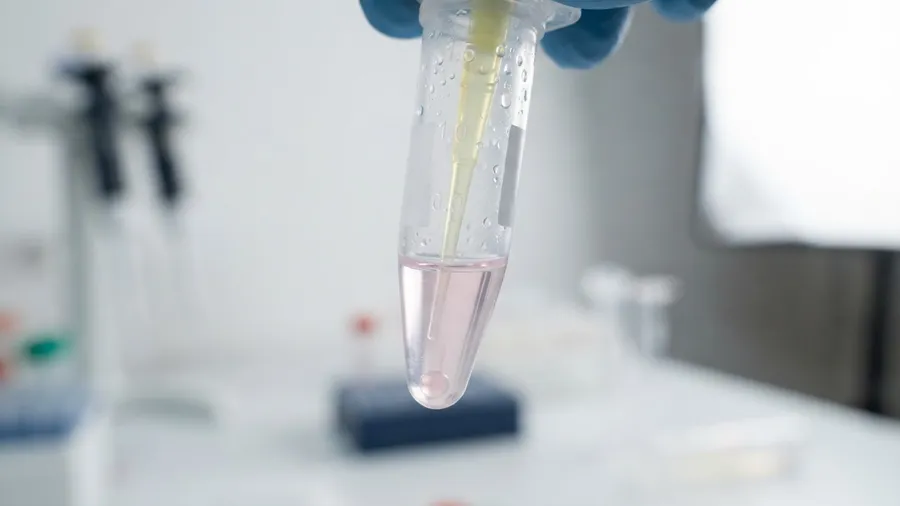
A microcentrifuge tube holds a small RNA extract pellet isolated from urine samples.
🇺🇸 Why Checking for Bladder Cancer Is Such a Chore
Bladder cancer has an annoying habit of coming back. Many patients who get treated need checkups for years, and the standard checkup is a cystoscopy, where a doctor threads a thin camera up the urethra. It works. It is also uncomfortable, expensive, and not something anyone schedules for fun. Urine tests already exist, mostly cytology, where a pathologist looks for abnormal cells under a microscope. Cytology is decent at catching aggressive tumors and weaker with slow, low grade ones. Which is a problem, since low grade tumors are the ones that recur and keep patients in the cycle of repeated exams. Other urine markers have been tried over the years too, with mixed results, and I do not know the full list.
🇪🇸 El problema de vigilar una vejiga
Quien ha tenido cáncer de vejiga sabe que el seguimiento es lo más pesado. Después del tratamiento hay que volver una y otra vez para una cistoscopia, que es meter una cámara delgada por la uretra. Funciona, pero molesta, cuesta y da miedo. Existe también la citología de orina, donde un patólogo mira células al microscopio. Detecta bien los tumores agresivos y falla más con los de bajo grado, que paradójicamente son los que más regresan. Hace años se han probado otros marcadores en orina, con resultados mixtos. Por eso hay tanta gente buscando una alternativa que no dependa de instrumentos metidos en el cuerpo.
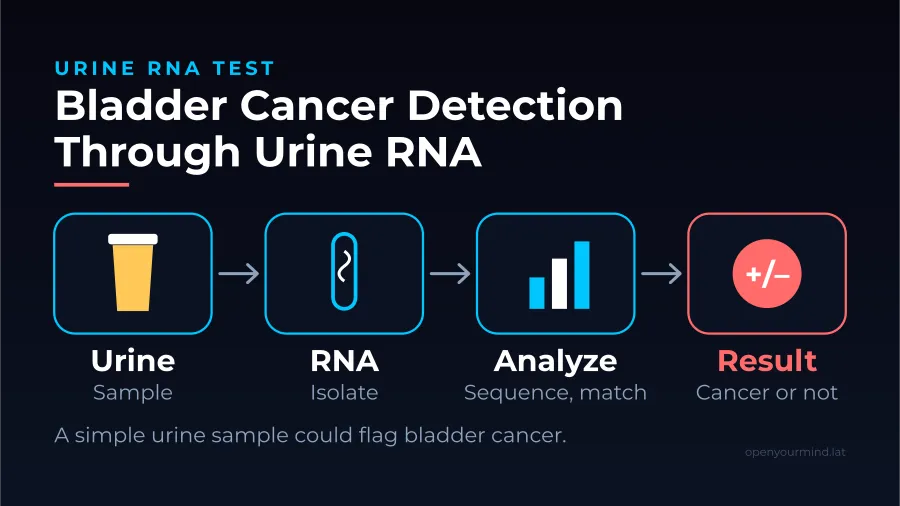
The proof-of-concept test detects bladder cancer by sequencing RNA fragments isolated from urine.
🇺🇸 What the Test Is Actually Reading
Here is the mechanism, as far as I can follow it. Cells in the bladder lining die and shed constantly, and they drop RNA into urine. Some of that RNA gets chopped into short fragments before it ever reaches the cup. Tumor cells switch on different genes than healthy ones, so the fragments differ in kind and in amount. The test measures which fragments are present and how many, then compares that profile against samples from people with and without cancer. Some kind of statistical model does the sorting, from what I read. How the fragments survive in urine, a liquid full of enzymes that destroy RNA, is a part I could not fully follow.
🇪🇸 Cómo se lee el ARN en la orina
El mecanismo, más o menos, es este. El revestimiento de la vejiga se renueva todo el tiempo, y las células viejas caen a la orina con su ARN. Las enzimas lo cortan en pedazos cortos. Una célula tumoral enciende genes distintos a los de una célula sana, así que los pedazos cambian en tipo y en cantidad. La prueba mide cuáles hay y cuántos, y compara ese perfil con el de personas con y sin cáncer. Un modelo estadístico hace la clasificación, según entendí. Lo que no me queda claro es cómo sobreviven esos fragmentos en un líquido lleno de enzimas que destruyen ARN. Ahí me perdí un poco.

Researchers load urine RNA extracts into a 96-well plate for sequencing and PCR analysis.
🇺🇸 What Changes for Someone Waiting on a Checkup
For a patient, the change would be boring in the best way. A cup instead of a camera, at least for some of the checkups. Nobody is proposing to throw out cystoscopy tomorrow, and nothing here says that should happen. But if a urine test can flag who needs the scope and who can wait, the number of invasive procedures drops. That matters for people who go through the exam every few months for years. It matters for clinics with long waiting lists too. I suspect it matters even more in the Dominican Republic, where reaching a urologist with the right equipment is not the same in Santo Domingo as in a small town. A urine sample can travel.
🇪🇸 Menos cámaras, más vasitos
Para un paciente, el cambio sería aburrido, y eso es bueno. Un vasito de orina en vez de una cámara, al menos en algunos controles. Nadie dice que la cistoscopia desaparezca mañana. La idea más realista es que la prueba ayude a decidir quién necesita el examen invasivo ahora y quién puede esperar. Eso reduce procedimientos para gente que pasa por esto cada pocos meses durante años. En países como el nuestro, donde llegar a un urólogo con el equipo no es igual en la capital que en un pueblo, una muestra de orina viaja más fácil que un paciente. Sigue siendo una promesa pequeña, no una solución hecha.
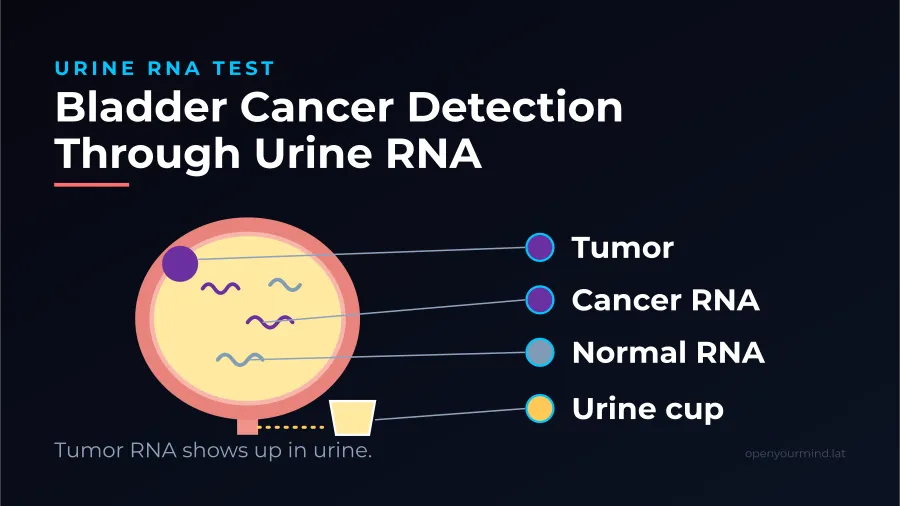
Bladder tumor cells shed RNA fragments into urine, which the test can detect.
🇺🇸 The Parts Nobody Has Measured Yet
I found no data on how the test performs on tumors under one centimeter. I found no limit for how long a urine sample can sit before the fragments degrade, two hours or two days. And nobody seems to have measured whether the signal falls after surgery, or after how many weeks. That is the imperfect part I promised.
🇪🇸 Lo que todavía nadie ha medido
No encontré datos sobre cómo responde la prueba ante tumores de menos de un centímetro. Tampoco hay un límite claro de cuánto tiempo puede reposar la orina antes de que los fragmentos se degraden, dos horas o dos días. Y nadie parece haber medido si la señal baja después de la cirugía, ni en cuántas semanas. Esa es la parte imperfecta que prometí.
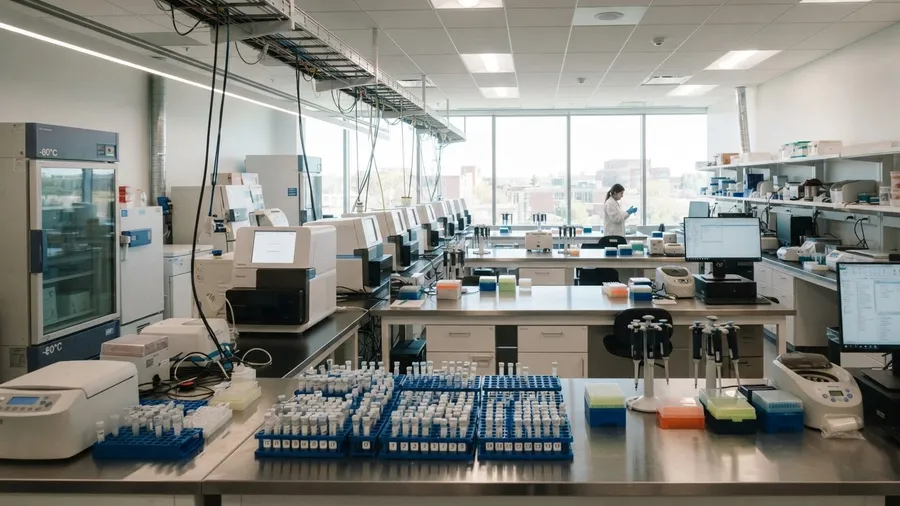
Sequencing instruments and urine RNA sample tubes fill a modern clinical genomics facility.
🔗 Related Articles | Artículos Relacionados
Nuestro canal transmite datos curiosos de ciencia, IA, espacio y tecnología las 24 horas. | Our channel streams science facts, AI, space and technology around the clock.
▶ Ver transmisión | Watch liveOPEN YOUR MIND
Source: Source
Join the conversation