How Robots Will Build and Work on the Moon and in Orbit
Machines now being tested can build habitats, refuel satellites and mine dust. This is how robots will help lun
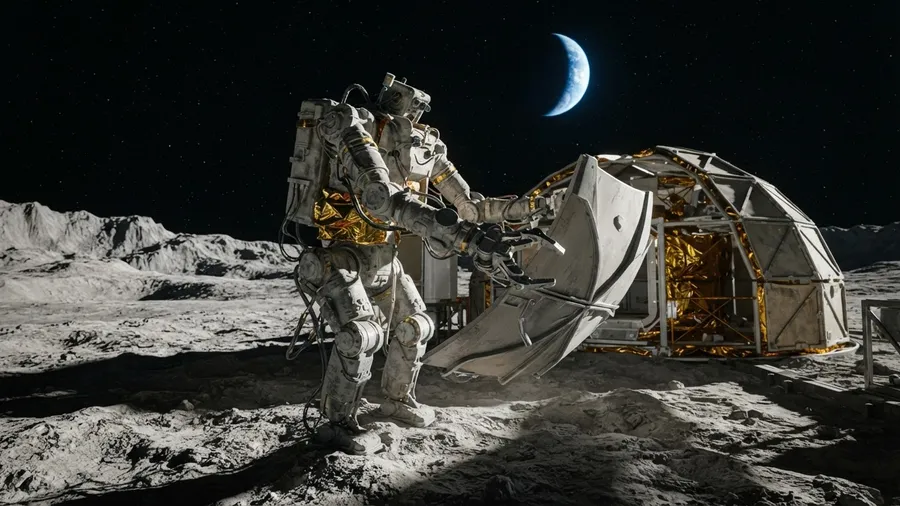
A construction robot
🇺🇸 A Panel About Robots as the Workforce
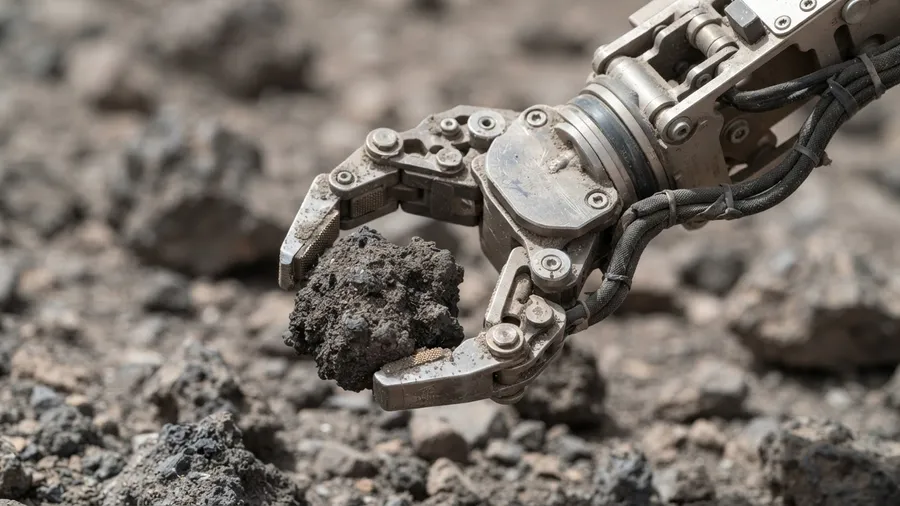
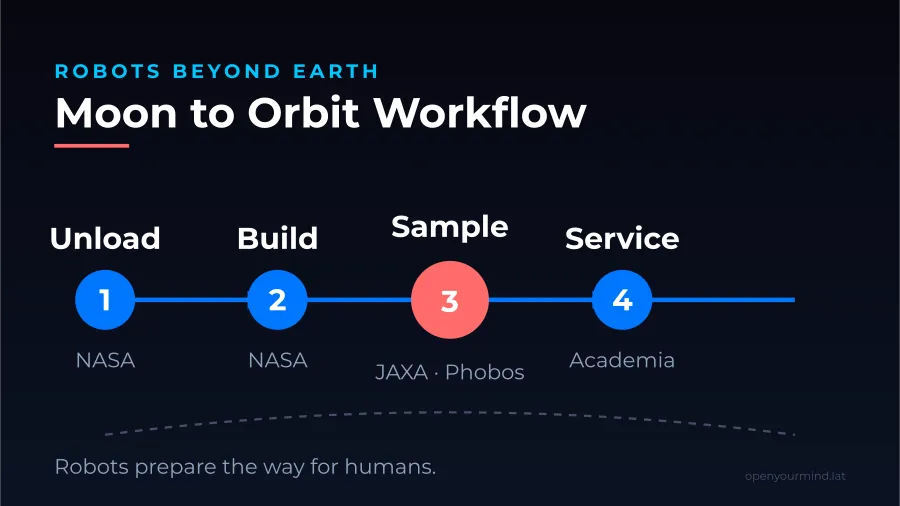
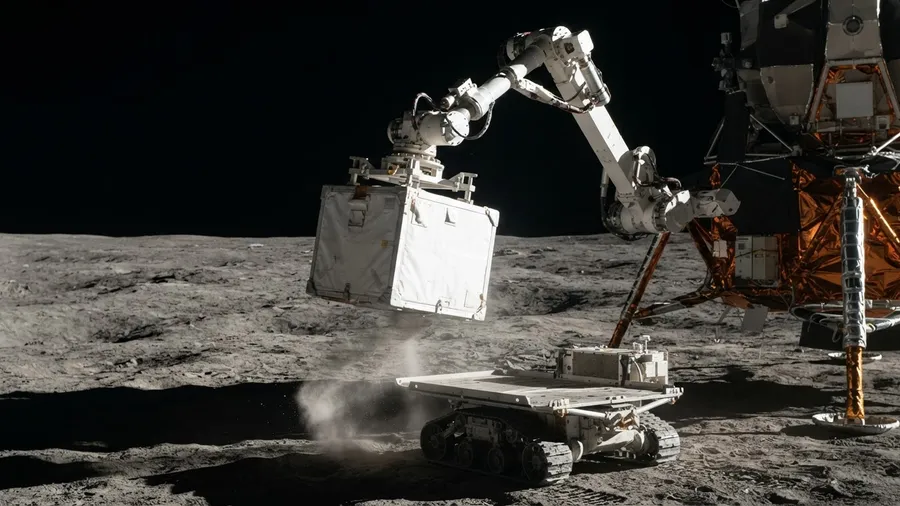
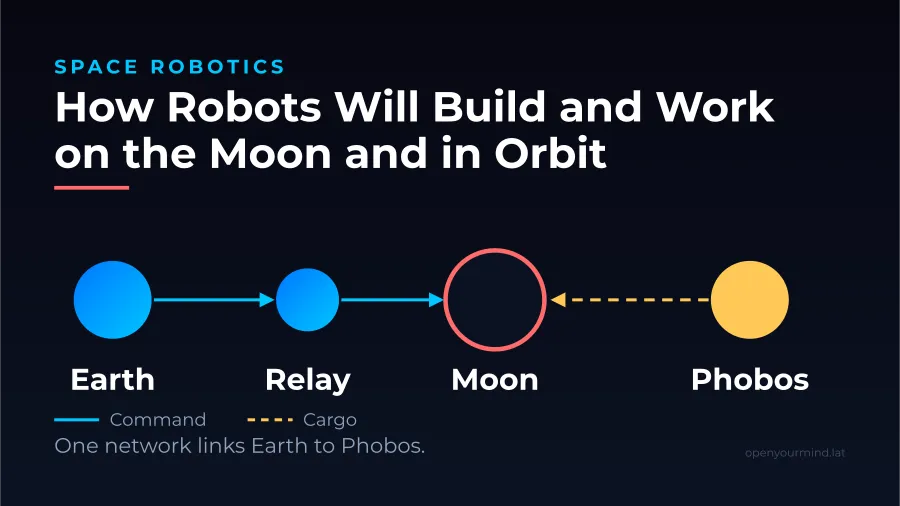
A plenary panel at IROS 2026 in Pittsburgh spent its time on one subject. Robots in space. Not as props for a mission, but as the workforce. Speakers came from NASA, JAXA and several universities, and their examples were oddly practical. Unloading cargo from landers. Building lunar infrastructure. Grabbing samples off Phobos, the larger moon of Mars. I was not in the room, so I am leaning on the reporting by Emmet Cole, and I cannot tell you how deep each talk went. What stuck with me is the mix. Heavy lifting on the Moon and delicate scooping on a tiny moon now share a field.
🇪🇸 Un panel donde los robots son la fuerza de trabajo
En Pittsburgh, durante el congreso IROS 2026, un panel plenario reunió a gente de NASA, JAXA y varias universidades para hablar de robots en el espacio. Yo no estuve ahí. Me guío por lo que reportó Emmet Cole, así que no sé qué tan a fondo fue cada charla. Los ejemplos eran concretos: descargar carga de módulos de aterrizaje, construir infraestructura en la Luna y recoger muestras de Phobos, la luna más grande de Marte. Lo que me llama la atención es la mezcla. Mover cosas pesadas y raspar polvo en una luna diminuta caben ahora en la misma conversación.
How Robots Will Build and Work on the Moon and in Orbit
🇺🇸 Space Robots Are Not New
Space robotics is not new, which is strange to forget. Canadarm flew on the shuttle. Canadarm2 has worked on the space station since 2001. Rovers have crawled across Mars for decades, and JAXA brought pebbles home from the asteroid Ryugu in 2020. But look at the pattern. Most of those machines were bolted to something, or they drove slowly while people on Earth planned each move. Apollo astronauts did the real work on the Moon with their own hands. Now the plan is for robots to do that work, and to do it before people arrive, or alongside them. That is a different job description.
🇪🇸 Los robots espaciales ya tienen historia
Los brazos robóticos ya tienen una larga trayectoria en el espacio. El Canadarm voló en el transbordador, y el Canadarm2 trabaja en la estación espacial desde 2001. Los rovers marcianos llevan décadas avanzando a paso de tortuga, y la sonda Hayabusa2 de JAXA trajo fragmentos del asteroide Ryugu en 2020. El patrón es claro. Casi todas esas máquinas estaban atornilladas a algo, o se movían despacio mientras un equipo en la Tierra planificaba cada paso. En la Luna, los astronautas del Apollo hicieron el trabajo con sus manos. Ahora la idea es que lo hagan robots.
Scientific diagram: How Robots Will Build and Work on the Moon and in Orbit
🇺🇸 Delay, Dust and Almost No Gravity
Start with the delay. Radio takes about 1.3 seconds to cross from Earth to the Moon, so a round trip costs around 2.6 seconds. You can drive a robot like that, but it feels like moving through syrup. Around Mars the lag stretches to minutes, and a robot there has to decide things alone. So the machines need cameras, force sensors in the joints, and software that can look at a pile of cargo and pick the next move. Phobos adds a twist. Its gravity is less than a thousandth of Earth's, so pushing too hard on the ground can launch the robot instead of the sample. I do not know how the panel divided work between autonomy and human control.
🇪🇸 Retraso, polvo y casi nada de gravedad
En Phobos la gravedad es menor que una milésima de la terrestre. Si el brazo empuja de más, el que sale despedido es el robot, no la muestra. Eso obliga a pensar cómo anclarse antes de recoger nada. En la Luna el obstáculo es otro: la señal tarda unos 1,3 segundos en llegar, y el control remoto se siente lento y torpe. Alrededor de Marte la demora se mide en minutos, así que el robot decide solo. Por eso hacen falta cámaras, sensores de fuerza en las articulaciones y programas capaces de mirar una pila de carga y elegir el siguiente movimiento. Cuánto control queda en manos humanas, no lo sé.
How Robots Will Build and Work on the Moon and in Orbit
🇺🇸 Who Gets the Dangerous Chores
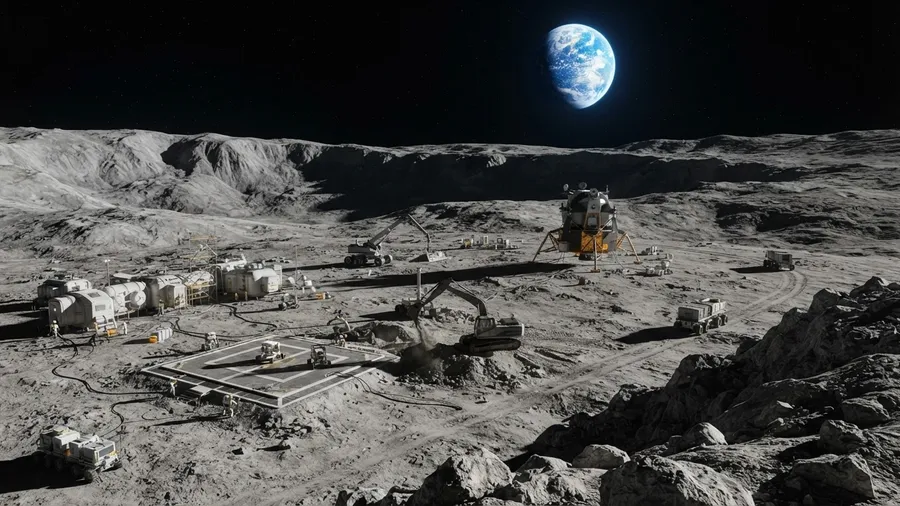
Let me be careful here. Nobody in Pittsburgh is promising you a lunar hotel. What changes first is who does the dangerous chores. A spacewalk takes hours of preparation and puts a person in a suit that can tear. A robot that unloads a lander skips all of that. Crews could land at a base where a pad and a cargo area already exist, which means fewer risky hours outside. On Earth the effects are quieter. The same skills, grasping with feel and working without constant supervision, matter for mining, nuclear cleanup and disaster sites. That is where most people might actually notice the work.
🇪🇸 Quién se queda con las tareas peligrosas
Para casi todos nosotros, nada cambia mañana. El primer beneficio es para los astronautas. Una caminata espacial exige horas de preparación y un traje que puede romperse, y un robot que descarga un módulo de aterrizaje se ahorra todo eso. Si una base ya tiene plataforma y zona de carga cuando llega la tripulación, hay menos riesgo y más tiempo para la ciencia. Las habilidades también se pueden reutilizar aquí abajo. Manipular con tacto y trabajar sin supervisión constante sirve en minería, limpieza nuclear y zonas de desastre. Un estudiante en Santo Domingo podría escribir parte de ese software, y eso es lo que más me gusta imaginar.
Scientific diagram: How Robots Will Build and Work on the Moon and in Orbit
🇺🇸 What Nobody Can Answer Yet
Nobody knows how robot joints hold up against abrasive lunar dust over many lunar days, each about 29.5 Earth days long. No robot has touched Phobos yet, so anchoring in gravity under a thousandth of Earth's is still untested there. And I could not find any number for how close to a crewed site a robot may work without a human watching. I would want test dates before believing a schedule.
🇪🇸 Lo que todavía no sabemos
Falta saber cuánto aguantan las articulaciones frente al polvo abrasivo de la Luna después de varios días lunares, de unos 29,5 días terrestres cada uno. Ningún robot ha tocado Phobos todavía, así que anclarse allí sigue sin probarse. Y no encontré ninguna cifra sobre qué tan cerca de una tripulación puede trabajar un robot sin que un humano lo vigile. Sin fechas de prueba, no creo en ningún calendario.
How Robots Will Build and Work on the Moon and in Orbit
🔗 Related Articles | Artículos Relacionados
Nuestro canal transmite datos curiosos de ciencia, IA, espacio y tecnología las 24 horas. | Our channel streams science facts, AI, space and technology around the clock.
▶ Ver transmisión | Watch liveOPEN YOUR MIND
Source: Source
Join the conversation