How a Lunar Landing Pad Could Tame Rocket Exhaust Dust
How a Lunar Landing Pad Could Tame Rocket Exhaust Dust
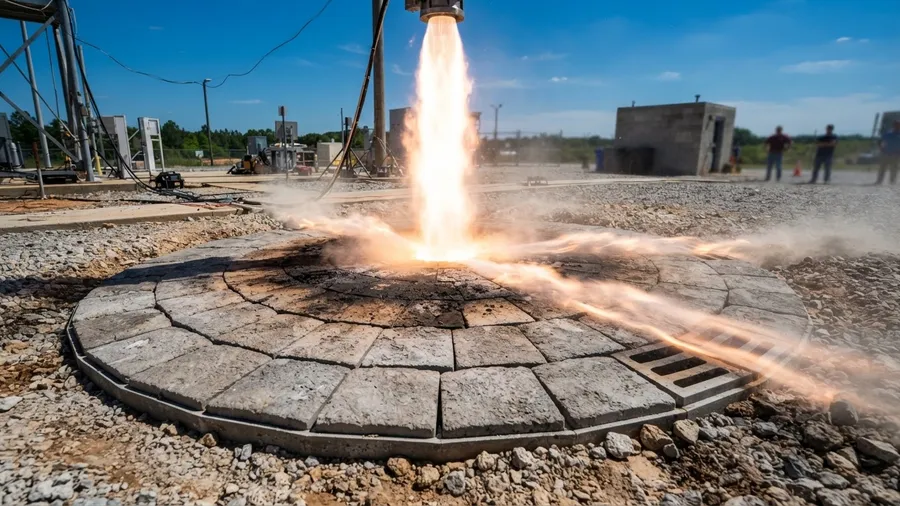
The prototype landing pad undergoes a rocket test at the University of Alabama in Huntsville.
🇺🇸 Three Firings on a Pad Made for the Moon
This summer, students and researchers at the University of Alabama in Huntsville lit a rocket motor three separate times over a prototype lunar landing pad. Three burns. That is the whole headline, and I like how plain it is. The pad did what it was built to do, which was catch the exhaust and push it through an integrated vent system instead of letting it blast across the surface. I kept rereading that part, because the point is not the fire. The point is where the fire goes afterward. Nobody is building a Moon base on this exact design yet, obviously, but a prototype that survives three burns is a real first step.
🇪🇸 Tres encendidos sobre una plataforma lunar
Este verano, en la Universidad de Alabama en Huntsville, un grupo de estudiantes e investigadores encendió un motor cohete tres veces sobre un prototipo de plataforma de aterrizaje lunar. La plataforma recogía los gases del escape y los mandaba por un sistema de ventilación integrado. Eso era justo lo que se buscaba. Lo curioso, si lo piensas, es que el éxito no se mide por el fuego sino por hacia dónde se va después. Un prototipo que aguanta tres pruebas no es una base lunar, claro. Pero es el tipo de pieza que alguien tiene que probar antes de construir algo más grande, y esa prueba ya existe.
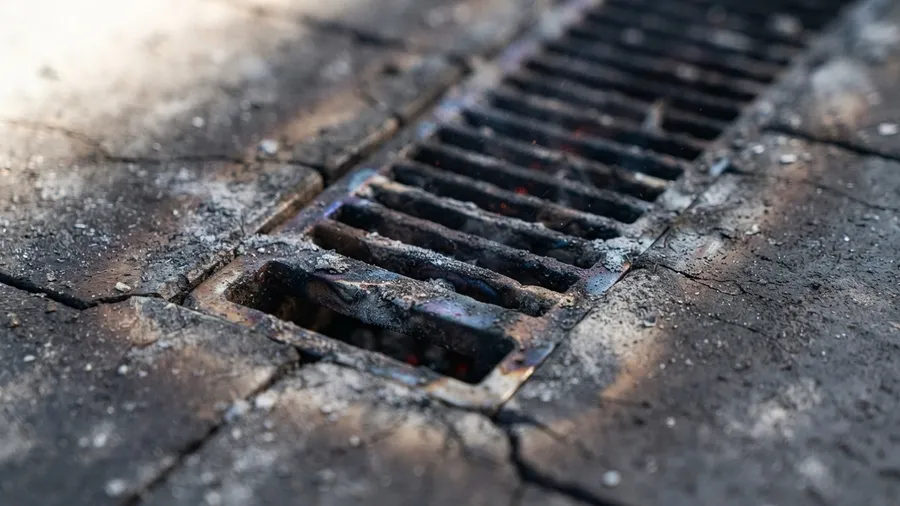
A vent opening on the pad shows heat discoloration and fine dust caught in the grating.
🇺🇸 The Dust Problem Apollo Left Behind
Apollo 12 gave us the best evidence. In 1969 the lunar module Intrepid landed roughly 160 meters from the old Surveyor 3 probe, and when astronauts walked over and brought parts home, the metal was sandblasted. Moon dust is sharp, not smooth like beach sand, because wind and water never wore it down. With no air to slow it, grains kicked up by an engine fly flat and fast, some of them faster than a bullet. That was with a small lander. Current plans involve far bigger engines, and, which is strange if you think about it, we have mostly designed landers before designing the ground they sit on.
🇪🇸 Lo que Apolo 12 ya había mostrado
Ya en 1969 había una pista. Los astronautas del Apolo 12 caminaron hasta la sonda Surveyor 3, a unos 160 metros de donde aterrizó su módulo, y se llevaron piezas a la Tierra. Esas piezas estaban lijadas por el polvo que levantó el motor. El regolito lunar es filoso porque nada lo ha desgastado con viento ni agua. Y sin atmósfera que frene los granos, salen disparados casi en línea recta. Aquello fue con un módulo pequeño. Los planes actuales hablan de motores mucho más grandes, y me da la impresión de que primero diseñamos las naves y después nos acordamos del suelo.
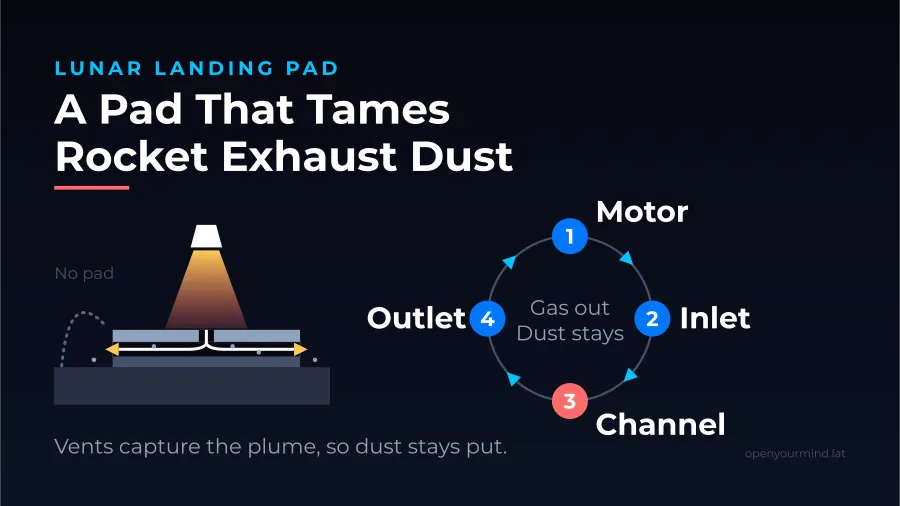
Side-on cutaway showing how rocket exhaust is captured and redirected through the vent system.
🇺🇸 Where the Exhaust Goes
I do not have the engineering drawings, so take this as my reading of the idea. A rocket engine pointed at the ground sends a hot jet that hits the surface and spreads sideways, scouring loose dust off as it goes. On bare lunar soil that dust becomes a spray. On the prototype, the surface is solid, and vents built into it give the gas somewhere to go. Instead of bouncing and spreading, a share of the flow gets channeled through openings and carried off in a chosen direction. Less gas skimming the ground means less dust lifted. How large that share is, I could not tell you.
🇪🇸 Por dónde se escapa el gas
Imagina el chorro de un motor apuntando al suelo. Al chocar, se abre en todas direcciones y arrastra lo que encuentre, que en la Luna es polvo suelto. Si el suelo es una superficie sólida con ventilas, parte del gas encuentra una salida en lugar de rebotar. Esa salida lo conduce hacia donde los ingenieros quieran, lejos del módulo y de cualquier equipo cercano. Menos gas rozando el terreno significa menos granos en el aire. Lo que no sé es qué porcentaje del flujo captura el prototipo de Alabama, y sospecho que ese número es justo lo que más les interesa medir.
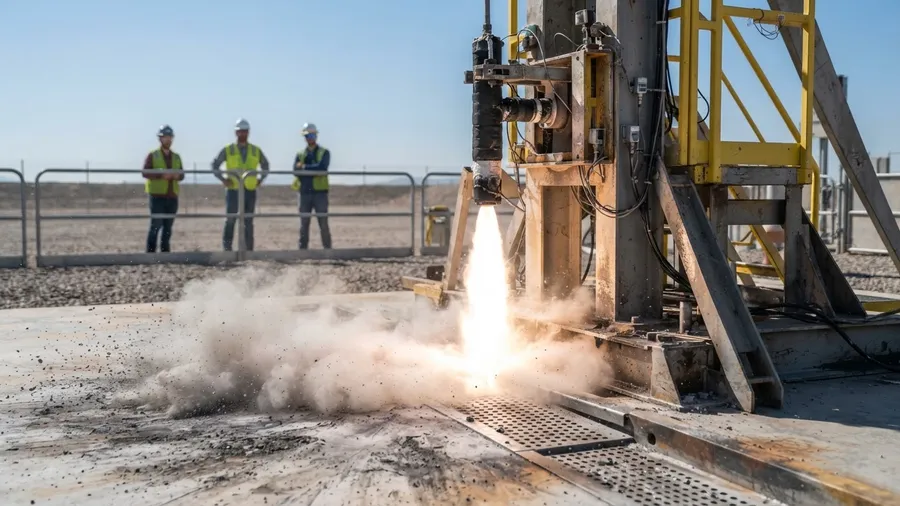
A small test motor fires directly onto the pad, sending a bright exhaust jet downward.
🇺🇸 What Changes for People on the Ground
Think of the crews first. Dust that coats a lander can foul hatches, seals and solar panels, and Apollo astronauts complained about it clinging to their suits and irritating their eyes and throats. A pad that holds the spray down means a cleaner arrival and a safer departure. Then think of everything parked nearby, like habitats and power systems and radio masts, that a landing could sandblast from hundreds of meters away. A pad lets a base sit closer to its own landing site. That saves walking time, and on the Moon, time costs oxygen. It could also let one pad serve many landings, instead of every touchdown being a gamble.
🇪🇸 Qué cambia para la gente
Para una tripulación, el polvo no es un detalle. Se mete en sellos, escotillas y paneles solares, y los astronautas del Apolo contaban cómo se les pegaba al traje y les irritaba los ojos. Una plataforma que contiene ese chorro significa llegadas más limpias y despegues menos arriesgados. También cambia la distancia a la que se puede instalar un hábitat o una antena. Si el aterrizaje ya no lanza arena a cientos de metros, la base puede estar más cerca de su pista, y caminar menos en la Luna ahorra oxígeno. Y una plataforma que resiste varias pruebas podría servir para muchos aterrizajes, no para uno solo.
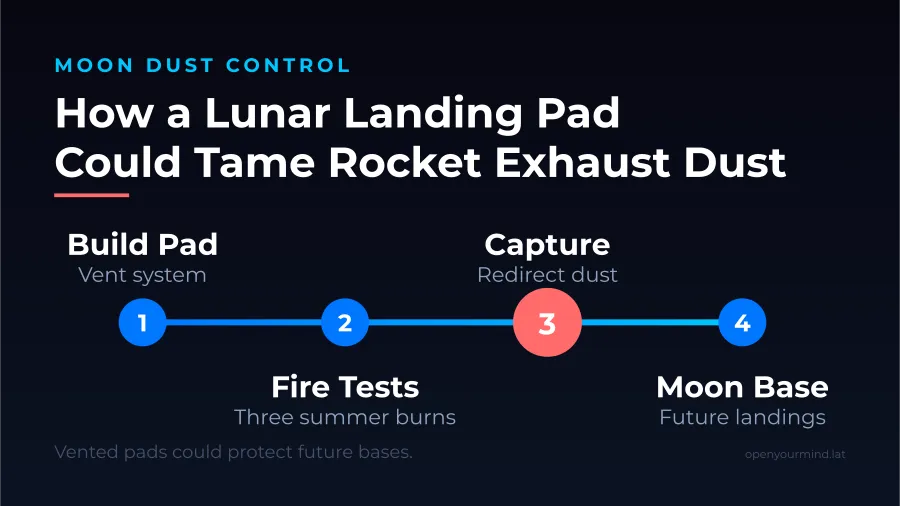
The Huntsville test campaign runs from building the vented pad through firing and analysis.
🇺🇸 What Nobody Has Measured Yet
Nobody knows how the vents behave under a full size lander engine, which burns far longer and harder than a test motor. Nobody knows how the pad handles lunar temperature swings of roughly 250 degrees Celsius between day and night. And tests on Earth run in air, so the flow in vacuum is still unmeasured.
🇪🇸 Lo que aún nadie ha medido
Faltan al menos tres respuestas. Nadie sabe cómo se comportan las ventilas con el motor de un módulo real, que quema más tiempo y con más fuerza que uno de prueba. Tampoco se sabe cómo aguanta la plataforma una variación de unos 250 grados Celsius entre el día y la noche lunares. Y las pruebas en la Tierra ocurren con aire, así que el flujo en vacío sigue sin medirse.

A drone view shows the pad, motor gantry, and vent ducts across the outdoor test range.
🔗 Related Articles | Artículos Relacionados
Nuestro canal transmite datos curiosos de ciencia, IA, espacio y tecnología las 24 horas. | Our channel streams science facts, AI, space and technology around the clock.
▶ Ver transmisión | Watch liveOPEN YOUR MIND
Source: Source
Join the conversation