Nanolasers A Leap Towards Energy-Efficient Computing
Nanolasers A Leap Towards Energy-Efficient Computing
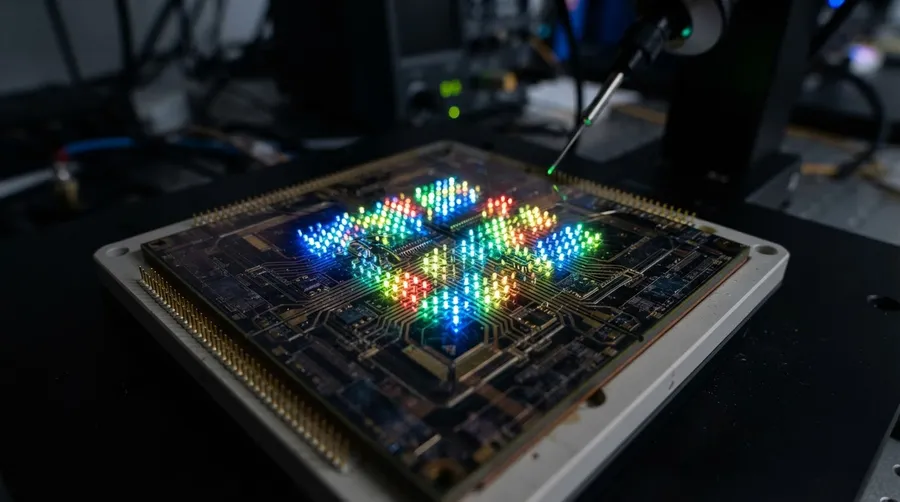
A microchip densely populated with vibrant glowing nanolasers.
🇺🇸 Tiny Lasers, Huge Potential
Scientists have created a nanolaser so small that it fits thousands of times on a single microchip. This breakthrough is marked by the use of light instead of electricity to transmit information. Using light could cut energy consumption in half. Imagine thousands of these lasers working together, transforming how data is processed. It's an ambitious leap toward more efficient technology. Even though the lasers are ultra-small, their impact could be massive. The vision is to make computers faster and less power-hungry. Data centers, smartphones, and medical sensors all stand to benefit from this development. This has not been just a theory or a blueprint; it's an exciting reality in the lab.
As an Amazon Associate I earn from qualifying purchases.

🇪🇸 Láseres Minúsculos, Potencial Gigante
Científicos han logrado crear un nanoláser tan pequeño que miles de ellos caben en un solo microchip. Este avance se caracteriza por el uso de la luz en lugar de la electricidad para transmitir información. Usar luz podría reducir el consumo energético a la mitad. Imagina miles de estos láseres trabajando juntos, cambiando cómo se procesa la información. Es un salto ambicioso hacia una tecnología más eficiente. Aunque estos láseres son minúsculos, su impacto podría ser gigantesco. La visión es hacer las computadoras más rápidas y menos consumidoras de energía. Centros de datos, smartphones y sensores médicos podrían beneficiarse de este desarrollo. No es solo teoría ni planos; es una realidad en el laboratorio.
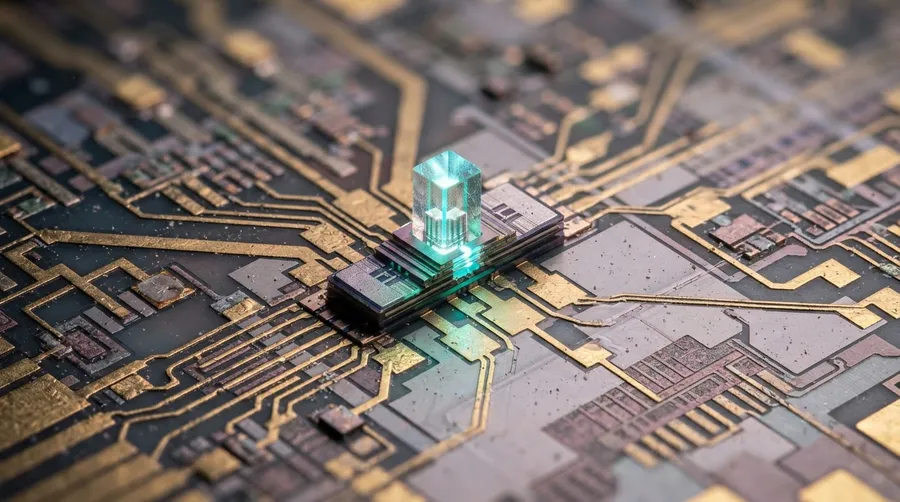
Intricate details of a single nanolaser on a microchip.
🇺🇸 The Known Landscape
Before this tiny laser came along, the tech world already knew that using photons instead of electrons could make things faster and more efficient. Photonics has been around for some time but struggled with integration into everyday tech due to size constraints and complexities. Light is faster than electricity, no doubt about that. But small-scale adoption was difficult until now because it required large setups and heavy power consumption just to make it work at a practical level. Moving past these hurdles was always seen as crucial for truly energy-efficient computing.

🇪🇸 El Paisaje Conocido
Antes de que apareciera este minúsculo láser, el mundo tecnológico ya sabía que el uso de fotones en lugar de electrones podía hacer las cosas más rápidas y eficientes. La fotónica lleva tiempo existiendo pero ha tenido problemas para integrarse en la tecnología cotidiana debido a limitaciones de tamaño y complejidades técnicas. La luz es más rápida que la electricidad, eso sin duda. Pero la adopción a pequeña escala era complicada hasta ahora porque requería grandes configuraciones y un consumo elevado de energía para funcionar a nivel práctico. Superar estos obstáculos siempre fue visto como crucial para una computación verdaderamente eficiente en términos energéticos.
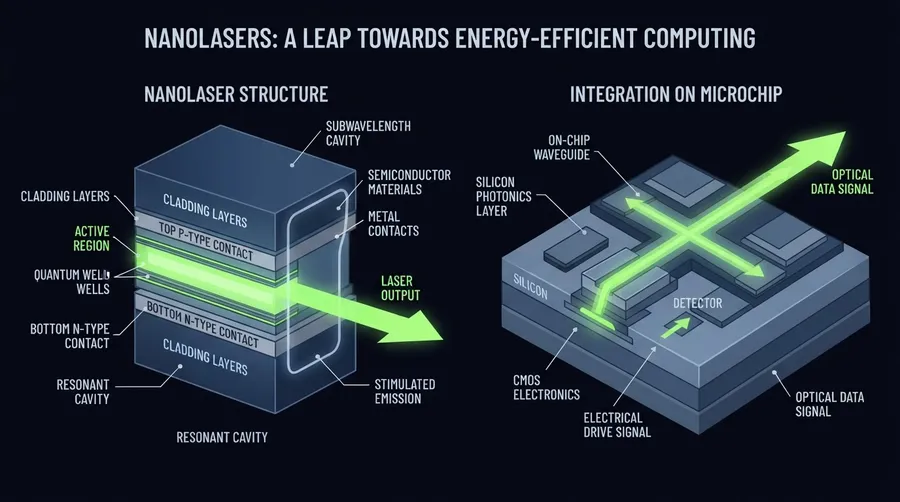
Detailed diagram of nanolaser structure on a microchip.
🇺🇸 The Mechanics of Nanolasers
Nanolasers work by confining light in dimensions smaller than the wavelength of light itself, which is strange if you think about it. Using special materials called photonic crystals, they trap light in a tiny space and let it bounce around to amplify itself before being released as a laser beam. These photonic crystals are structured at a nanoscale level, allowing them to control light in such confined spaces efficiently. I kept rereading that part about how the crystals work; it's complex stuff but fascinating nonetheless. The ability to control photons so precisely at such a small scale is what makes these lasers revolutionary in potential impact.

🇪🇸 La Mecánica de los Nanoláseres
Los nanoláseres funcionan confinando la luz en dimensiones más pequeñas que la longitud de onda de la propia luz, lo cual es extraño si lo piensas bien. Utilizando materiales especiales llamados cristales fotónicos, atrapan la luz en un espacio diminuto y la hacen rebotar para amplificarse antes de ser liberada como un rayo láser. Estos cristales fotónicos están estructurados a nivel nanométrico, permitiéndoles controlar la luz en espacios tan confinados de manera eficiente. Repasé varias veces esa parte sobre cómo funcionan los cristales; es material complejo pero fascinante sin duda alguna. La capacidad de controlar fotones tan precisamente a tan pequeña escala es lo que hace que estos láseres tengan un impacto potencial revolucionario.
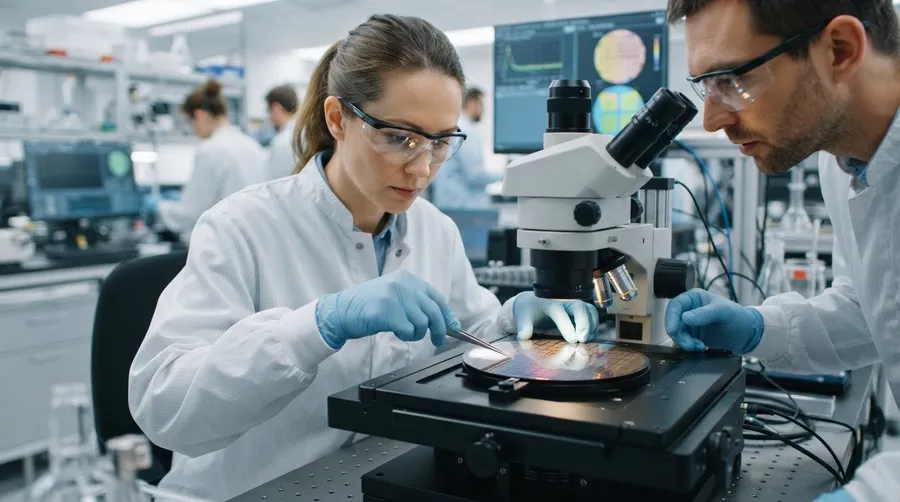
Scientists position a silicon wafer for testing in the lab.
🇺🇸 Changes On The Horizon
If these nanolasers become mainstream, computers will consume less energy and data will move much faster within them. This means longer battery life for devices like smartphones and less cooling needed for data centers due to reduced heat generation from electrical resistance. Medical devices could also see improvements in size and functioning efficiency, allowing for more advanced sensors that fit into smaller packages or even inside the body without being invasive. People might not notice these changes immediately but over time, they could reshape how we interact with technology in everyday life.

🇪🇸 Cambios En El Horizonte
Si estos nanoláseres se vuelven comunes, las computadoras consumirán menos energía y los datos se moverán mucho más rápido dentro de ellas. Esto significa una mayor duración de batería para dispositivos como los smartphones y menos necesidad de enfriamiento en centros de datos debido a una menor generación de calor por resistencia eléctrica. Los dispositivos médicos también podrían ver mejoras en tamaño y eficiencia funcional, permitiendo sensores más avanzados que quepan en paquetes más pequeños o incluso dentro del cuerpo sin ser invasivos. La gente quizás no note estos cambios inmediatamente pero con el tiempo podrían remodelar cómo interactuamos con la tecnología en la vida cotidiana.
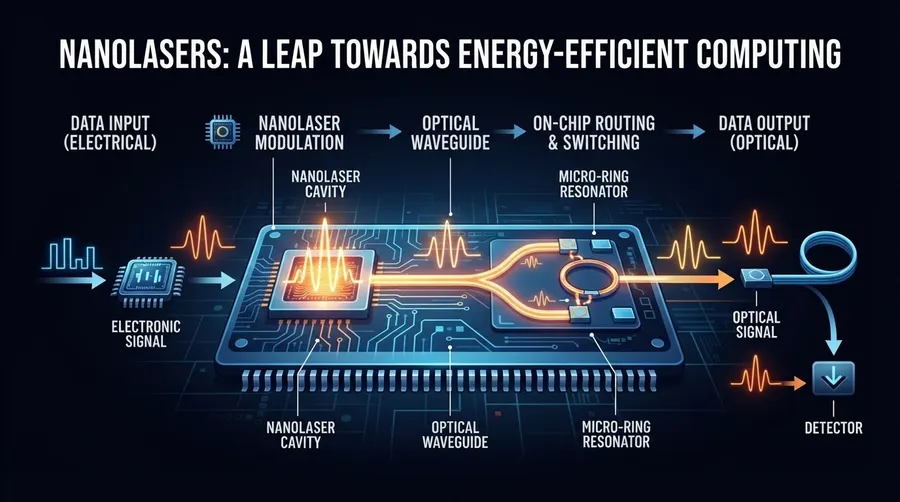
Flowchart showing data transmission via nanolasers.
🇺🇸 Unanswered Questions Loom
Nobody knows how long it will take to integrate these nanolasers into everyday microchips effectively without causing overheating issues. What happens at temperatures above 80 degrees Celsius remains unclear too as experiments haven't reached those extremes yet. There's also uncertainty about lifespan under constant use given their minuscule structure.

🇪🇸 Preguntas Sin Responder Persiste
Nadie sabe cuánto tiempo tomará integrar estos nanoláseres eficazmente en microchips cotidianos sin causar problemas de sobrecalentamiento. Qué pasa a temperaturas superiores a 80 grados Celsius sigue siendo incierto ya que los experimentos no han alcanzado esos extremos aún. También hay incertidumbre sobre su vida útil bajo uso constante dada su estructura diminuta.

Data center servers potentially using nanolaser technology.
🔗 Related Articles | Artículos Relacionados
Nuestro canal transmite datos curiosos de ciencia, IA, espacio y tecnología las 24 horas. | Our channel streams science facts, AI, space and technology around the clock.
▶ Ver transmisión | Watch liveOPEN YOUR MIND
Source: Source
Join the conversation