Why Your Face Appears Different in Photographs
Why Your Face Appears Different in Photographs
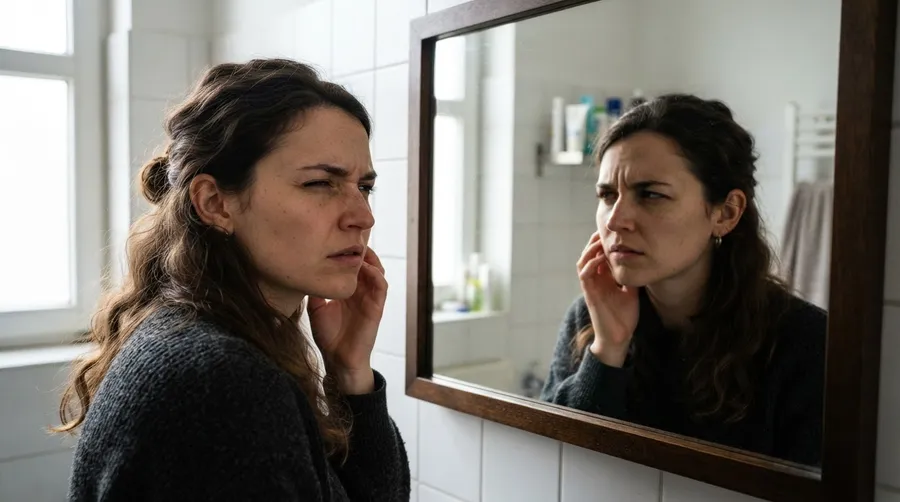
A person puzzled by their reflection, highlighting perception differences.
🇺🇸 The Face in the Photo
You know that weird feeling when you look at a photo of yourself, and something just feels off? Like, is that really my face? Turns out, this isn’t just in your head. It’s physics playing tricks on you. Cameras capture your face in a way that isn’t always how you see it in a mirror. Different angles, lighting, and lenses can distort your features. Close-ups can exaggerate certain parts. Ever noticed how selfies make your nose look bigger? That’s because of the lens distortion. It’s all about how the camera interprets what it sees. The human eye works differently than a camera lens, which is strange if you think about it.
As an Amazon Associate I earn from qualifying purchases.

🇪🇸 La Cara en la Foto
¿Has sentido alguna vez que tu cara se ve extraña en las fotos? No estás loco. Es la física haciendo de las suyas. Las cámaras nos capturan de maneras que no siempre reflejan lo que vemos en el espejo. Las luces y ángulos pueden distorsionar nuestros rasgos. A veces los primeros planos agrandan algunas partes de tu cara. ¿Te has dado cuenta de que las selfies suelen hacer que tu nariz se vea más grande? Eso es por la distorsión del lente. La cámara ve de una forma diferente al ojo humano.
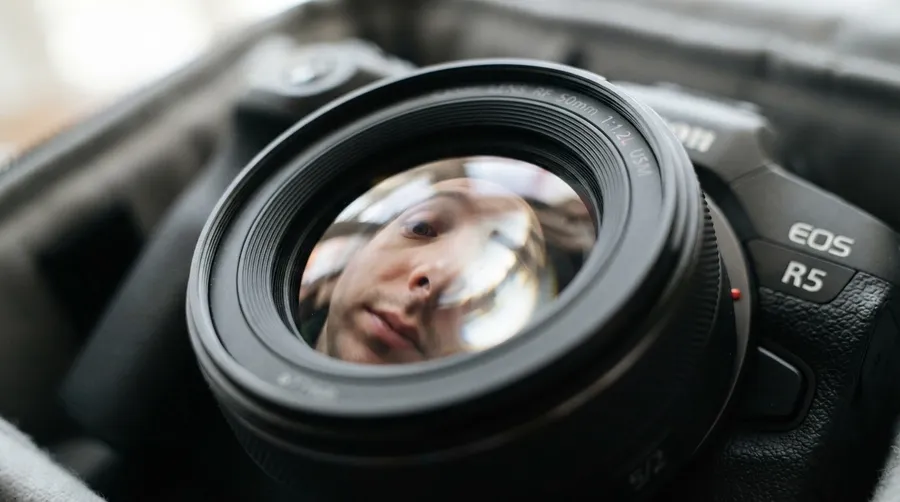
Camera lens close-up showing how lens distortion affects facial appearance.
🇺🇸 Mirrors vs Cameras
Before everyone had cameras in their pockets, mirrors were pretty much the only way to see your own face. So we got used to our mirror image as the real us. But mirrors flip our image from left to right, so what we see in photos often looks different than what we're used to. Photos show our true orientation because they don’t reverse the image. That can make things feel strange since we’re not used to seeing ourselves that way.

🇪🇸 Espejos vs Cámaras
Antes de que todos tuviéramos cámaras en nuestros teléfonos, los espejos eran casi la única forma de ver nuestra cara. Nos acostumbramos a vernos como nos refleja un espejo, como si fuera la verdad. Los espejos nos muestran al revés, así que cuando vemos una foto nos parece diferente a lo normal. Las fotos no invierten la imagen y eso nos desconcierta un poco porque no estamos acostumbrados a vernos así.
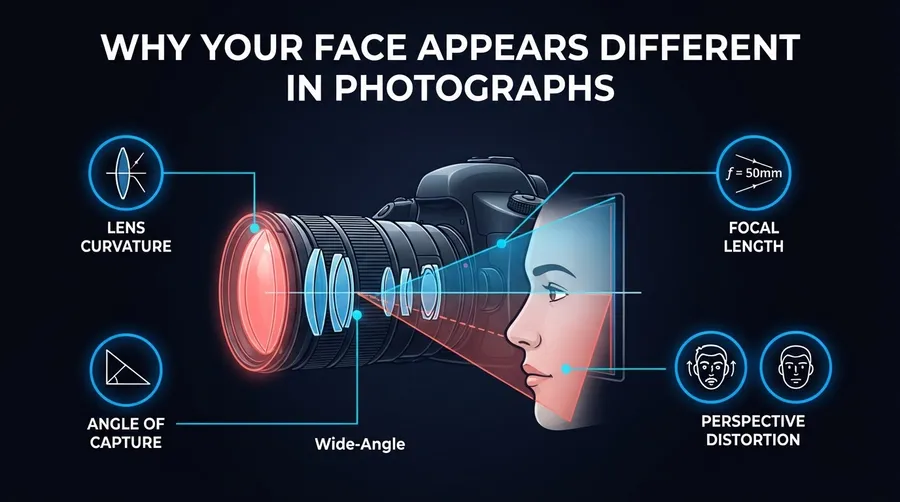
Diagram of factors causing facial distortion in photographs.
🇺🇸 The Mechanics of Distortion
So how does this distortion actually happen? Cameras use lenses that bend light to focus an image onto a sensor. Depending on the lens type and focal length, this bending can distort images, especially at the edges. Wide-angle lenses make nearby objects look larger than they are compared to distant ones. This is why phones with their wide lenses can make your face look somewhat off compared to how you usually see it.

🇪🇸 La Mecánica de la Distorsión
¿Cómo ocurre esta distorsión realmente? Las cámaras usan lentes que desvían la luz para crear una imagen en un sensor. Dependiendo del tipo de lente y su longitud focal, esto puede distorsionar las imágenes, especialmente en los bordes. Los lentes gran angular hacen que los objetos cercanos se vean más grandes comparados con los distantes. Por eso las cámaras de los teléfonos pueden hacer que tu cara parezca un poco diferente a lo que normalmente ves.
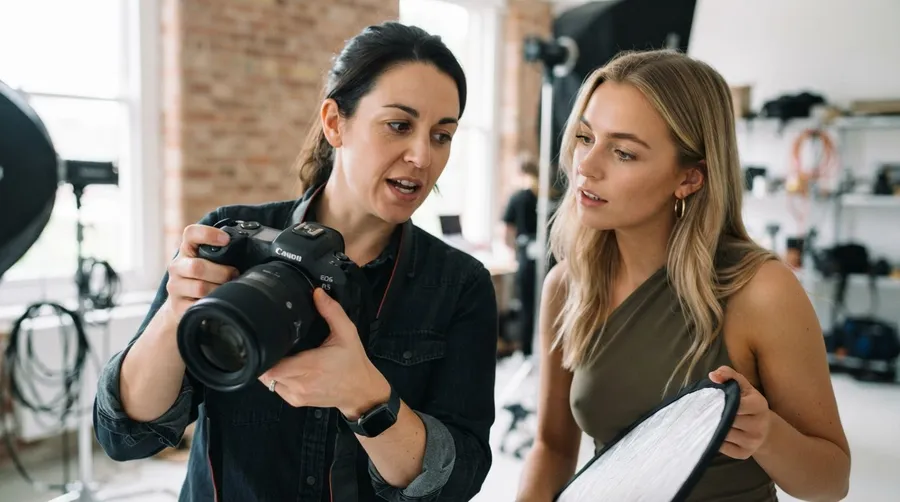
Photographer explains lens distortion effects to a model during a shoot.
🇺🇸 Everyday Impact
This distortion affects more than just selfies or holiday snaps. It influences everything from social media presence to how you perceive yourself day-to-day. People often prefer pictures taken from further away or with longer lenses for portraits because they offer a more flattering view and less distortion. Understanding this can help you choose the right lens for different situations or maybe not worry as much about that awkward selfie.

🇺🇸 Impacto Diario
Esta distorsión afecta más que solo nuestras selfies o fotos de vacaciones. Influye en nuestra presencia en redes sociales e incluso en cómo nos vemos día a día. La gente suele preferir fotos tomadas desde lejos o con lentes más largos porque ofrecen una vista más favorecedora y menos distorsionada. Si comprendes esto puedes elegir mejor el lente para cada situación y dejar de preocuparte tanto por esa selfie rara.
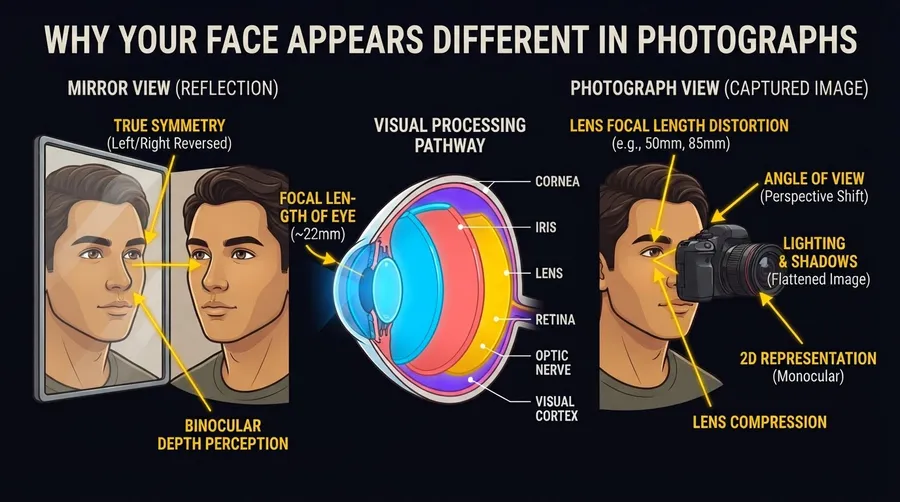
Illustration comparing mirror and photo facial appearances.
🇺🇸 What We Still Don't Know
We still don't fully understand how different lighting conditions affect facial perception in photos versus mirrors. Another question is how human psychology adjusts when seeing reversed versus true images over long periods of time. The potential role of digital editing tools in altering our self-image perception is also unclear.
🇪🇸 Lo Que Aún No Sabemos
Todavía no sabemos exactamente cómo afectan las diferentes condiciones de luz a la percepción facial en fotos comparado con espejos. Otra pregunta es cómo se adapta nuestra psicología al ver imágenes invertidas frente a las verdaderas durante mucho tiempo. El posible papel de las herramientas digitales para alterar nuestra percepción también es incierto.
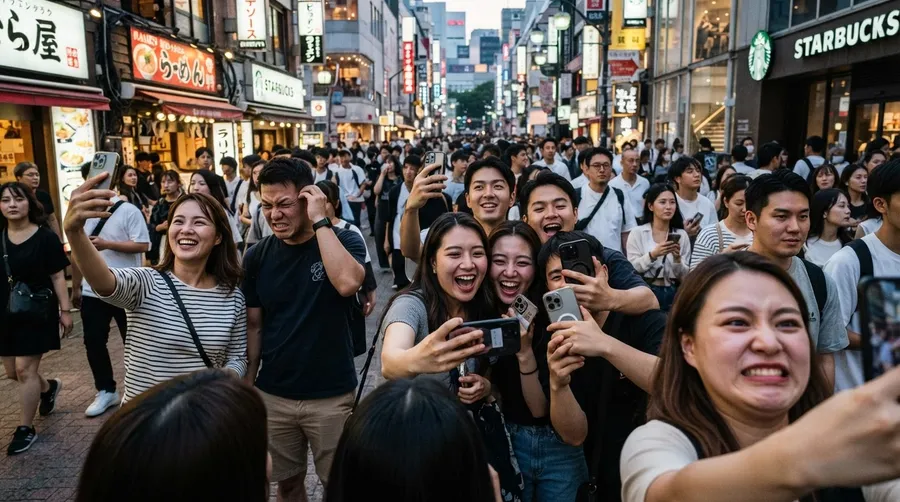
Street scene with selfies showing how angles and lenses alter appearances.
🔗 Related Articles | Artículos Relacionados
Nuestro canal transmite datos curiosos de ciencia, IA, espacio y tecnología las 24 horas. | Our channel streams science facts, AI, space and technology around the clock.
▶ Ver transmisión | Watch liveOPEN YOUR MIND
Source: Source
Join the conversation