The Mystery Behind Ancient Honeycomb Formations
The Mystery Behind Ancient Honeycomb Formations
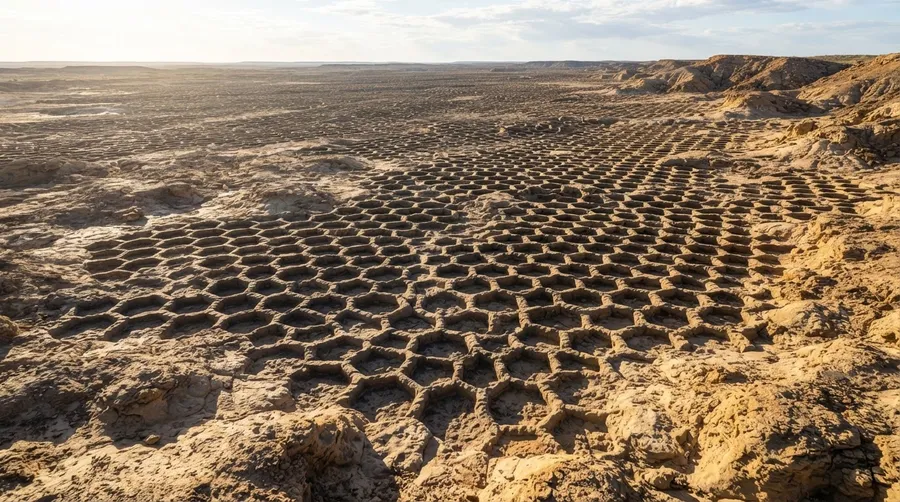
Aerial view reveals the vastness of ancient Paleodictyon formations.
🇺🇸 A Surprising Find
In recent studies, researchers have stumbled upon something peculiar about the honeycomb formations known as Paleodictyon. These structures, discovered on ocean floors, have long puzzled scientists. They appear like honeycombs or grids etched into the sediment. It's almost like a mystery carved into the earth's crust. Until now, many believed these were created by some soft-bodied marine creature. However, recent evidence suggests otherwise. Instead of being the handiwork of soft-bodied creatures, the formations might be geological in origin. This revelation changes how we view these ancient patterns. Isn’t it odd to think something that looks so biological might just be a natural earth process?
As an Amazon Associate I earn from qualifying purchases.

🇪🇸 Un Hallazgo Sorprendente
Los estudios recientes han revelado algo curioso sobre las formaciones de panal conocidas como Paleodictyon. Descubiertas en el fondo oceánico, han desconcertado a los científicos por años. Se asemejan a panales o retículas grabadas en el sedimento del océano. Algo así como un rompecabezas tallado en la corteza terrestre. Hasta ahora se creía que eran creadas por criaturas marinas de cuerpo blando. Pero la nueva evidencia sugiere lo contrario. En vez de ser obra de criaturas marinas, podrían tener un origen geológico. Este descubrimiento reconfigura nuestra visión sobre estos patrones antiguos.
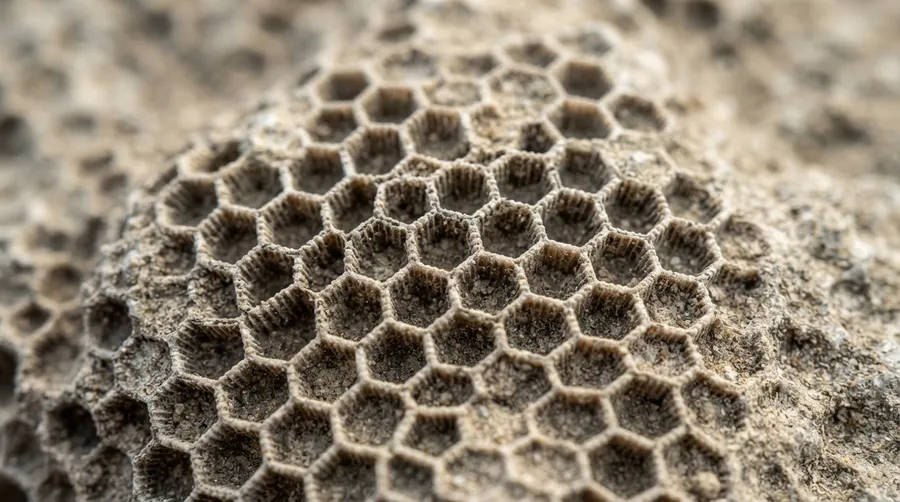
Detailed view of the Paleodictyon's intricate hexagonal pattern.
🇺🇸 Paleodictyon: A Brief History
Long before this recent revelation, Paleodictyon formations were already famous among geologists and biologists alike. These honeycomb patterns were first noted in fossil records and even sketched by Leonardo da Vinci centuries ago. They captured the imagination due to their precise structure. Most people thought they were traces left by ancient worms or similar organisms moving through sediment layers. This idea stuck around because it made sense back then. But now? We need to rethink that whole narrative given the new data.

🇪🇸 Paleodictyon: Un Poco de Historia
Antes de esta revelación actual, las formaciones de Paleodictyon ya eran conocidas entre geólogos y biólogos. Estos patrones de panal aparecieron en registros fósiles y hasta fueron dibujados por Leonardo da Vinci hace siglos. Cautivaron la imaginación por su estructura precisa y simétrica. La mayoría pensaba que eran huellas dejadas por gusanos antiguos o criaturas similares que se movían a través de capas de sedimento. Esta idea se mantuvo porque tenía sentido en ese entonces. Pero con los nuevos datos, este relato necesita ser replanteado.

Diagram shows the structure and possible origins of Paleodictyons.
🇺🇸 What Could Be Happening?
So how do these formations actually get made? The current thinking leans towards geological processes over biological ones. Some scientists propose that these patterns are formed by fluids moving through sediments under specific conditions. Maybe pressure changes or mineral deposits play a role here too? The exact mechanism remains murky, which is strange if you think about it given how long we've known about them. With our advanced technology today, you'd think we'd have figured out more by now.

🇪🇸 ¿Qué Podría Estar Sucediendo?
¿Cómo se forman realmente estas estructuras? La teoría actual se inclina hacia procesos geológicos en vez de biológicos. Algunos científicos sugieren que estos patrones son creados por fluidos moviéndose a través del sedimento bajo ciertas condiciones específicas de presión o depósitos minerales quizás también influyen aquí? El mecanismo exacto sigue siendo un misterio y es curioso pensar en esto considerando cuánto tiempo hemos conocido estas estructuras. Con la tecnología avanzada que tenemos hoy día uno pensaría que ya habríamos descubierto más al respecto.
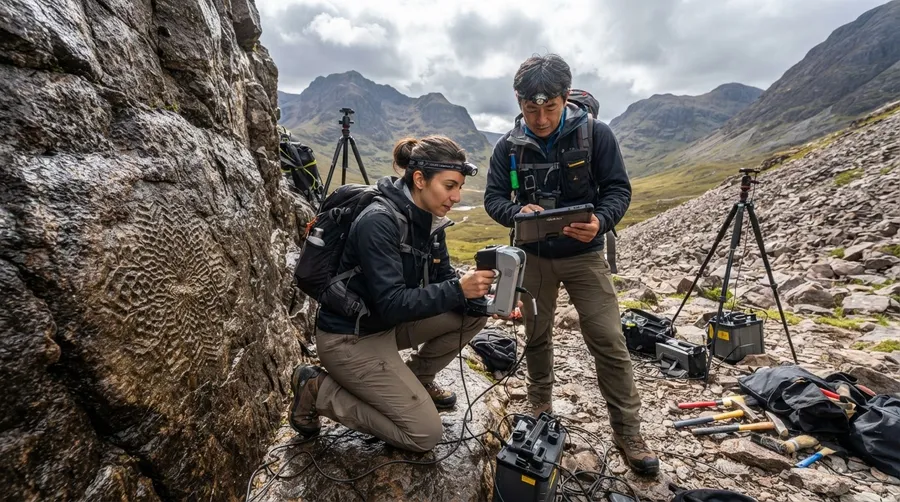
Scientists scan Paleodictyon formations to uncover their secrets.
🇺🇸 Impact on Our Understanding
What does this mean for us now? If these structures are indeed geological, then it changes how we interpret ancient seabeds and fossil records. It could affect how we search for life signs on other planets as well since similar patterns might be misinterpreted as biological when they're not. Geologists may need to revisit previous analyses of similar structures with fresh eyes and new hypotheses in mind.

🇪🇸 Impacto en Nuestro Entendimiento
¿Qué significa esto para nosotros ahora? Si estas estructuras son realmente geológicas, cambia nuestra interpretación de los lechos marinos antiguos y los registros fósiles existentes que hemos estudiado durante tanto tiempo afectando también nuestra búsqueda de signos de vida en otros planetas ya que patrones similares pueden interpretarse erróneamente como biológicos cuando en realidad no lo son los geólogos podrían tener que revisar análisis previos de estructuras similares teniendo nuevas hipótesis en mente.
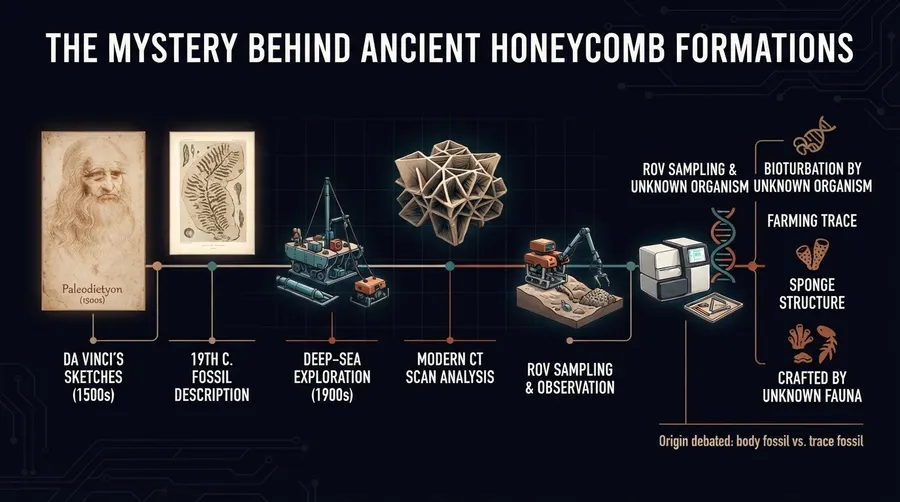
Timeline traces the study of Paleodictyons from past to present.
🇺🇸 What Remains Unknown
How exactly do fluid dynamics create such intricate patterns? What specific conditions trigger their formation? Can we replicate this process in a controlled environment for further study?

🇪🇸 Lo Que Aún Desconocemos
¿Cómo es que la dinámica de fluidos crea patrones tan intrincados? ¿Qué condiciones específicas desencadenan su formación? ¿Podemos replicar este proceso en un entorno controlado para estudiarlo más a fondo?
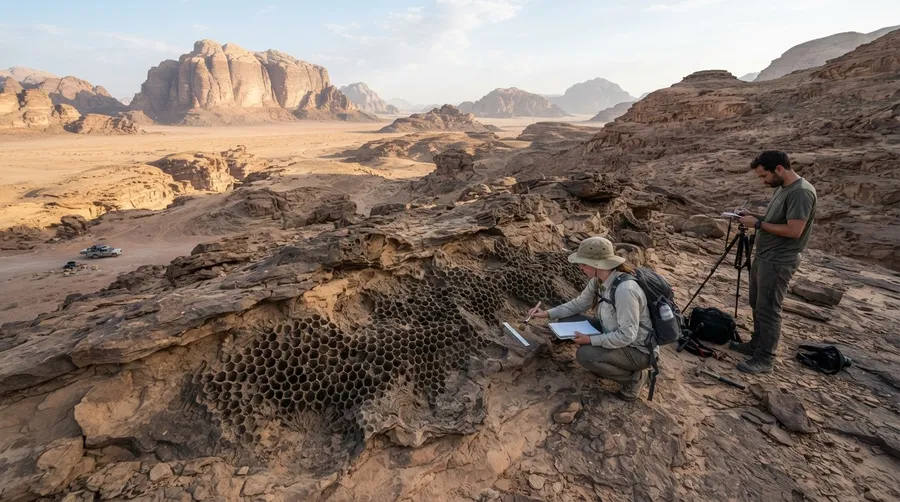
Paleodictyon formations dwarf researchers in their natural habitat.
🔗 Related Articles | Artículos Relacionados
Nuestro canal transmite datos curiosos de ciencia, IA, espacio y tecnología las 24 horas. | Our channel streams science facts, AI, space and technology around the clock.
▶ Ver transmisión | Watch liveOPEN YOUR MIND
Source: Source
Join the conversation