Space Station Experiment Confirms Gravity Theory
Space Station Experiment Confirms Gravity Theory
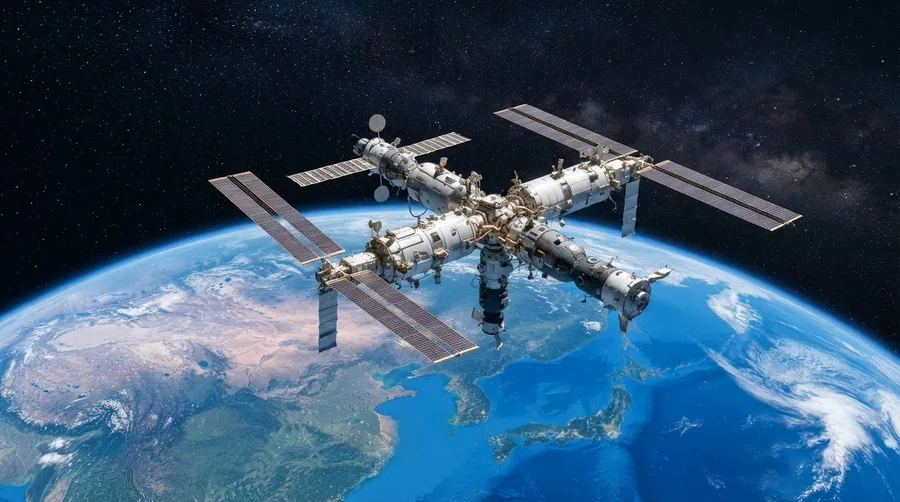
The Tiangong space station orbits Earth, showcasing its intricate design.
🇺🇸 Rubidium Atoms and Their Fall
On the Tiangong space station, a remarkable experiment took place. Chinese scientists conducted research with rubidium atoms to see how they fall in microgravity. The results showed that these atoms fell with the same acceleration. This supports a crucial part of Einstein's general theory of relativity. No differences in acceleration were detected, which is strange if you think about it. Considering the precision required, it's fascinating that the findings were so clear-cut. The apparatus on board was designed to make very precise measurements. This wasn't about proving Einstein right. It was about testing limits and seeing if anything wobbled.
Como Afiliado de Amazon, obtengo ingresos por las compras adscritas que cumplen los requisitos aplicables.

🇪🇸 Átomos de Rubidio y su Caída
En la estación espacial Tiangong, ocurrió un experimento fascinante. Científicos chinos estudiaron cómo caen los átomos de rubidio en microgravedad. Resulta que estos átomos caen con la misma aceleración. Confirma una parte clave de la teoría general de la relatividad de Einstein. No se detectaron diferencias en la aceleración. Si lo piensas, es curioso dada la precisión necesaria para las mediciones. El equipo a bordo fue diseñado para capturar datos con exactitud milimétrica. Más que probar que Einstein tenía razón, buscaban ver si algo no encajaba del todo.

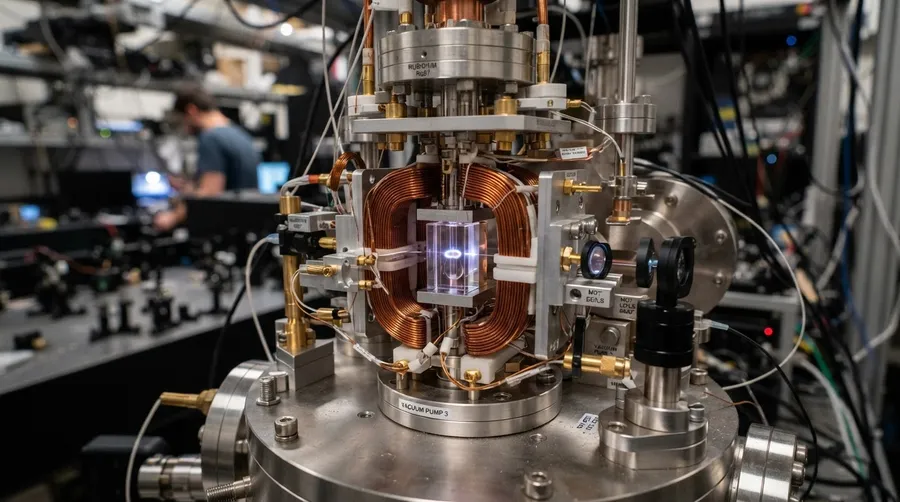
A close-up view of the rubidium atom trap used in the gravity experiment.
🇺🇸 Background on Gravity and Relativity
So why does this matter? Long before space stations, Einstein proposed that gravity affects time and space. His theory suggested that all objects fall at the same rate because they follow the curvature of spacetime. Physicists have tested this on Earth using various objects like feathers and balls in vacuum chambers. But out in space? That's a whole different game since microgravity reduces interference from Earth’s gravitational pull. Scientists are obsessed with finding any discrepancies because it could hint at new physics. That would change our understanding of gravity entirely.

🇪🇸 Antecedentes sobre Gravedad y Relatividad
¿Por qué importa esto? Mucho antes de que existieran estaciones espaciales, Einstein propuso que la gravedad afecta el tiempo y el espacio. Su teoría sugiere que todos los objetos caen al mismo ritmo porque siguen la curvatura del espaciotiempo. Esto se ha probado en la Tierra usando objetos en cámaras de vacío. Pero hacerlo en el espacio es diferente porque la microgravedad reduce las interferencias del tirón gravitacional terrestre. Los físicos están muy interesados en encontrar discrepancias que puedan sugerir nuevas leyes físicas y alterarían por completo nuestro entendimiento de la gravedad.
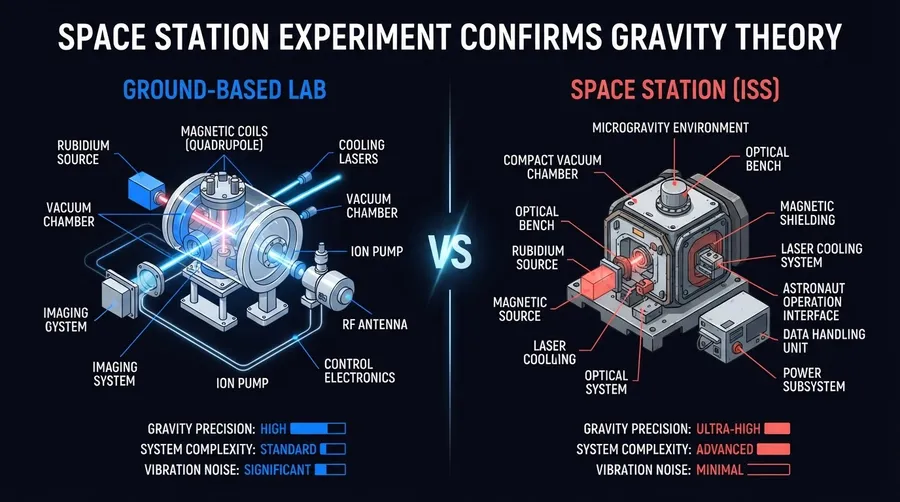
Diagram of the rubidium atom trap used in the gravity experiment.
🇺🇸 Mechanics Behind the Experiment
The experiment relied on something called interferometry. It involves splitting an atom beam into two paths and then recombining them to look for interference patterns. By measuring these patterns, researchers can determine acceleration changes at a microscopic level. The equipment used on Tiangong had to be specially designed to handle this level of detail in a weightless environment. They needed lasers to control the atoms' paths precisely and vacuum chambers to minimize external influences. What I find mind-boggling is how they managed to fit such complex systems into a confined module.
🇪🇸 Mecánica Detrás del Experimento
Este experimento utilizó algo llamado interferometría. Se trata de dividir un haz de átomos en dos trayectorias y luego recombinarlos para buscar patrones de interferencia. Al medir estos patrones, los investigadores pueden detectar cambios minúsculos en la aceleración de los átomos. El equipo en Tiangong fue diseñado para manejar este nivel de detalle sin gravedad terrestre afectando los resultados. Usaron láseres para controlar las trayectorias atómicas con precisión y cámaras al vacío para minimizar influencias externas del entorno espacial.

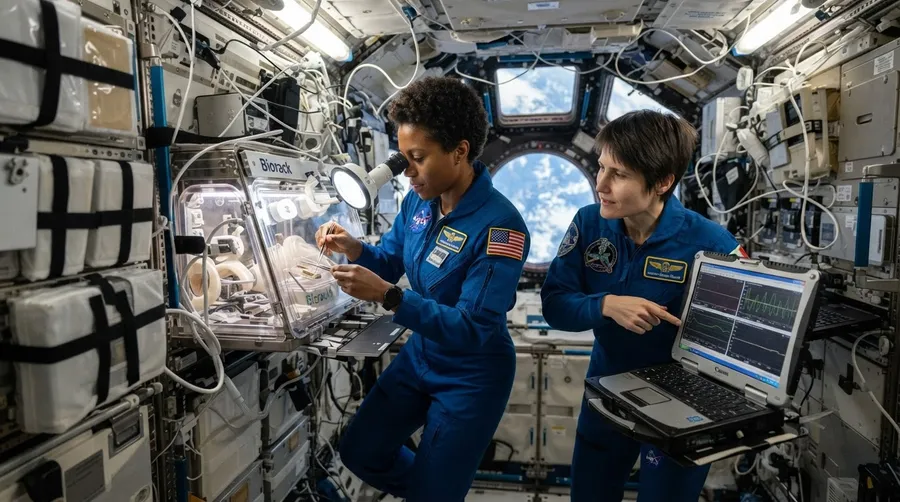
Scientists aboard the space station conduct the gravity experiment.
🇺🇸 Practical Implications of the Experiment
This kind of experiment can have real-world implications for GPS technology and other systems reliant on precise timekeeping and positioning. If there were variations in how different elements behaved under gravity, it might require redesigning satellites or recalibrating timing devices used globally. You know those atomic clocks that keep everything running smoothly? Their accuracy depends on our understanding of physics principles confirmed by experiments like this one in space.
🇪🇸 Implicaciones Prácticas del Experimento
Este tipo de experimento puede impactar tecnologías como el GPS y sistemas que dependen de una cronometraje y posicionamiento preciso. Si hubiera variaciones en cómo se comportan diferentes elementos bajo el efecto de la gravedad, podría requerir rediseñar satélites o recalibrar dispositivos globales de medición temporal. Los relojes atómicos que mantienen todo sincronizado dependen de principios físicos que experimentos como éste ayudan a confirmar y refinar.
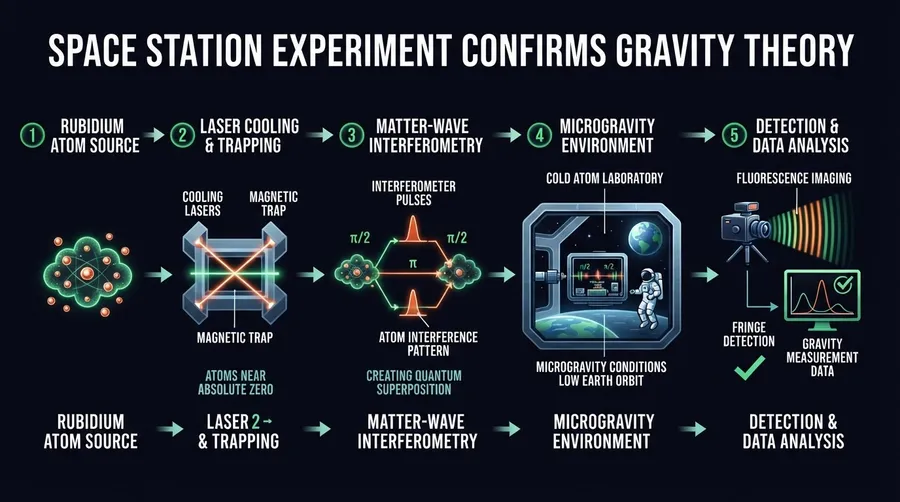
Flowchart detailing the gravity experiment procedure on the space station.
🇺🇸 Lingering Questions
Some questions remain unanswered, though they've narrowed them down significantly. How do these results hold up with other elements besides rubidium? Can we measure variations in different gravitational fields beyond Earth's influence? When will similar tests occur on other space stations or platforms?
🇪🇸 Preguntas Sin Resolver
Aún hay preguntas sin responder aunque han reducido considerablemente las incógnitas iniciales con este estudio tan preciso ¿Cómo se comportarán otros elementos además del rubidio? ¿Podemos medir variaciones en campos gravitacionales distintos al terrestre? ¿Cuándo se realizarán pruebas similares en otras estaciones o plataformas espaciales?
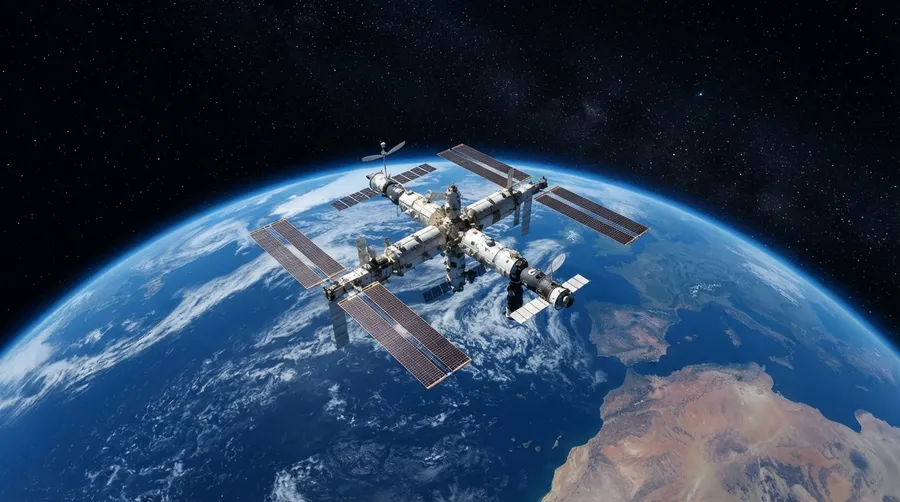
The Tiangong space station orbits Earth, highlighting its massive scale.
🔗 Related Articles | Artículos Relacionados
Nuestro canal transmite datos curiosos de ciencia, IA, espacio y tecnología las 24 horas. | Our channel streams science facts, AI, space and technology around the clock.
▶ Ver transmisión | Watch liveOPEN YOUR MIND
Source: Source
Join the conversation