Revolutionary Chip Operates Near Absolute Zero
Revolutionary Chip Operates Near Absolute Zero

The brain-inspired chip operates in extreme cold conditions.
🇺🇸 Chip Near Absolute Zero
The University of Hong Kong has found something quite fascinating. A new type of chip, inspired by the brain, that operates just above absolute zero. This is one of the coldest environments we know. Scientists used a standard silicon carbide transistor but in a completely different way. The goal was to make it behave like a neuron. This chip fires electrical spikes similar to those in the human brain. It is amazing to think that something mimicking neural activity can work in such extreme cold. The implications could be huge, but they remain to be seen.
🇪🇸 Chip cerca del cero absoluto
En la Universidad de Hong Kong han creado un chip que sorprende. Inspirado en el cerebro, funciona apenas por encima del cero absoluto, un entorno extremadamente frío. Usaron un transistor de carburo de silicio estándar, pero de una forma nueva. Querían que actuara como una neurona. Este chip lanza pulsos eléctricos similares a los del cerebro humano. Increíble pensar que algo así pueda operar en tanto frío. Las implicaciones potenciales son grandes, aunque aún no se conocen bien.
Como Afiliado de Amazon, obtengo ingresos por las compras adscritas que cumplen los requisitos aplicables.

Detailed view of the silicon carbide transistor's surface.
🇺🇸 Old Knowledge
Before this development, scientists knew that silicon carbide was tough and heat-resistant. But using it in extreme cold for neuron-like behavior? That was not on anyone's radar. Neurons in the human brain fire electrical spikes as a way of communication. We have known this for some time, of course. The idea of mimicking this biologically inspired process on a chip in such cold conditions was not thought possible before. Brain-inspired computing has been trending because it might be more energy efficient than traditional methods.
🇪🇸 Lo que ya se sabía
Antes de este avance, se conocía que el carburo de silicio era resistente al calor y muy duro, pero usarlo en condiciones de frío extremo para imitar el comportamiento neuronal es nuevo. En el cerebro humano, las neuronas disparan pulsos eléctricos para comunicarse; esto lo sabemos hace tiempo. La idea de replicar este proceso biológico en un chip en temperaturas tan bajas no se consideraba posible hasta ahora. La computación inspirada en el cerebro ha ganado interés por su eficiencia energética potencial.

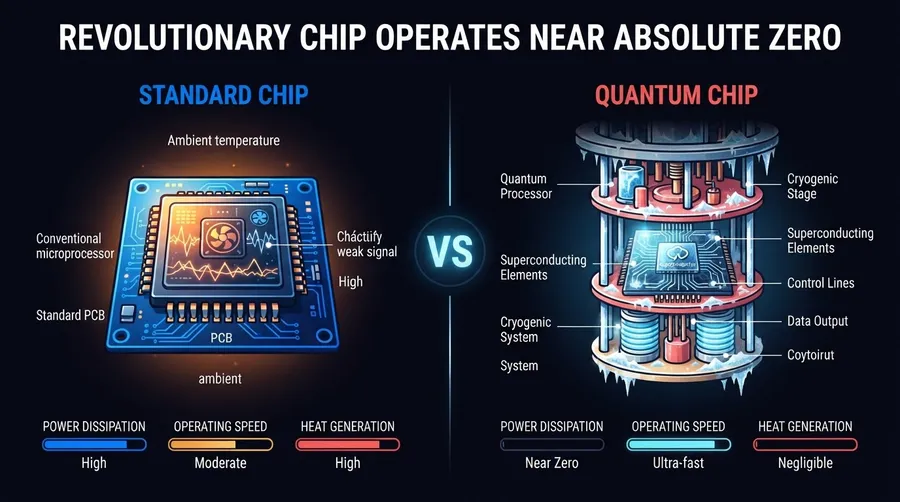
Flowchart of the chip's operation near absolute zero.
🇺🇸 Mechanical Wonders
The magic here lies in how they used the silicon carbide transistor. Normally transistors are switches, simple enough right? But here the transistor acts like a neuron by sending sharp electrical signals or spikes. They achieved this by applying specific voltages that make the device mimic neuron behavior closely and in extreme cold conditions too. Silicon carbide is not new, but this way of using it sure is. I kept rereading the part about voltage applications because it changes everything I thought I knew about electronic engineering at low temperatures.
🇪🇸 Maravillas mecánicas
La clave está en cómo usaron el transistor de carburo de silicio. Normalmente, los transistores son interruptores; hasta ahí todo normal ¿no? Pero aquí el transistor actúa como una neurona enviando señales eléctricas agudas o picos. Lograron esto aplicando voltajes específicos que hacen que el dispositivo imite el comportamiento neuronal incluso en condiciones de frío extremo. El carburo de silicio no es nuevo, pero esta forma de usarlo sí lo es completamente nueva para mí al menos.

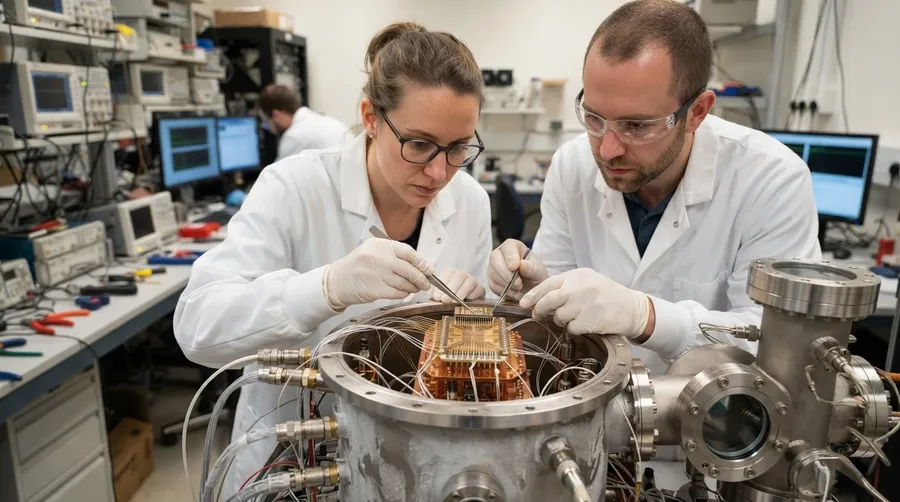
Scientists prepare the chip for cryogenic testing.
🇺🇸 Impact on Real Life
What does this mean for you and me? Well, brain-inspired chips could lead to more energy-efficient electronic devices in the future or even enhance artificial intelligence systems by being more brain-like themselves. Imagine a computer that thinks more like a human brain but uses far less energy doing it, especially impressive if they can operate under extreme conditions like outer space or deep-sea exploration where energy efficiency is crucial.
🇪🇸 Impacto en la vida real
¿Y qué significa esto para nosotros? Estos chips inspirados en el cerebro podrían permitir dispositivos electrónicos más eficientes energéticamente o mejorar sistemas de inteligencia artificial haciéndolos más parecidos al cerebro humano. Imagina una computadora que piense como un cerebro humano pero usando mucha menos energía, especialmente útil si puede operar en condiciones extremas como el espacio exterior o exploraciones submarinas donde la eficiencia es crucial.
🇺🇸 Lingering Questions
How does the chip behave below 0 Kelvin if it ever gets there? Can this technology scale effectively without losing efficiency? What are the long-term effects on the materials involved? Nobody knows yet about these aspects.
🇺🇸 Preguntas pendientes
¿Cómo se comportaría el chip por debajo de 0 Kelvin si llegara allí? ¿Puede esta tecnología escalar sin perder eficiencia? ¿Cuáles son los efectos a largo plazo en los materiales utilizados? No hay respuestas aún.
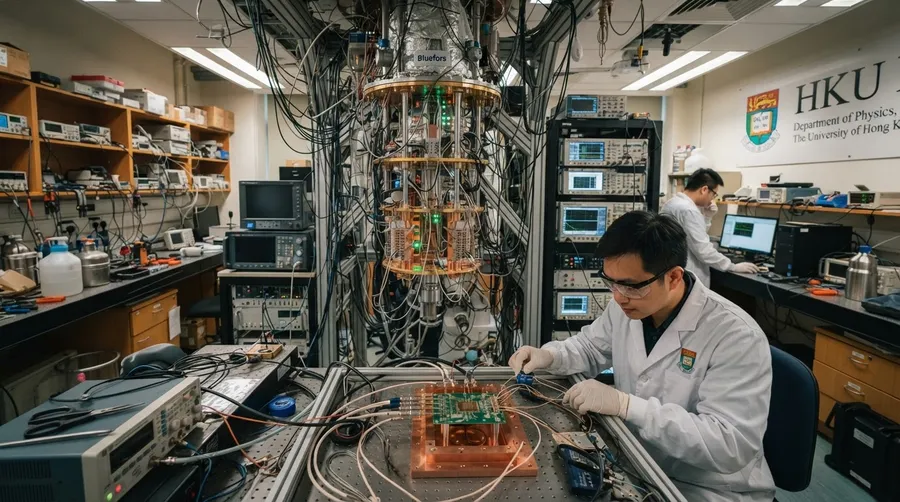
Lab setup at the University of Hong Kong for chip testing.
🔗 Related Articles | Artículos Relacionados
Nuestro canal transmite datos curiosos de ciencia, IA, espacio y tecnología las 24 horas. | Our channel streams science facts, AI, space and technology around the clock.
▶ Ver transmisión | Watch liveOPEN YOUR MIND
Source: Source
Join the conversation