Lunar Impact SpaceX Rocket Debris Hits the Moon
Lunar Impact SpaceX Rocket Debris Hits the Moon

The Moon's surface shows the Falcon 9 debris impact site.
🇺🇸 Lunar Collision: SpaceX Rocket Debris Hits the Moon
So here's the deal. The remains of a SpaceX Falcon 9 rocket have crashed into the Moon. This wasn't planned. They didn't aim for a lunar landing, not this time. Instead, this spent upper stage had been wandering space until gravity did its thing and brought it crashing down onto the Moon's surface. I kept rereading that because, frankly, space is vast, right? Yet somehow this chunk of metal ended up hitting our closest celestial neighbor. It illustrates the growing issue with debris in space. And now we have to wonder: how often might this happen as more rockets head to the Moon?
🇪🇸 Colisión Lunar: Restos de Cohete de SpaceX Golpean la Luna
Ahora te cuento. Los restos de un cohete Falcon 9 de SpaceX se estrellaron contra la Luna. No estaba planeado. Este fragmento no tenía la misión de aterrizar allí. Había estado vagando por el espacio hasta que la gravedad decidió su destino y terminó chocando con la superficie lunar. Espacio enorme y aún así, termina golpeando a nuestro vecino celeste más cercano. Esto nos muestra el problema creciente de los desechos espaciales. Y ahora hay que preguntarse: ¿con qué frecuencia podría ocurrir esto a medida que más cohetes se dirigen hacia la Luna?
Como Afiliado de Amazon, obtengo ingresos por las compras adscritas que cumplen los requisitos aplicables.

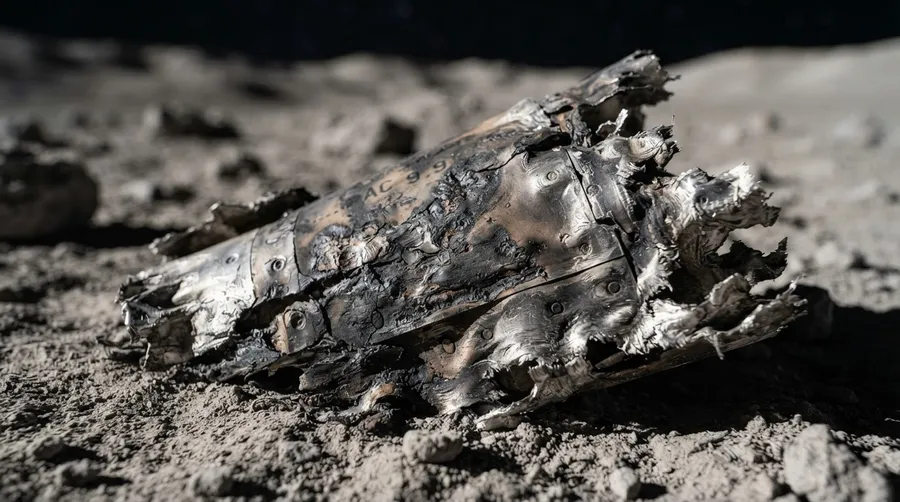
Detailed view of Falcon 9 debris with charred textures.
🇺🇸 Background on Space Debris
Debris has been an issue since the early days of space exploration. Satellites break apart, rocket stages get discarded, and over time, we've ended up with a lot of junk up there orbiting Earth. But as we start setting our sights beyond Earth's orbit, like trips to the Moon or even Mars someday, this problem grows. And more to the point: debris doesn't just float away harmlessly forever. It creates hazards for future missions and equipment. Back in 2009, there was a big scare when American and Russian satellites collided in orbit.
🇪🇸 Antecedentes sobre Desechos Espaciales
El problema de los desechos espaciales no es nuevo; comenzó con las primeras misiones al espacio. Satélites que se rompen, etapas de cohetes desechadas… todo eso ha dejado mucha basura girando alrededor de la Tierra. Pero mientras miramos más allá de nuestra órbita hacia destinos como la Luna o Marte, el tema se agrava. Los residuos no desaparecen ni flotan indefinidamente sin consecuencias. Representan riesgos para futuras misiones y equipos en el espacio. En 2009 hubo una gran preocupación cuando satélites estadounidenses y rusos chocaron en órbita.
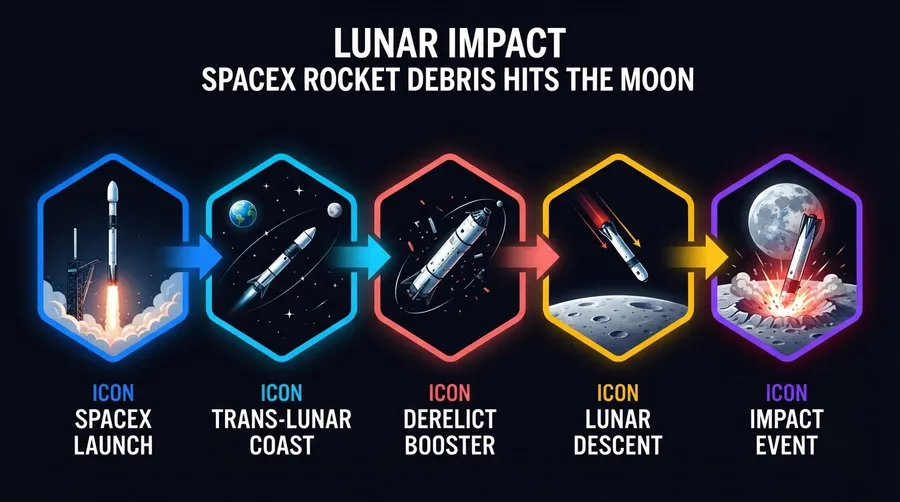
Chronological timeline of Falcon 9 debris impact events.
🇺🇸 The Mechanics Behind the Crash
Let's talk physics or at least try to make sense of it together. The upper stage of a Falcon 9 is not small; it's like taking a school bus and sending it into space. Once its mission is done, it usually just hangs out up there until gravity pulls it somewhere unexpected like the Moon in this case. The way it works is that all objects with mass exert gravitational pull, even if tiny compared to planets or moons themselves. This force eventually affects debris floating through space.
🇪🇸 La Mecánica Detrás del Impacto
Hablemos de física o intentemos entenderlo juntos. La etapa superior del Falcon 9 no es pequeña; imagina un autobús escolar enviado al espacio. Una vez cumplida su misión, suele quedarse flotando hasta que la gravedad lo empuja a algún lugar inesperado como la Luna esta vez. Todo objeto con masa ejerce atracción gravitatoria aunque sea ínfima comparada con planetas o lunas en sí mismos. Esta fuerza termina afectando a los residuos que flotan por el espacio.

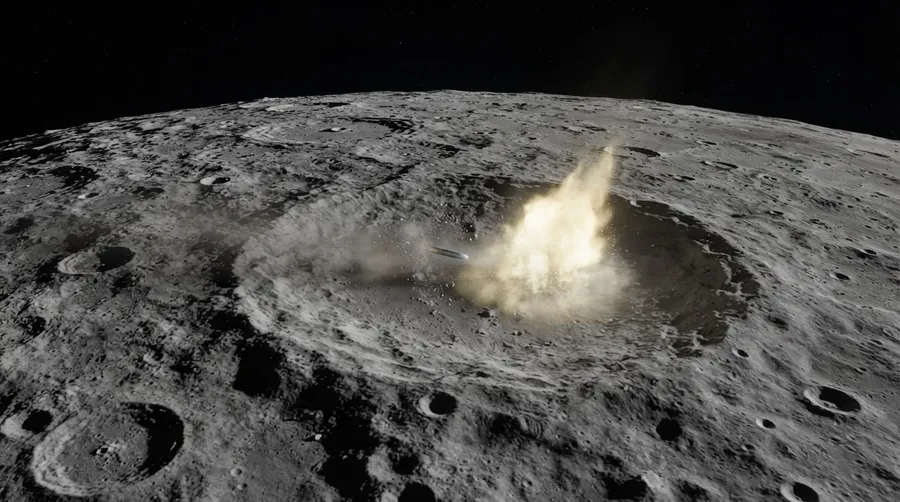
Satellite captures the Falcon 9 debris impact on the Moon.
🇺🇸 Real-World Implications
Space debris poses real challenges for space agencies and companies aiming for lunar exploration or Mars missions down the road. If we keep ignoring it, we risk not only losing expensive equipment but also endangering human lives if manned missions become more frequent. Imagine planning a mission only to have it jeopardized by some forgotten piece of metal orbiting out there. There's increasing talk about finding ways to track or even remove some of this stuff from space altogether.
🇪🇸 Implicaciones en el Mundo Real
Los desechos espaciales representan verdaderos desafíos para agencias espaciales y compañías que planean exploraciones lunares o misiones a Marte en el futuro cercano. Ignorar este problema podría costarnos no solo equipo costoso sino también poner en peligro vidas humanas si las misiones tripuladas se vuelven más comunes. Imagina planificar una misión solo para verla en peligro por un trozo de metal olvidado orbitando allá afuera.

Illustration of Falcon 9 upper stage components involved.
🇺🇸 Unanswered Questions
How many pieces of debris are currently in cislunar space? What specific trajectory led to this Falcon 9 stage colliding with the Moon? Is there any feasible way to remove or mitigate debris before it causes more damage? Researchers are actively investigating these questions but have yet to find solid answers.
🇪🇸 Preguntas Sin Responder
¿Cuántos fragmentos de desechos existen actualmente en el espacio cislunar? ¿Qué trayectoria específica llevó esta etapa del Falcon 9 a chocar con la Luna? ¿Hay alguna manera viable de eliminar o mitigar desechos antes de que causen más daños? Investigadores están buscando respuestas pero aún no tienen soluciones claras.
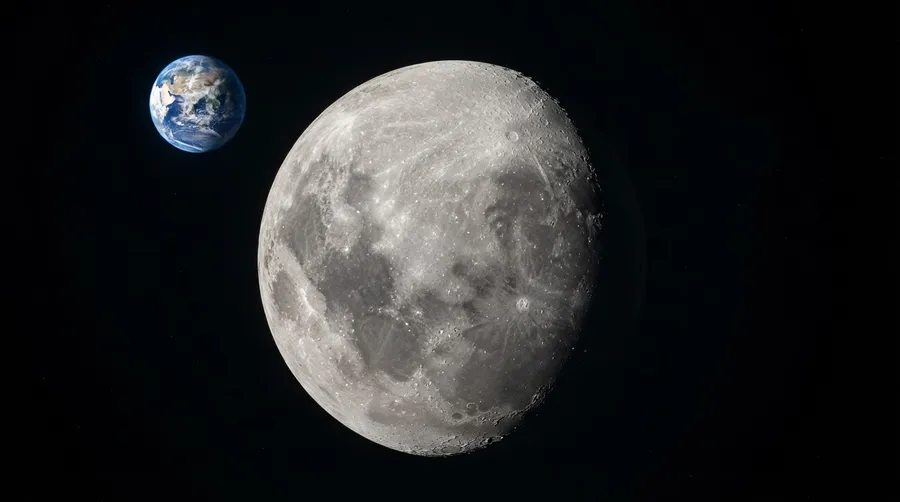
The Moon and Earth highlight the scale of the impact site.
🔗 Related Articles | Artículos Relacionados
Nuestro canal transmite datos curiosos de ciencia, IA, espacio y tecnología las 24 horas. | Our channel streams science facts, AI, space and technology around the clock.
▶ Ver transmisión | Watch liveOPEN YOUR MIND
Source: Source
Join the conversation