James Webb Reveals Stellar Wonders in Carina Nebula
James Webb Reveals Stellar Wonders in Carina Nebula
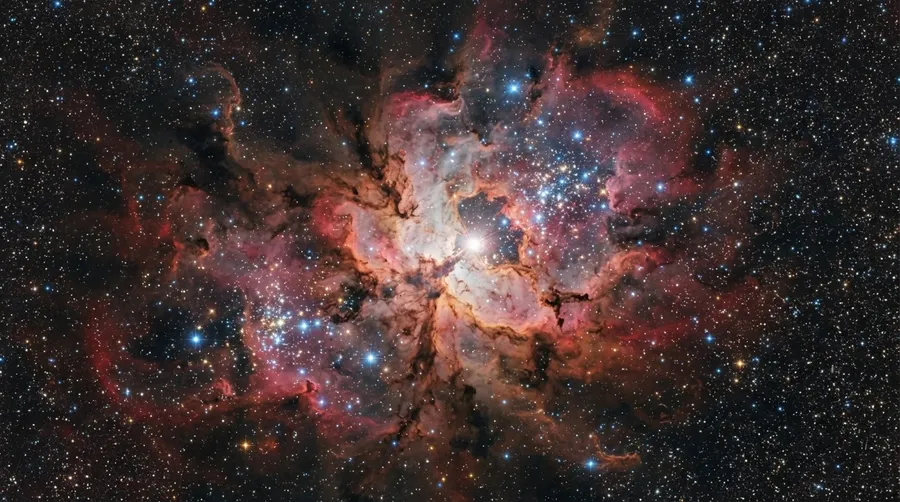
A stunning view of the Carina Nebula's colorful clouds.
🇺🇸 Webb Unveils the Carina Nebula's Mysteries
The James Webb Space Telescope has given us a fresh perspective on the Carina Nebula. This stunning image from NASA and ESA reveals cosmic wonders hidden within our galaxy. Nestled about 7500 light-years away, this nebula is more than just dust and gas. It is a dynamic region where new stars are born, and it tells stories of our cosmic origins. The image shows intricate structures that look like sculptures carved by the forces of starlight and winds. These elements craft dust clouds into fantastic shapes. The Cosmic Cliffs, part of the nebula, are visible in striking detail thanks to Webb. This discovery lets us peer deeper into the processes of star formation, uncovering layers of complexity previously unseen.
🇪🇸 Webb Descubre los Secretos de la Nebulosa Carina
El Telescopio Espacial James Webb nos ha dado una nueva visión de la Nebulosa Carina. Esta imagen impresionante de NASA y ESA revela maravillas cósmicas ocultas dentro de nuestra galaxia. A unos 7500 años luz de distancia, esta nebulosa es más que solo polvo y gas. Es un lugar dinámico donde nacen nuevas estrellas y cuenta historias de nuestros orígenes cósmicos. La imagen muestra estructuras intrincadas que parecen esculturas talladas por fuerzas de la luz estelar y los vientos. Estos elementos moldean nubes de polvo en formas fantásticas. Los Acantilados Cósmicos, parte de la nebulosa, son visibles con un detalle impresionante gracias a Webb. Este descubrimiento nos permite explorar más a fondo los procesos de formación estelar.
Como Afiliado de Amazon, obtengo ingresos por las compras adscritas que cumplen los requisitos aplicables.


Detailed close-up of a dust cloud in the Carina Nebula.
🇺🇸 What We Knew Before Webb
Before James Webb's image, we already knew the Carina Nebula was rich in massive stars and active star-forming regions. Astronomers had studied it with other telescopes, tracing its large-scale structures and dramatic dust formations. The nebula hosts some of the brightest and most massive stars known to science, like Eta Carinae, a star that has puzzled researchers for years because of its eruptions and sheer size. Hubble had previously captured images, showing fine details but missing certain elements due to its limitations in infrared observation. The Carina Nebula has long been both an object of wonder and a subject of scientific analysis.
🇪🇸 Lo Que Sabíamos Antes del Webb
Antes de la imagen del James Webb, ya se sabía que la Nebulosa Carina estaba llena de estrellas masivas y regiones activas de formación estelar. Los astrónomos la habían estudiado con otros telescopios, siguiendo sus grandes estructuras y formaciones dramáticas de polvo. Esta nebulosa alberga algunas de las estrellas más brillantes y masivas conocidas por la ciencia, como Eta Carinae, una estrella que ha desconcertado a los investigadores durante años debido a sus erupciones y tamaño descomunal. Hubble había capturado imágenes antes, mostrando detalles finos pero perdiendo ciertos elementos debido a sus limitaciones en observación infrarroja. La Nebulosa Carina ha sido durante mucho tiempo un objeto de asombro y análisis científico.

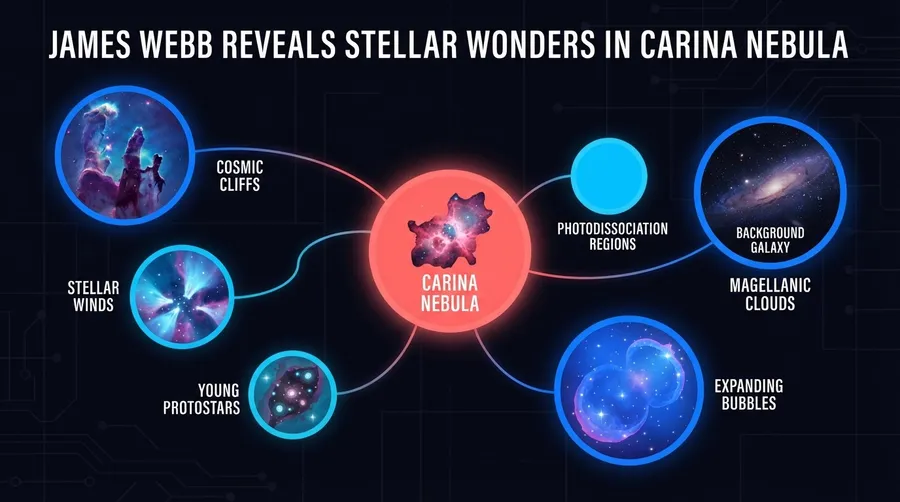
Diagram illustrating the Carina Nebula's structure.
🇺🇸 How Webb Works its Magic
The James Webb Space Telescope uses infrared technology to see through dense clouds of gas and dust that obscure visible light views. Its instruments are designed to capture light at longer wavelengths than human eyes can see. This capability allows it to unveil features that were hidden to previous telescopes like Hubble. When light hits these dense clouds, different wavelengths interact differently with the material involved. Webb's instruments collect this data and translate it into images we can study back on Earth. The telescope's position in space helps too since it avoids atmospheric distortions present on Earth.
🇪🇸 Cómo Hace el Webb su Magia
El Telescopio Espacial James Webb utiliza tecnología infrarroja para ver a través de densas nubes de gas y polvo que oscurecen las vistas en luz visible. Sus instrumentos están diseñados para captar luz en longitudes de onda más largas que las visibles para el ojo humano. Esta capacidad le permite revelar características que estaban ocultas para telescopios anteriores como el Hubble. Cuando la luz golpea estas nubes densas, diferentes longitudes de onda interactúan de manera distinta con el material involucrado. Los instrumentos del Webb recopilan estos datos y los traducen en imágenes que podemos estudiar desde la Tierra. La posición del telescopio en el espacio también ayuda al evitar distorsiones atmosféricas presentes en nuestro planeta.

Stellar winds dynamically shape the Carina Nebula's clouds.
🇺🇸 Impact on Astronomy and Beyond
The images from James Webb have caused excitement not just among scientists but also the public who enjoy these glimpses into the universe's beauty. Astronomers now have more detailed data for studying star formation processes which could lead to new understandings about our own solar system's birth. This helps educators too who can use these stunning images to inspire students in science fields. Space agencies worldwide are eager to apply similar technology to future missions expanding their scopes beyond what was thought possible before.

🇪🇸 Impacto en la Astronomía y Más Allá
Las imágenes del James Webb han causado emoción no solo entre científicos sino también en el público que disfruta estas vislumbres de la belleza del universo. Los astrónomos ahora tienen datos más detallados para estudiar procesos de formación estelar lo cual podría llevar a nuevos entendimientos sobre el nacimiento de nuestro propio sistema solar. Esto también ayuda a los educadores quienes pueden usar estas impresionantes imágenes para inspirar estudiantes en campos científicos. Las agencias espaciales alrededor del mundo están ansiosas por aplicar tecnología similar en futuras misiones ampliando sus alcances más allá de lo que se pensaba posible antes.
🇺🇸 What We Still Don't Know
There are still questions about how these massive stars influence their surroundings over time. How does this nebula evolve as new stars form? Nobody knows why some areas produce more stars while others remain quiet.
🇪🇸 Lo Que Aún No Sabemos
Quedan preguntas sobre cómo estas estrellas masivas influyen en su entorno con el tiempo. ¿Cómo evoluciona esta nebulosa mientras se forman nuevas estrellas? Nadie sabe por qué algunas áreas producen más estrellas mientras otras permanecen tranquilas.
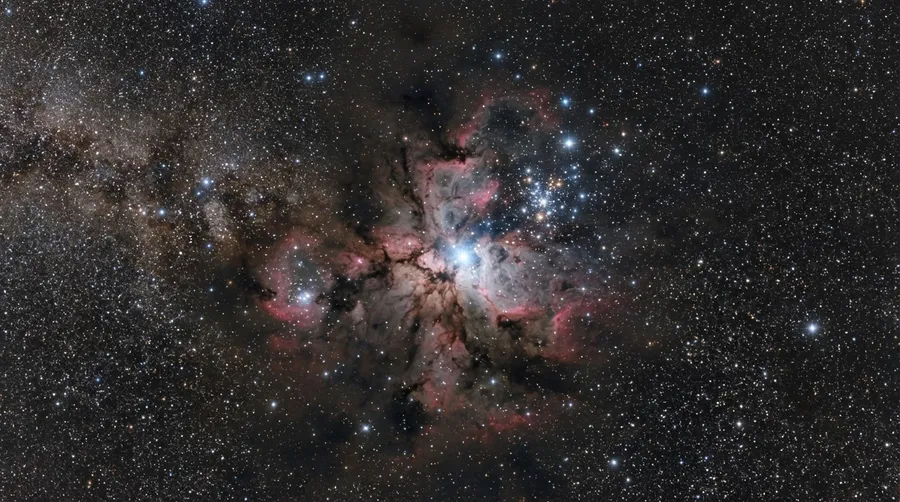
The Carina Nebula shown within its vast galactic surroundings.
🔗 Related Articles | Artículos Relacionados
Nuestro canal transmite datos curiosos de ciencia, IA, espacio y tecnología las 24 horas. | Our channel streams science facts, AI, space and technology around the clock.
▶ Ver transmisión | Watch liveOPEN YOUR MIND
Source: Source
Join the conversation