Breakthrough 1 Million P-Bit Computer Unveiled
Breakthrough 1 Million P-Bit Computer Unveiled
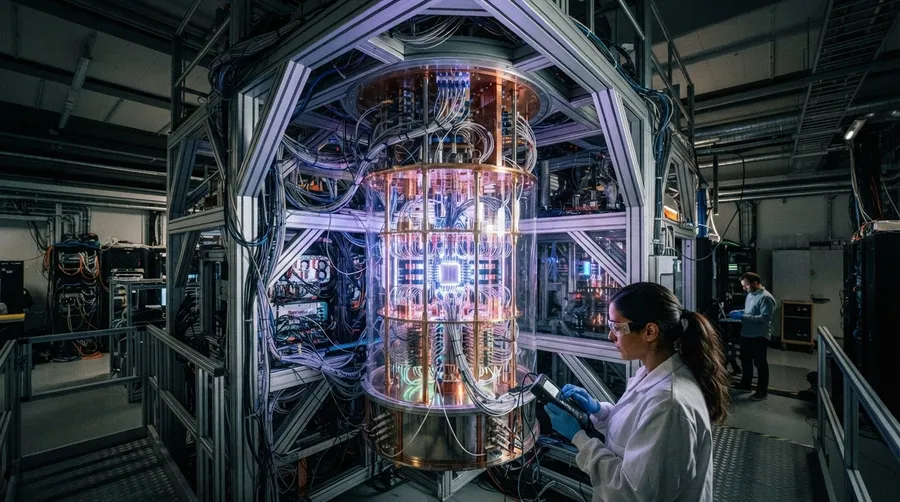
The 1 million P-bit computer in operation with vibrant LEDs.
🇺🇸 Huge Leap in Probabilistic Computing
Scientists have unveiled a computer boasting a million p-bits. It's the largest probabilistic computer ever created. P-bits act like unpredictable dice, fluctuating between 0 and 1, where normal bits pick a side. Imagine regular computers as rigid mathematicians following strict rules. P-bits thrive in uncertainty, making them great for solving specific problems. Here's the kicker: they sidestep many issues that complicate quantum computing. Quantum devices need delicate conditions to avoid errors, while p-bits can roll with the punches. This computer could be a glimpse into the future of computing, maybe solving things standard computers can't touch yet. But how soon will this tech spread? No one knows.
🇪🇸 Un Gran Salto en Computación Probabilística
Un equipo de científicos presentó una computadora con un millón de p-bits, la más grande jamás creada. Los p-bits no son como los bits normales que eligen entre 0 o 1; son más como dados que nunca dejan de girar. Mientras las computadoras tradicionales siguen reglas estrictas, los p-bits disfrutan de la incertidumbre. Así pueden resolver problemas que las computadoras normales no pueden. A diferencia de las computadoras cuánticas, que requieren condiciones muy especiales y frágiles, los p-bits son menos exigentes. Esta tecnología podría cambiar mucho en el futuro, pero no sabemos cuándo se extenderá al público.
Como Afiliado de Amazon, obtengo ingresos por las compras adscritas que cumplen los requisitos aplicables.


Close-up view of a single P-bit chip's intricate circuitry.
🇺🇸 Setting the Stage for P-Bit Computing
Before this milestone, p-bit technology was still largely experimental and niche. Researchers have been fascinated with the idea that these bits could perform complex tasks without needing the ultra-precise environments required by quantum systems. Quantum bits or qubits promise incredible speed and power but need extreme conditions to function properly, which limits their use today. P-bit machines offer a practical alternative that seemed just out of reach until now. The concept isn't brand new—scientists had long theorized about probabilistic computing as a middle ground between classical and quantum realms—but this is the first time it's being realized on such a scale.
🇪🇸 Preparando el Terreno para la Computación con P-Bits
Antes de este logro, la tecnología de p-bits era más un experimento de laboratorio que una realidad práctica. Investigadores llevaban tiempo pensando que estos bits podrían abordar tareas complejas sin los ambientes precisos que necesitan los sistemas cuánticos. Los qubits cuánticos prometen gran velocidad y potencia pero requieren condiciones extremas para funcionar bien, limitando su aplicación actual. Las máquinas de p-bits ofrecen una alternativa práctica que parecía lejana hasta ahora. Aunque el concepto no es nuevo y se había teorizado como un puente entre lo clásico y lo cuántico, esta es la primera vez que se hace realidad en una escala tan grande.

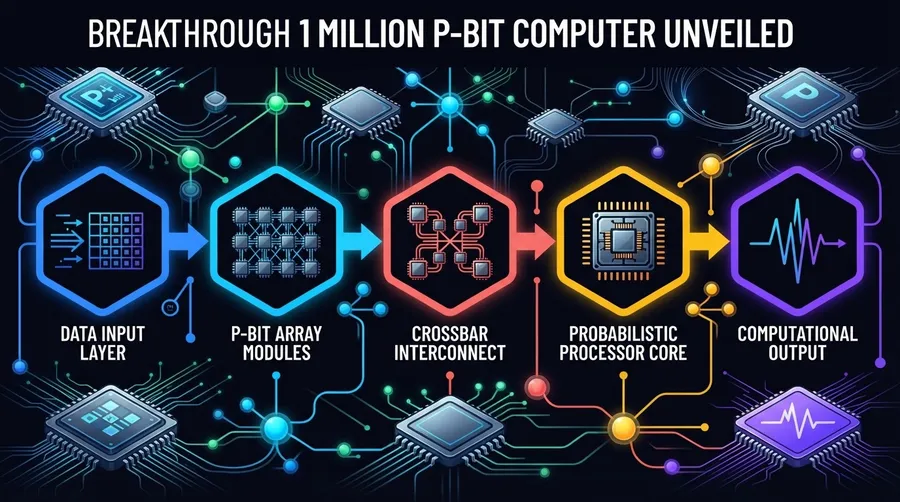
Diagram of the P-bit computer's structure and connections.
🇺🇸 Inside the Machine: What Makes It Tick?
How does this machine actually work? At its core are magnetoresistive random-access memory cells that each act as a single p-bit. These cells are linked through circuitry that allows them to interact in unpredictable ways, mimicking natural processes like neural networks in a brain or molecules in chemistry. Unlike quantum computers that rely on entanglement and superposition, this setup uses straightforward engineering principles to achieve complexity. It's like if you took a bunch of spinning tops and set them loose in a room to bump into each other, creating chaos that somehow leads to order. I kept rereading that part.
🇪🇸 Dentro de la Máquina: ¿Cómo Funciona?
Entonces, ¿cómo funciona esta máquina? En su núcleo tiene celdas de memoria magnetorresistivas que actúan como p-bits únicos. Estas celdas están conectadas por circuitos que permiten interacciones impredecibles, imitando procesos naturales como redes neuronales o moléculas químicas. A diferencia de las computadoras cuánticas que dependen del entrelazamiento y la superposición, este sistema usa principios de ingeniería más simples para alcanzar complejidad. Es como si pusieras un montón de trompos girando en una sala chocándose entre sí creando caos que de alguna manera lleva al orden.

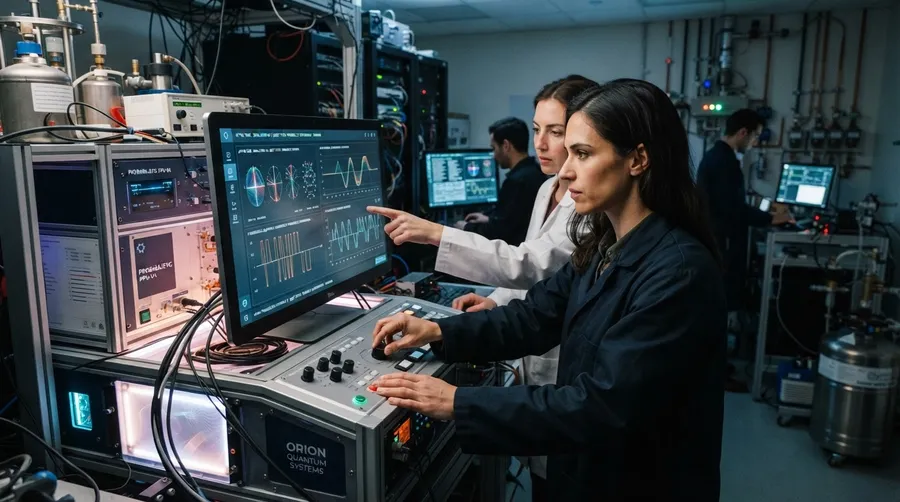
Scientists configure the probabilistic computer in action.
🇺🇸 What Changes for You and Me?
For regular folks, what does this mean? Well, industries relying on optimization might see big changes first. Think logistics companies routing trucks efficiently or even healthcare systems managing resources better. In areas requiring rapid computation like weather prediction or drug discovery, probabilistic computers could accelerate processes significantly once they become commercially viable. It might lead to cheaper solutions for complex problems without needing the sprawling infrastructure quantum systems demand today. It's early days yet but promising all the same.
🇪🇸 ¿Qué Cambia Para Nosotros?
¿Y qué significa esto para personas comunes? Los primeros en notar cambios serían sectores que dependen mucho de la optimización en sus operaciones diarias como el transporte o la salud pública gestionando mejor sus recursos. En campos que necesitan cálculos rápidos como el pronóstico del clima o el descubrimiento de fármacos podría acelerar mucho los procesos cuando estas computadoras sean viables comercialmente hablando.

Flowchart of the probabilistic computer's unique operation.
🇺🇸 Questions Still Awaiting Answers
Several questions remain unanswered as we look ahead: What will it cost to produce such machines at scale? How efficient are they compared to traditional systems in real-world applications? Will there be unexpected challenges when scaling up beyond one million p-bits? Researchers are eager to dive into these unknowns but admit there's much more work ahead.
🇪🇸 Preguntas Que Aún Esperan Respuestas
Todavía hay preguntas importantes por resolver: ¿Cuál será el costo de producción en masa? ¿Qué tan eficientes son comparadas con sistemas tradicionales en aplicaciones reales? ¿Existirán desafíos inesperados al escalar más allá del millón de p-bits? Los investigadores están ansiosos por explorar estas incógnitas pero reconocen que queda mucho camino por delante.

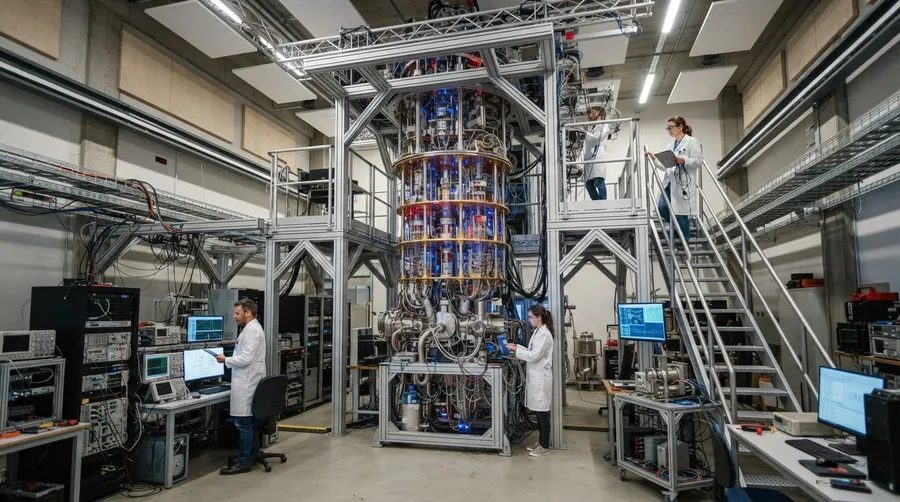
The lab environment showcasing the scale of the P-bit computer.
🔗 Related Articles | Artículos Relacionados
Nuestro canal transmite datos curiosos de ciencia, IA, espacio y tecnología las 24 horas. | Our channel streams science facts, AI, space and technology around the clock.
▶ Ver transmisión | Watch liveOPEN YOUR MIND
Source: Source
Join the conversation