Unique Mathematical Shape Alters Light in New Ways
Unique Mathematical Shape Alters Light in New Ways
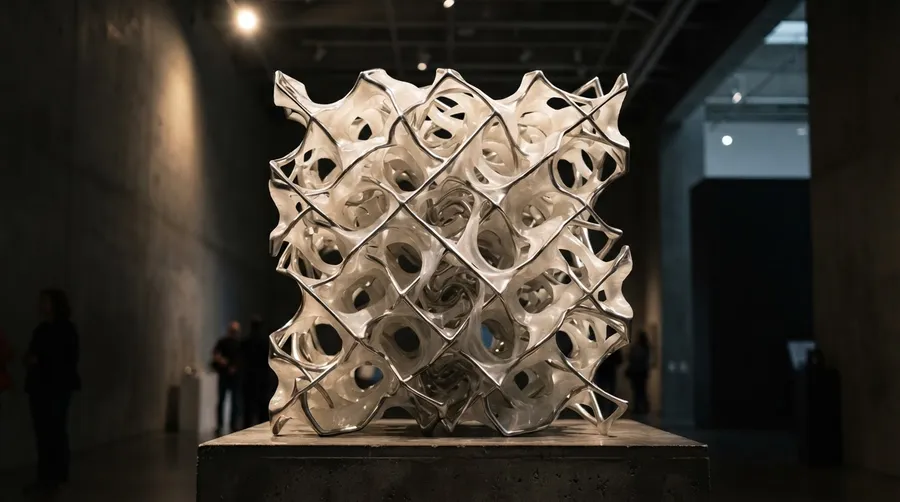
The unique shape displays intricate patterns under dramatic lighting.
🇺🇸 Light and Mathematical Shapes Meet
Scientists studying mathematical shapes found something unexpected. A special kind of shape used to tile surfaces without repeating has shown it can twist light in unique patterns. This shape, known as a Penrose tiling, was thought to be just a curiosity in geometry. But now it seems to have a talent for manipulating light into chiral forms. Chiral forms are like mirror images that can't be superimposed, which is strange if you think about it. The way this shape interacts with light could open new paths in optics. The researchers stumbled upon this property while experimenting with different materials and wavelengths. Sometimes discoveries come from just playing around with ideas.
Como Afiliado de Amazon, obtengo ingresos por las compras adscritas que cumplen los requisitos aplicables.

🇪🇸 Luz y formas matemáticas se entrelazan
Investigadores han encontrado que una figura geométrica especial puede doblar la luz de maneras únicas. Esta forma, conocida como enlosado de Penrose, se utiliza para cubrir superficies sin repetir patrones. Se pensaba que era solo una curiosidad matemática, pero ha demostrado manipular la luz en formas quirales, algo que es como las imágenes especulares que no pueden superponerse. El hallazgo fue accidental mientras probaban materiales y longitudes de onda diferentes. A veces, solo jugar con ideas lleva a descubrimientos sorprendentes. Ahora, este comportamiento abre posibilidades en el campo de la óptica.

Close-up reveals grooves twisting light into chiral patterns.
🇺🇸 What We Knew Before
Mathematicians had long admired the Penrose tiling for its non-repeating yet ordered pattern. It was a classic example of how complex math could manifest in unexpected beauty. But its connection to light was not really on anyone's radar until now. Before this, the focus was mostly on its mathematical properties and applications in things like quasicrystals. Those are materials that also show non-repeating order at atomic levels. People knew it had potential, given its unique structure, but not in this optical way.

🇪🇸 Lo que ya sabíamos
Los matemáticos siempre han valorado el enlosado de Penrose por su patrón ordenado pero no repetitivo. Era un clásico ejemplo de cómo las matemáticas complejas pueden manifestarse en belleza inesperada. Sin embargo, su relación con la luz no era algo que muchos anticiparan. Antes, el enfoque estaba más en sus propiedades matemáticas y aplicaciones como los cuasicristales. Estos son materiales que también presentan un orden no repetitivo a nivel atómico, sorprendiendo por su estructura única.
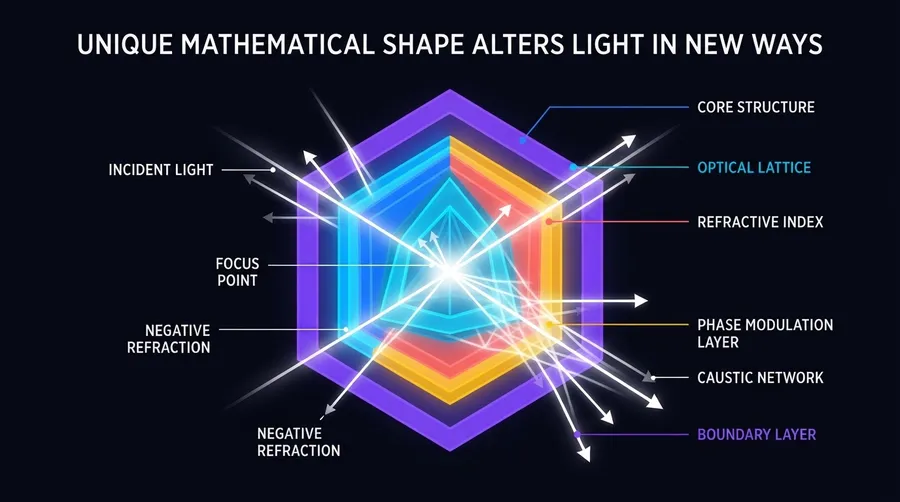
Diagram shows shape's geometry and light alteration method.
🇺🇸 The Curious Mechanism
The mechanism behind this optical twisting involves the way light interacts with the patterns of the Penrose tiling. As the light passes through or reflects off these patterns, it gets twisted into chiral forms. This happens because of the angles and spacing of the tiles themselves, which force the light waves to bend or twist in certain ways. It's kind of like how water flows around rocks in a stream but with photons instead of water droplets. This bending is influenced by the wavelength of light and the material used. The researchers are still figuring out why these specific conditions trigger such an effect.

🇪🇸 El curioso mecanismo
El mecanismo detrás de esta torsión óptica se basa en cómo la luz interactúa con los patrones del enlosado de Penrose. Al pasar o reflejarse en estos patrones, la luz se retuerce en formas quirales debido a los ángulos y espaciamientos de las baldosas mismas que obligan a las ondas de luz a doblarse o torcerse de ciertas maneras. Es parecido a cómo el agua fluye alrededor de rocas en un arroyo pero con fotones en lugar de gotas de agua. La longitud de onda y el material tienen un papel crucial aquí.
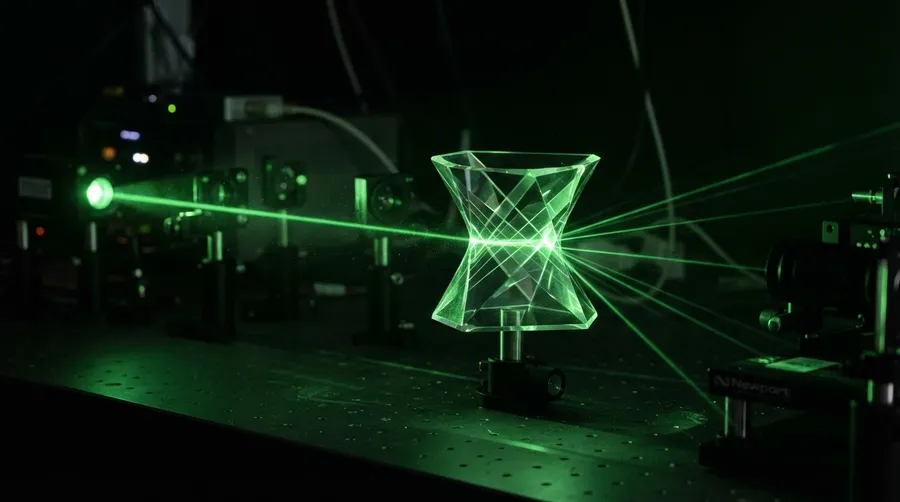
Light beam visibly alters as it interacts with the shape.
🇺🇸 What Changes for People
So what does this mean for real-world applications? Well, it could lead to more precise ways of controlling light in devices like sensors or cameras. Imagine being able to fine-tune polarization with shapes instead of complex electronics. For telecommunications, it might improve signal clarity by reducing interference through better control of light's path and form. This discovery could also potentially enhance medical imaging techniques by offering new ways to manipulate the light used in scans or endoscopies.

🇪🇸 Lo que cambia para la gente
¿Y qué significa esto para aplicaciones del mundo real? Podría resultar en formas más precisas de controlar la luz en dispositivos como sensores o cámaras ajustando la polarización con formas en lugar de electrónica compleja. En telecomunicaciones, podría mejorar la claridad de la señal al reducir interferencias mediante un mejor control del camino y forma de la luz. Este descubrimiento podría mejorar técnicas de imagen médica ofreciendo nuevas formas de manipular la luz utilizada en escáneres o endoscopias.
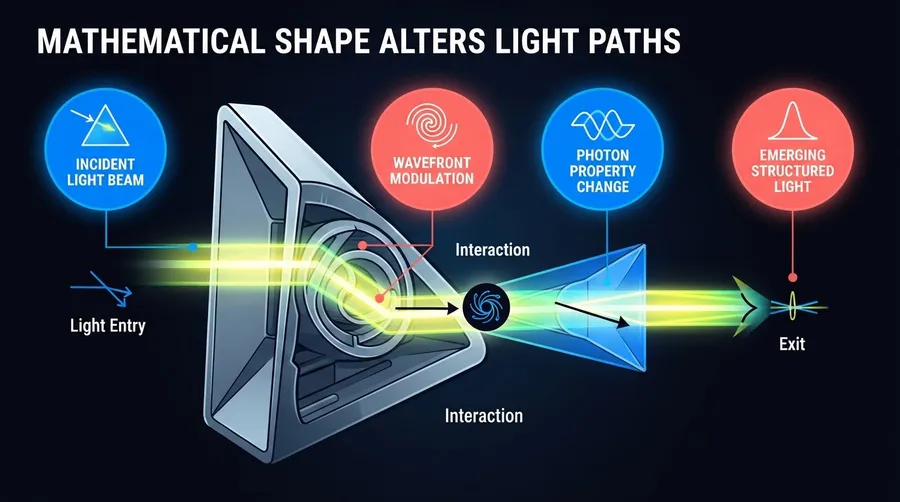
Flowchart illustrates the light-altering process of the shape.
🇺🇸 Unanswered Questions Remain
How exactly do the angles and spacings cause specific types of twist? Can the effect be scaled up for industrial use without losing efficiency? Why does this only happen with certain wavelengths? Nobody knows yet if these patterns work well under extreme conditions like high pressure or temperature.

🇪🇸 Preguntas aún sin respuesta
¿Qué ángulos y espaciamientos causan giros específicos? ¿Cómo escalar este efecto para uso industrial sin perder eficiencia? ¿Por qué ocurre solo con ciertas longitudes de onda? Nadie sabe aún si estos patrones funcionan bien bajo condiciones extremas como alta presión o temperatura.
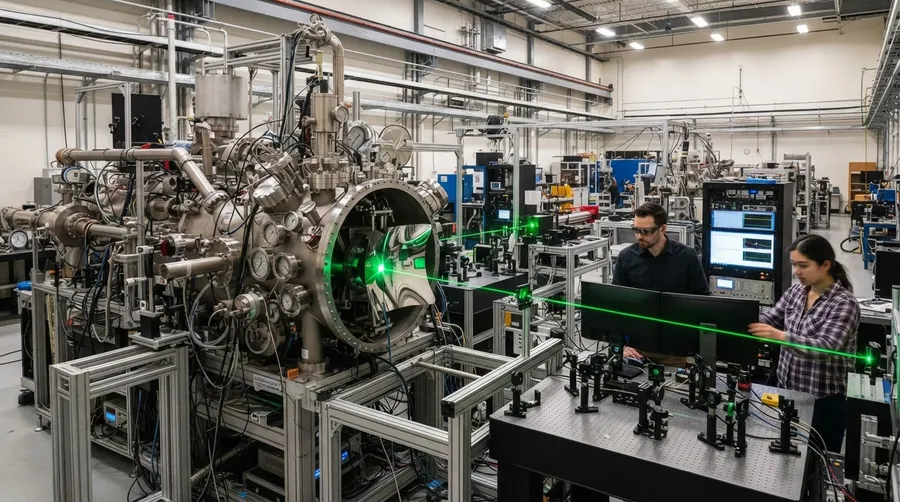
The shape is integrated into a real-world optical device.
🔗 Related Articles | Artículos Relacionados
Nuestro canal transmite datos curiosos de ciencia, IA, espacio y tecnología las 24 horas. | Our channel streams science facts, AI, space and technology around the clock.
▶ Ver transmisión | Watch liveOPEN YOUR MIND
Source: Source
Join the conversation