Robotic Fish Adapting to Any Size for Swimming
Robotic Fish Adapting to Any Size for Swimming
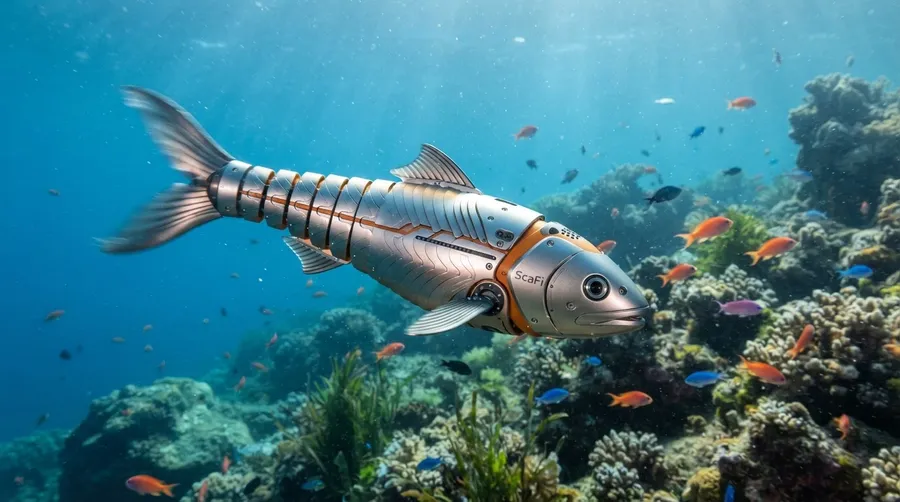
The ScaFi robotic fish showcases its sleek design and adaptive features in clear water.
🇺🇸 Adapting Robotic Fish
ScaFi is not your average underwater drone. Researchers at the CREATE Lab in EPFL have developed a robotic fish that can adapt its size for swimming in different aquatic environments. This little tech marvel can adjust its length just by expanding or contracting. That means it can squeeze into tight spots or spread out in open water. I find that pretty fascinating. Not only does it solve issues with existing propeller-driven vehicles, but it also makes exploring hard-to-reach areas more feasible. Imagine a robot fish that could swim in a shallow creek and not get stuck or scare the wildlife. That's what ScaFi promises.
As an Amazon Associate I earn from qualifying purchases.

🇪🇸 Un pez robótico adaptable
ScaFi es un dron submarino diferente a los demás. En el CREATE Lab de EPFL, desarrollaron un pez robótico que puede cambiar su tamaño para nadar en distintos entornos acuáticos. Esta maravilla tecnológica se alarga o se encoge con facilidad. Eso le permite pasar por lugares estrechos o expandirse en aguas abiertas. Soluciona problemas de los vehículos con hélices que conocemos, que suelen quedarse atascados o asustar a la fauna. Con ScaFi, se puede explorar áreas difíciles, como arroyos poco profundos, sin molestar a los animales ni quedar atrapado en la vegetación.
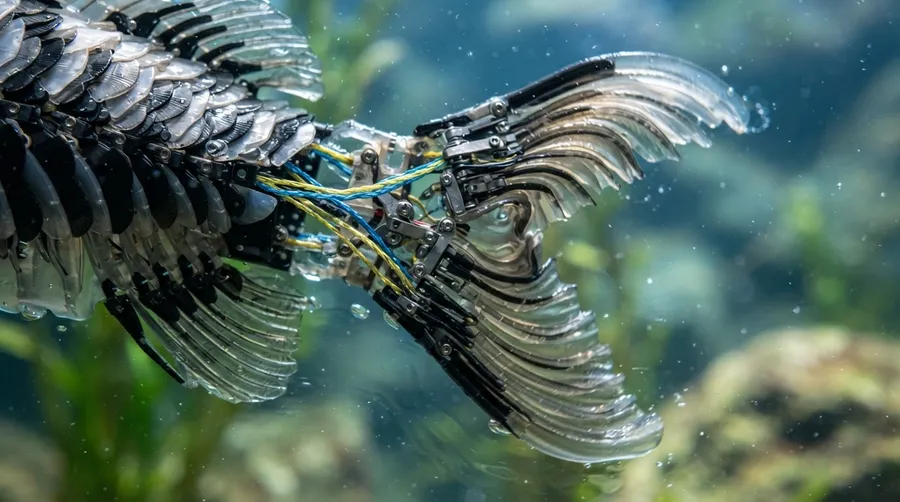
A close-up reveals the intricate design of ScaFi's flexible fin mechanism.
🇺🇸 The Background Context
For decades, underwater vehicles have relied on propellers to move around. They're great for deep-sea exploration, where speed and power are essential. But these propeller-driven machines are less suited for delicate ecosystems like coral reefs or marshlands. The spinning blades can damage plants and disturb sediment layers. Scientists have been aware of these limitations for a while now. Some have tried to innovate with different designs and materials, but problems persist. Traditional designs haven't been able to shrink down without losing functionality or becoming too fragile for practical use.

🇪🇸 El contexto detrás del avance
Desde hace décadas, los vehículos submarinos han usado hélices para moverse. Son ideales para explorar las profundidades del mar, donde la velocidad y la potencia son clave, pero son menos útiles en ecosistemas delicados como arrecifes de coral o marismas. Las hélices pueden dañar plantas y remover sedimentos. Los científicos ya conocían estas limitaciones desde hace tiempo y han buscado soluciones con nuevos diseños y materiales. Sin embargo, los problemas persisten, ya que al reducir el tamaño de estos vehículos tradicionales pierden eficiencia o se tornan frágiles para el trabajo práctico.
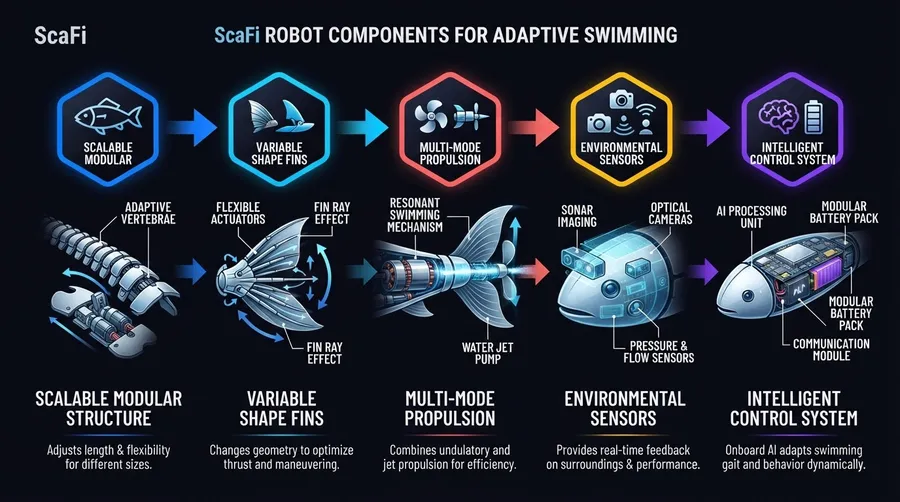
Diagram of ScaFi's components, including fins, propulsion, and sensors.
🇺🇸 Mechanical Functionality of ScaFi
ScaFi is powered by artificial muscles made from electroactive polymers. These polymers expand and contract when an electrical current is applied. It's kind of like how our muscles work but in a robotic form. The fish can change its length by this expansion-contraction process, making it scaleable for various environments. That said, the polymer muscles are complex and need precise control to function correctly. This is where it gets tricky. How do you program such precision into something moving through unpredictable water currents? Researchers have made progress but admit there's room for improvement.

🇪🇸 Cómo funciona mecánicamente el ScaFi
ScaFi utiliza músculos artificiales hechos de polímeros electroactivos que se expanden y contraen cuando reciben corriente eléctrica similar a cómo funcionan nuestros músculos pero en forma robótica. El pez ajusta su longitud mediante este proceso de expansión-contracción lo que le permite adaptarse a varios ambientes acuáticos sin perder eficiencia ni resistencia pero estos músculos poliméricos requieren un control preciso para funcionar bien lo cual no es sencillo dado que el agua tiene corrientes impredecibles donde el control es vital.

ScaFi swims through a creek, navigating without disturbing the environment.
🇺🇸 Implications in Real Life
What does this mean for everyday folks? Imagine more accurate environmental monitoring without disturbing natural habitats. Scientists could study aquatic life more closely without the drawbacks of traditional methods. Conservationists might use ScaFi to access hard-to-reach areas and gather data that would otherwise be challenging to collect. Even commercial applications like fishing could get a boost with more efficient monitoring tools that don’t disrupt marine life as much as the current technologies do. It represents a step toward more eco-friendly tech in water exploration.

🇪🇸 Consecuencias en la vida real
¿Y esto qué implica para la gente común? Significa monitoreo más preciso del medio ambiente sin perturbar hábitats naturales los científicos podrían estudiar la vida acuática más detalladamente sin las desventajas de métodos tradicionales los conservacionistas podrían usar ScaFi para acceder a áreas difíciles recolectando datos que serían complicados de obtener incluso aplicaciones comerciales como la pesca podrían beneficiarse al contar con herramientas de monitoreo más eficientes que no alteran tanto la vida marina como las tecnologías actuales.
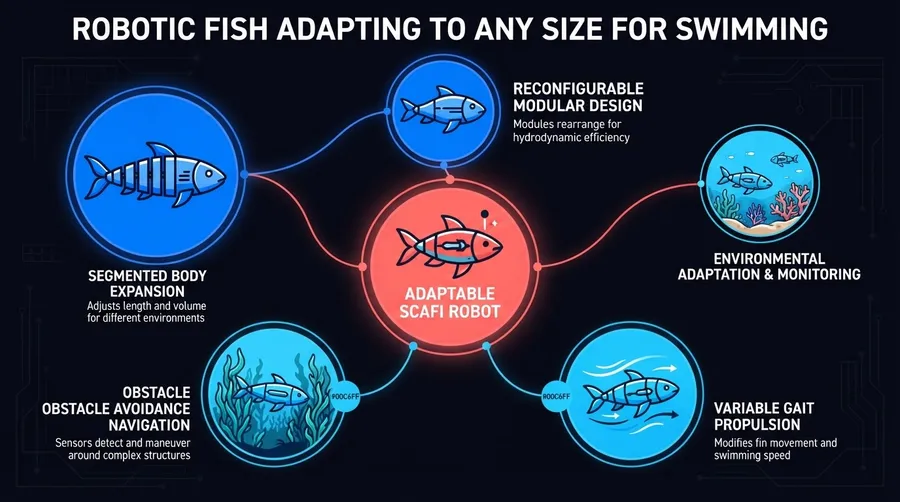
Flowchart of ScaFi's adaptive process in different aquatic environments.
🇺🇸 Unanswered Questions
Several questions remain open. How long will the polymer muscles last before degrading? Can the robot be scaled up for larger bodies of water? Nobody knows if ScaFi can operate effectively in turbulent conditions either.

🇪🇸 Preguntas sin respuesta
Aún quedan varias dudas en el aire cuánto tiempo durarán los músculos poliméricos antes de degradarse pueden escalarse estos robots para cuerpos de agua más grandes tampoco sabemos si ScaFi funcionará bien en condiciones turbulentas.
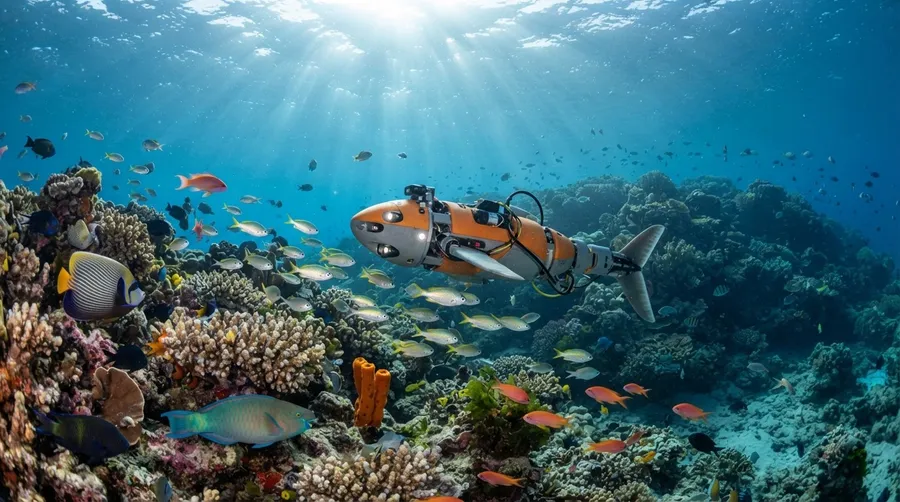
In a natural setting, ScaFi interacts with marine life, showing real-world application.
🔗 Related Articles | Artículos Relacionados
Nuestro canal transmite datos curiosos de ciencia, IA, espacio y tecnología las 24 horas. | Our channel streams science facts, AI, space and technology around the clock.
▶ Ver transmisión | Watch liveOPEN YOUR MIND
Source: Source
Join the conversation