NASA Innovates with Dual-Mode CubeSat Propulsion
NASA Innovates with Dual-Mode CubeSat Propulsion

The CubeSat orbits Earth, illuminated by the sun.
🇺🇸 NASA's Latest Step in CubeSat Propulsion
NASA engineers have been at work on something pretty exciting. They just completed a series of rigorous tests on a new small satellite system. Not just any tests though. We're talking about environmental and physical tests meant to push this tech to its limits. Why? To make space travel safer. These tests were run at the Marshall Space Flight Center in Huntsville, Alabama. People there are focused on crafting innovative propulsion methods for CubeSats. The aim is to create dual-mode systems for these small satellites. Imagine a propulsion system that can handle different types of maneuvers without needing separate, clunky components. It’s all about efficiency and reducing risks in space.
As an Amazon Associate I earn from qualifying purchases.

🇪🇸 El nuevo avance de NASA en propulsión para CubeSats
NASA ha estado trabajando en algo bastante emocionante. Un nuevo sistema de satélite pequeño ha pasado una serie de pruebas rigurosas. No eran pruebas cualquiera, sino ambientadas y físicas que llevan la tecnología al límite. El objetivo es hacer que el viaje espacial sea más seguro. Estas pruebas fueron realizadas en el Marshall Space Flight Center en Huntsville, Alabama. Allí trabajan en métodos de propulsión innovadores para CubeSats. Quieren crear sistemas de modo dual para estos satélites pequeños. Imagina un sistema de propulsión que maneja distintos tipos de maniobras sin componentes separados y voluminosos. Se trata de eficiencia y reducción de riesgos en el espacio.
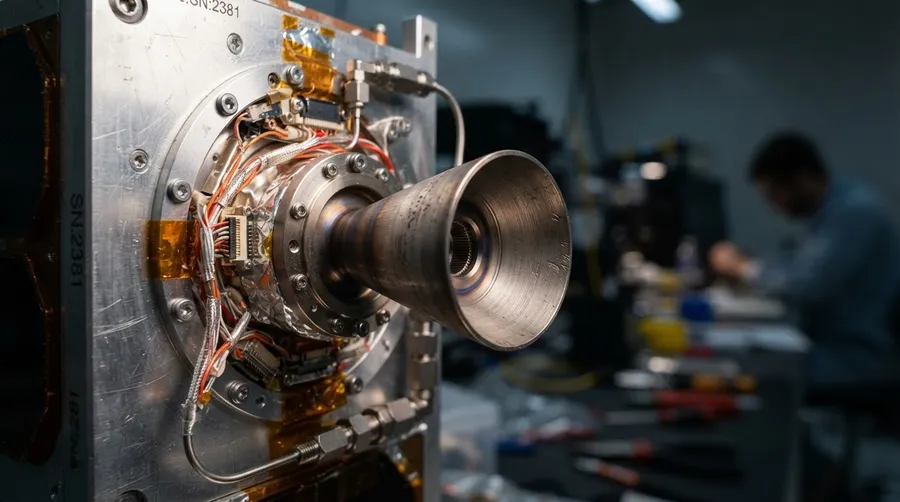
Detailed view of the CubeSat's propulsion nozzle.
🇺🇸 Old Methods Needed an Update
Spacecraft propulsion systems traditionally rely on volatile fuels and separate systems for different maneuvers. It’s not the most efficient setup, if we're being honest. These systems take up tons of space and add weight to spacecraft, which are already expensive to launch. Scientists knew this and have been looking for alternatives for years now. NASA's new dual-mode propulsion approach could change that setup by combining functions into a single mechanism. The idea isn’t exactly new but implementing it in such a small form factor is what makes it intriguing. Packaging multiple functions into one compact system could really streamline spacecraft design.
🇪🇸 Los métodos antiguos necesitaban una actualización
Los sistemas de propulsión tradicionales dependen de combustibles volátiles y sistemas separados para maniobras diferentes. No son muy eficientes realmente. Estos sistemas ocupan mucho espacio y aumentan el peso de las naves, que ya son caras de lanzar. Los científicos sabían esto y han buscado alternativas durante años. La nueva propulsión de doble modo podría cambiar todo combinando funciones en un solo mecanismo. La idea no es completamente nueva pero implementarla en un formato tan pequeño es lo que la hace interesante. Empaquetar múltiples funciones en un sistema compacto podría simplificar el diseño de las naves espaciales.
🇺🇸 The Mechanics of Dual-Mode Propulsion
So how does this dual-mode propulsion system actually work? The core of the system integrates two types of propulsion modes into one device, allowing for flexible maneuvers in space. One mode might use electric propulsion for fine adjustments while the other uses chemical methods for more significant changes in trajectory or speed. This combination means you can switch between modes depending on what's needed, which is strange if you think about it since traditional methods require separate bulky systems for each type of maneuvering.

🇪🇸 La mecánica detrás de la propulsión de doble modo
¿Cómo funciona este sistema de propulsión de doble modo? La clave consiste en integrar dos tipos de modos propulsores en un solo dispositivo, permitiendo maniobras flexibles en el espacio. Un modo podría usar propulsión eléctrica para ajustes finos mientras que el otro emplea métodos químicos para cambios significativos en trayectoria o velocidad. Esta combinación permite cambiar entre modos según lo necesario, lo cual es curioso, ya que los métodos tradicionales requieren sistemas voluminosos separados para cada tipo de maniobra.
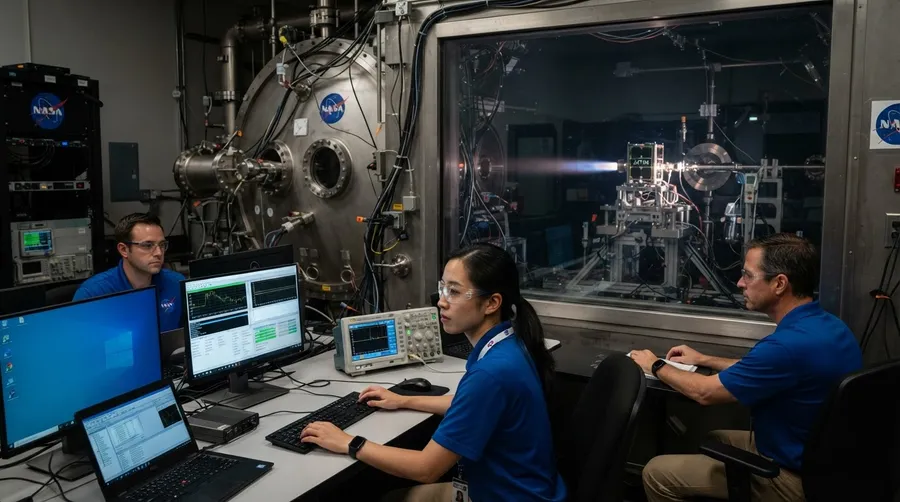
Engineers test the CubeSat's propulsion at NASA.
🇺🇸 What Could Change With This Tech
If NASA’s dual-mode propulsion system works as intended, we could see smaller satellites with more capabilities launched more frequently and at lower costs. Imagine universities or small companies being able to affordably launch their own CubeSats for research or tech development purposes. This would democratize access to space research in a big way, allowing more players to enter the field without requiring huge financial investments or resources.
🇪🇸 Qué podría cambiar con esta tecnología
Si el sistema de propulsión de doble modo de NASA funciona como se espera, podríamos ver satélites más pequeños con más capacidades lanzados con más frecuencia y a costos más bajos. Imagina universidades o pequeñas empresas lanzando sus propios CubeSats para investigación o desarrollo tecnológico sin gastar tanto dinero ni recursos enormes.
🇺🇸 Still Unanswered Questions
No one knows yet how this system will perform in long-duration missions beyond Earth orbit or under extreme radiation conditions prevalent in deep space environments. Another question researchers have is the cost-effectiveness of scaling up this technology for larger spacecraft applications.

🇪🇸 Preguntas aún sin respuesta
Aún no se sabe cómo funcionará este sistema en misiones prolongadas más allá de la órbita terrestre ni bajo condiciones extremas de radiación en el espacio profundo. Otra pregunta es si será rentable adaptar esta tecnología para naves espaciales más grandes.
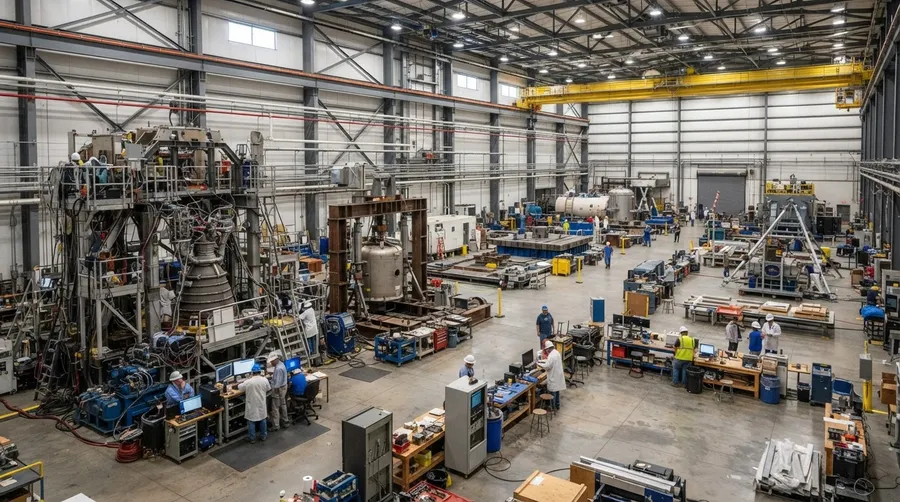
NASA's facility showcases various testing projects.
🔗 Related Articles | Artículos Relacionados
Nuestro canal transmite datos curiosos de ciencia, IA, espacio y tecnología las 24 horas. | Our channel streams science facts, AI, space and technology around the clock.
▶ Ver transmisión | Watch liveOPEN YOUR MIND
Source: Source
Join the conversation