Revolutionizing AI Servers with Liquid Cooling Technology
Revolutionizing AI Servers with Liquid Cooling Technology
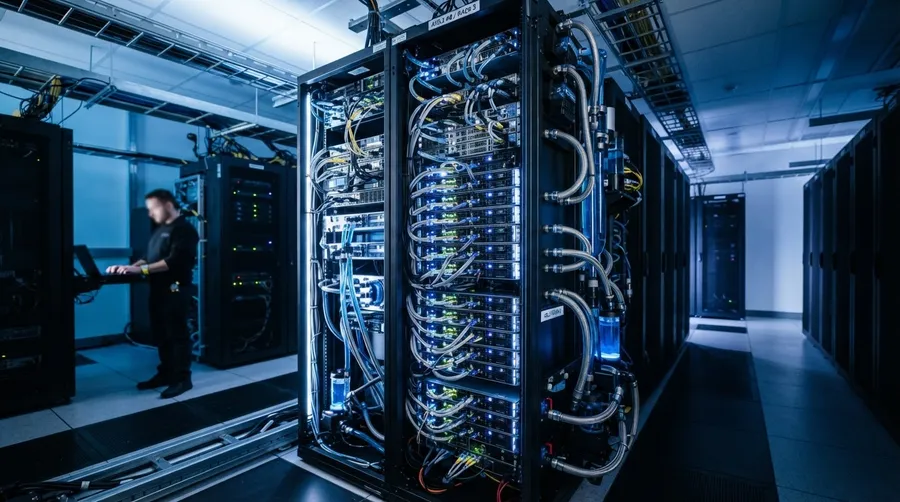
A high-density server rack with advanced liquid cooling technology.
🇺🇸 Discovery of Liquid Cooling in AI Servers
Engineers at CoolIT stumbled upon a fascinating breakthrough by diving deep into AI server cooling. They've utilized liquid cooling technology so smartly that it takes over almost the entire heat management process. This isn't just some theoretical idea on paper. These guys have already put it to work with modular coldplate blocks. The payoff is enormous. When you eliminate most of the air cooling, the system runs dramatically smoother. Imagine AI servers operating without those noisy fans. No more worrying about excess heat frying your chips. This discovery is pretty significant because it changes the game for high-density server racks.
As an Amazon Associate I earn from qualifying purchases.

🇪🇸 Descubrimiento del Enfriamiento Líquido en Servidores de IA
En CoolIT, los ingenieros han logrado un avance increíble en el enfriamiento de servidores de IA. Han implementado una tecnología de enfriamiento líquido que prácticamente se encarga de todo el calor. No es solo una teoría; ya lo utilizan con bloques modulares de placas frías. El beneficio es inmenso. Al eliminar casi todo el enfriamiento por aire, el sistema funciona mucho más eficientemente. Imagina servidores de IA operando sin esos ventiladores ruidosos. Sin preocuparse porque el calor dañe los componentes. Este descubrimiento es notable porque transforma cómo se gestionan los racks de servidores de alta densidad.
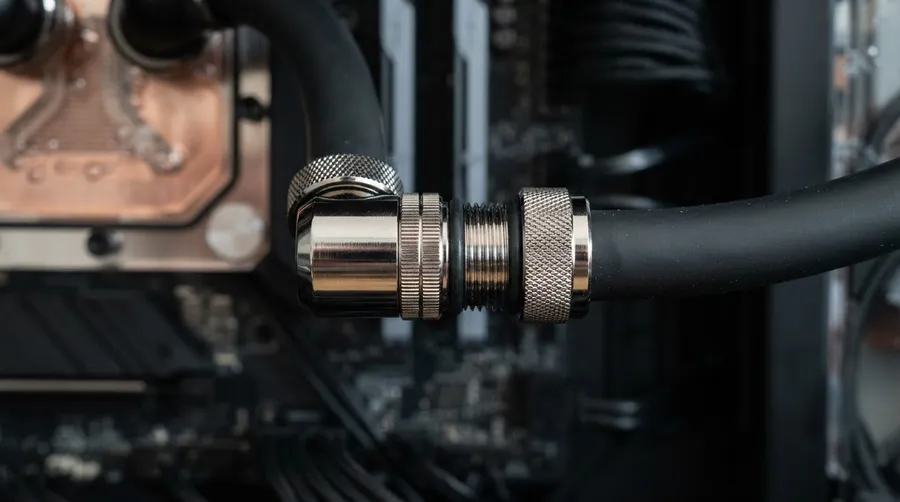
Close-up of a liquid cooling pipe connector, showcasing precision.
🇺🇸 Background on AI Server Cooling
Before this shift, people relied heavily on hybrid systems to cool down servers. A mix of air and liquid provided a decent balance between cost and efficiency. But beyond 250 kW, that model becomes pretty much obsolete. You're left with 75 kW that air needs to manage, which is pricey and complicated. Operators were reluctant to adopt these systems because of the financial strain and logistical headache involved. The search for a better solution was underway for years before liquid cooling emerged as a viable option. It seemed like a pipe dream at first but not anymore.

🇪🇸 Antecedentes del Enfriamiento en Servidores de IA
Antes de este cambio, se dependía mucho de sistemas híbridos para enfriar servidores, combinando aire y líquido para obtener un equilibrio razonable entre costo y eficiencia. Pero al superar los 250 kW, ese modelo casi deja de ser funcional. Quedan 75 kW que deben ser gestionados por aire, lo cual es caro y complejo. Muchos operadores eran reticentes a adoptar estos sistemas por la carga financiera y los desafíos logísticos que implicaban. La búsqueda de una mejor solución llevaba años hasta que el enfriamiento líquido se presentó como opción viable.
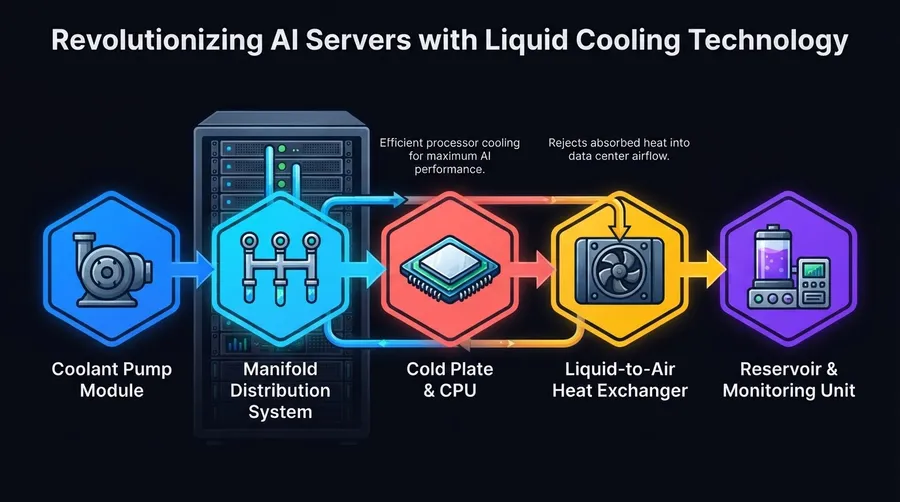
Diagram of liquid cooling components within a server rack.
🇺🇸 Mechanical Process of Liquid Cooling
The process involves coldplate blocks that capture heat directly from processors and major components. These blocks are modular, allowing for scalability within systems. Liquid flows through these blocks and absorbs heat like a sponge pulling moisture from the air. This heated liquid then moves away from the critical components to be cooled externally before re-entering the cycle anew. It’s like an endless loop but one that works quietly and efficiently in the background without causing disruption or noise within the server room.

🇪🇸 Proceso Mecánico del Enfriamiento Líquido
El proceso utiliza bloques de placas frías que capturan el calor directamente desde procesadores y componentes clave. Estos bloques son modulares, permitiendo escalabilidad en los sistemas. El líquido fluye a través de estos bloques y absorbe calor como una esponja atrayendo humedad del aire. Este líquido caliente se aleja de los componentes críticos para ser enfriado externamente antes de volver a entrar en el ciclo nuevamente. Es un ciclo interminable pero que opera silenciosamente y eficientemente sin causar interrupciones o ruido en la sala de servidores.
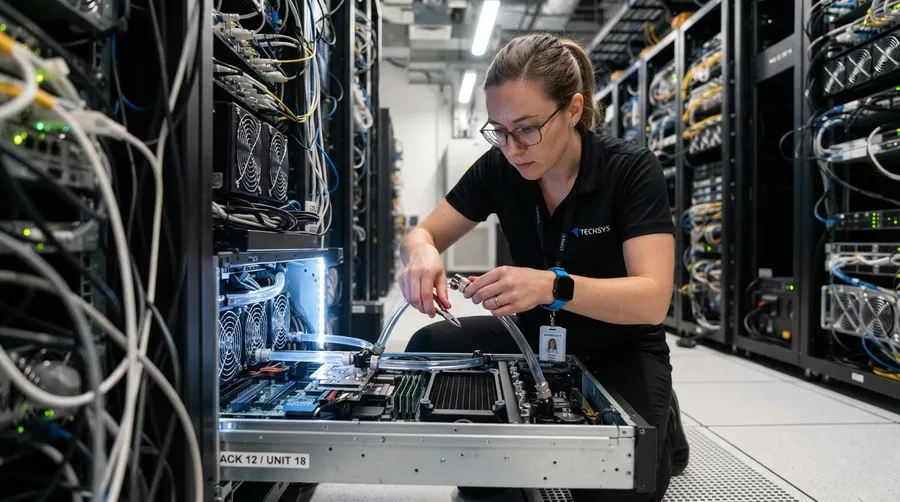
A technician adjusts a liquid cooling system in a server rack.
🇺🇸 Impact on Real-World Operations
For data centers, this means lower energy bills and less maintenance hassle due to failing fans or overheating issues. Technicians have fewer emergency repairs to make because there is less stress on each component under this cooling regime. Organizations running AI workloads can allocate resources elsewhere instead of worrying about keeping their machines cool constantly. The new approach also opens up the possibility for denser hardware configurations since thermal limits have effectively shifted upwards.

🇪🇸 Impacto en Operaciones Reales
Para los centros de datos, esto significa facturas de energía más bajas y menos problemas por mantenimiento debido a ventiladores fallidos o problemas de sobrecalentamiento. Los técnicos tienen menos reparaciones de emergencia que hacer ya que hay menos estrés en cada componente bajo este sistema de enfriamiento. Las organizaciones ejecutando cargas de trabajo de IA pueden redirigir recursos a otras áreas en lugar de preocuparse constantemente por mantener sus máquinas frescas. El nuevo enfoque también posibilita configuraciones más densas ya que los límites térmicos han cambiado efectivamente.

Flowchart showing heat dissipation in a liquid-cooled server.
🇺🇸 Remaining Unknowns in Liquid Cooling
How will this system perform in extremely humid environments? Nobody has quite cracked that nut yet. What's the long-term impact on component lifespan under constant liquid exposure? That's still unclear too. And how quickly can these systems be integrated into existing infrastructures without causing major disruptions?
🇪🇸 Incógnitas Restantes en Enfriamiento Líquido
¿Cómo funcionará este sistema en entornos extremadamente húmedos? Aún no hay respuesta definitiva para eso. ¿Qué impacto tiene a largo plazo sobre la vida útil de los componentes con exposición constante al líquido? Eso tampoco está claro aún. ¿Y qué tan rápido pueden integrarse estos sistemas en infraestructuras existentes sin causar grandes interrupciones?
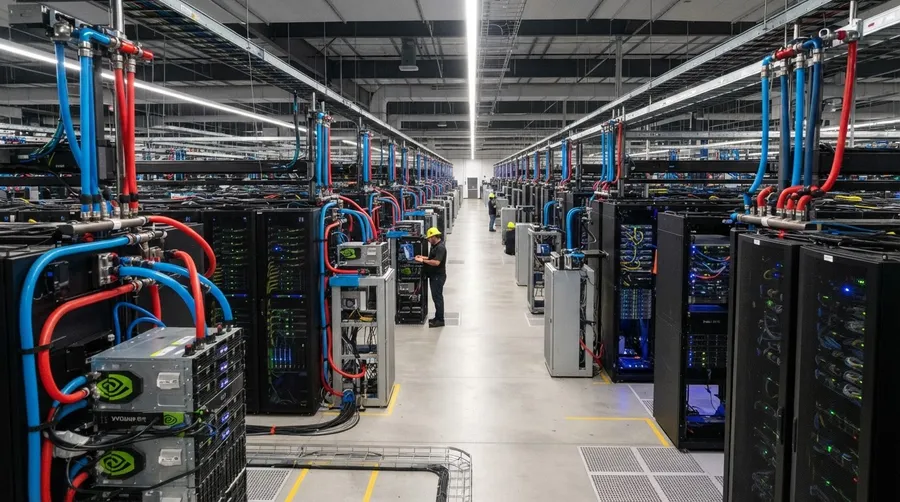
A vast data center with integrated liquid cooling systems.
🔗 Related Articles | Artículos Relacionados
Nuestro canal transmite datos curiosos de ciencia, IA, espacio y tecnología las 24 horas. | Our channel streams science facts, AI, space and technology around the clock.
▶ Ver transmisión | Watch liveOPEN YOUR MIND
Source: Source
Join the conversation