New Feline Species Discovered in Bolivia's Jungles
New Feline Species Discovered in Bolivia's Jungles
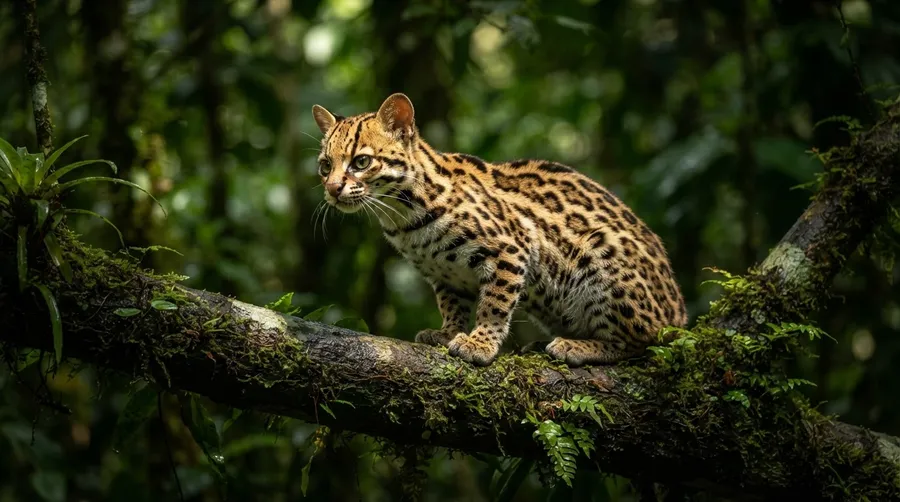
The tiny tiger cat perched on a branch in its jungle habitat.
🇺🇸 New Feline Species Found in Bolivia
Researchers stumbled upon a remarkable discovery deep in the jungles of Bolivia. Genetic testing revealed a new feline species, which is quite something if you think about it. They were studying two tiny tiger cats when they realized these cats were unique. This finding adds a new branch to the feline family tree. What does that mean exactly? The feline family tree just got a little more crowded. It shows how much we still don't know about species hiding in remote areas. It's like there's an entire world out there that continues to surprise us when we least expect it.
As an Amazon Associate I earn from qualifying purchases.

🇪🇸 Nueva Especie Felina Descubierta en Bolivia
Investigadores encontraron algo asombroso en las selvas de Bolivia. Las pruebas genéticas revelaron una nueva especie felina. Estudiaban dos gatos tigre cuando se dieron cuenta de sus características únicas. Este hallazgo agrega una nueva rama al árbol genealógico de los felinos. ¿Sabías que aún hay especies sin descubrir en lugares remotos? Es fascinante cómo el mundo sigue sorprendiéndonos cuando no lo esperamos. Sin embargo, esta nueva especie nos recuerda lo poco que sabemos sobre la biodiversidad en regiones difíciles de acceder.

A detailed view of the tiny tiger cat's eye and its patterns.
🇺🇸 What We Knew Before
Before this discovery, scientists knew about several species of small wild cats in South America. Most belong to the ocelot lineage, like the oncilla and the margay. These cats are elusive, making them hard to study. We also knew that their habitats spanned from mountain forests to lowland jungles, but details were sparse. Most research focused on preservation efforts due to habitat loss and poaching. The feeling was that we had cataloged most of what was out there, at least at the larger taxonomic levels. It turns out nature had some secrets left.

🇪🇸 Lo Que Sabíamos Antes
Antes de este hallazgo, sabíamos que existían varias especies de pequeños gatos salvajes en Sudamérica, como el oncilla y el margay, que pertenecen al linaje del ocelote. Son animales esquivos y difíciles de estudiar. Sus hábitats iban desde bosques montañosos hasta selvas bajas, pero teníamos pocos detalles específicos. La mayoría de la investigación se centraba en esfuerzos de conservación por la pérdida de hábitat y la caza furtiva. Pensábamos que ya habíamos clasificado lo más importante. Pero parece que la naturaleza aún guardaba secretos.
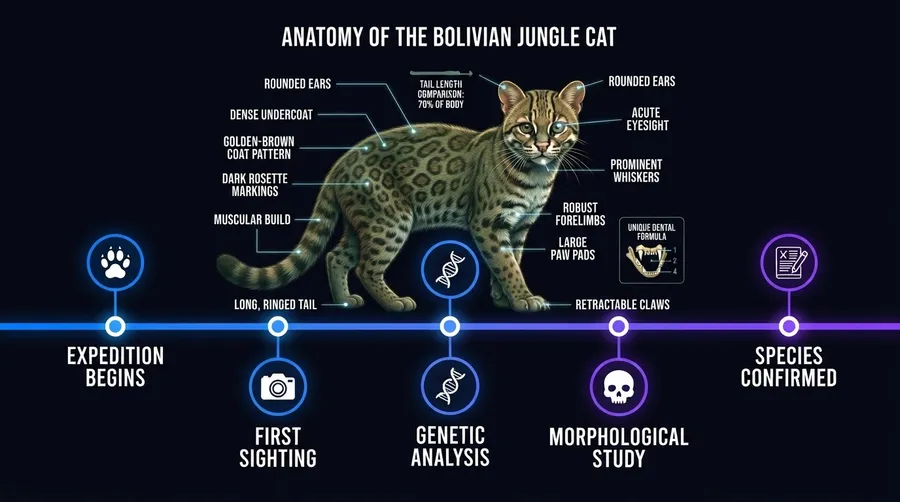
Anatomy of the newly discovered feline species with labeled features.
🇺🇸 Genetic Testing: How It Works
So, how did they actually figure this out? The researchers took DNA samples from the two cats and compared them to known species of small wild cats. It's a bit technical but basically involves sequencing specific parts of the DNA that help determine species differences. Once they ran these tests, they found genetic markers not present in any other recorded feline species. These unique markers proved that these weren't just odd-looking members of an existing species but something entirely new.

🇪🇸 Pruebas Genéticas: Cómo Funciona
¿Cómo lo descubrieron exactamente? Los investigadores tomaron muestras de ADN de los dos gatos y las compararon con especies conocidas de pequeños felinos salvajes. Suena técnico pero implica secuenciar partes del ADN que ayudan a determinar diferencias entre especies. Al realizar estas pruebas encontraron marcadores genéticos únicos no presentes en otras especies felinas registradas. Estos marcadores mostraron que no eran simplemente miembros raros de una especie existente sino algo completamente nuevo.

A researcher gathers genetic samples from the tiny tiger cat.
🇺🇸 Implications for Conservation
This new knowledge could change how we approach conservation in Bolivia's jungles. Knowing a new species lives there might lead to more focused efforts to preserve its habitat. Local communities could benefit from ecotourism if they protect these areas, boosting their economy while conserving nature. It also raises awareness about lesser-known species and their roles in ecological systems. More attention might go toward studying these regions now, which could help with broader conservation strategies.

🇪🇸 Implicaciones para la Conservación
Este nuevo conocimiento podría transformar nuestro enfoque hacia la conservación en las selvas bolivianas. Saber que existe una nueva especie podría impulsar esfuerzos más enfocados para preservar su hábitat y proteger estas áreas naturales por parte de las comunidades locales podría fomentar el ecoturismo beneficiando su economía y conservando la naturaleza al mismo tiempo. Aumenta la conciencia sobre especies menos conocidas y su papel en sistemas ecológicos.
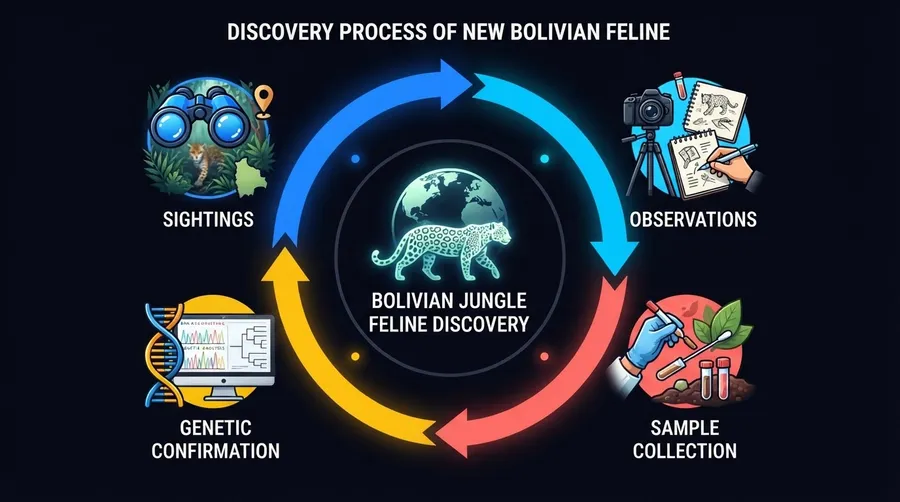
Timeline of the discovery process of the new feline species.
🇺🇸 Unanswered Questions Remain
We still don't know how big this population is or what its specific habitat needs are. Researchers need to find out how this new species interacts with local ecosystems and whether it's endangered or thriving in its environment.

🇪🇸 Preguntas Sin Responder
No sabemos cuán grande es esta población ni cuáles son sus necesidades específicas de hábitat. Los investigadores deben descubrir cómo interactúa esta nueva especie con los ecosistemas locales y si está en peligro o prosperando en su entorno.
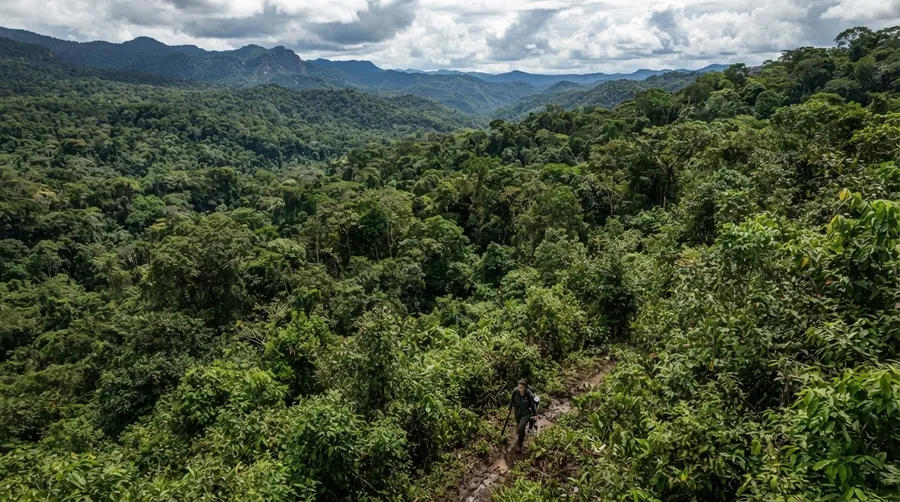
The vast Bolivian jungle habitat of the new feline species.
🔗 Related Articles | Artículos Relacionados
Nuestro canal transmite datos curiosos de ciencia, IA, espacio y tecnología las 24 horas. | Our channel streams science facts, AI, space and technology around the clock.
▶ Ver transmisión | Watch liveOPEN YOUR MIND
Source: Source
Join the conversation