How AI Shapes Dialogue at Climate Week
How AI Shapes Dialogue at Climate Week

Leaders and experts discuss AI's role at Climate Week.
🇺🇸 AI Takes Center Stage at Climate Week
Artificial intelligence is all over New York Climate Week. Leaders, experts, and influencers are talking about it. AI is shaping the conversations through predictive analysis. Gone are the days when discussions relied solely on past data and scientific theories. Now, AI is being used to project future climate scenarios. This technology can model complex interactions in our environment. People see AI as a tool to better understand the tangled web of climate factors. Some folks think its presence is everywhere. However, others argue that it's still in development for climate predictions. I've seen mixed reviews myself. What do you believe?
As an Amazon Associate I earn from qualifying purchases.

🇪🇸 La Inteligencia Artificial Domina la Semana del Clima
La inteligencia artificial es el centro de atención en la Semana del Clima en Nueva York. Los líderes y expertos están enfocados en ella. Esta tecnología está moldeando las conversaciones mediante análisis predictivo. Antes, las discusiones dependían más de datos pasados y teorías científicas establecidas. Ahora, la IA se utiliza para proyectar escenarios climáticos futuros y modelar interacciones complejas en el medio ambiente. Algunos piensan que puede ayudar a entender mejor el intrincado entramado de factores climáticos. Otros opinan que su capacidad predictiva aún está en desarrollo. He escuchado opiniones mixtas sobre esto.

AI models climate data on a vivid tablet screen.
🇺🇸 The Known Background of AI in Climate Policy
AI isn't new to climate policy discussions. For a while now, scientists have been exploring its potential applications in environmental science. In recent years, AI has moved from being a cool idea to being part of research projects. Machine learning has been used to analyze satellite images and predict deforestation rates. Algorithms assess greenhouse gas emissions with more accuracy than before. Even with these developments, integrating AI into climate strategies on a broader scale remains a work in progress.

🇪🇸 Lo Que Ya Se Sabía: La IA en Políticas Climáticas
La inteligencia artificial no es nueva en las políticas climáticas. Desde hace un tiempo, los científicos han investigado sus aplicaciones potenciales en ciencias ambientales. En los últimos años, ha pasado de ser una idea fascinante a formar parte de proyectos de investigación concretos. El aprendizaje automático se utiliza para analizar imágenes satelitales y predecir tasas de deforestación. Los algoritmos aumentan la precisión al evaluar las emisiones de gases de efecto invernadero. Sin embargo, la integración de la IA en estrategias climáticas más amplias sigue siendo un proceso en desarrollo.

AI integration process in climate talks visualized.
🇺🇸 Mechanics Behind AI Climate Models
AI tools rely heavily on data input and algorithms to function effectively in climate modeling. The process starts with feeding these systems vast amounts of data from various sources like satellites or sensors on the ground. Machine learning algorithms then identify patterns and correlations within this data which might be impossible for humans to see directly. The models generated can simulate potential climate outcomes and inform policy decisions based on those simulations.

🇪🇸 Cómo Funciona La IA en Modelos Climáticos
Las herramientas de inteligencia artificial dependen mucho de la entrada de datos y algoritmos para funcionar adecuadamente en los modelos climáticos. El proceso comienza alimentando estos sistemas con grandes cantidades de datos provenientes de fuentes diversas como satélites o sensores terrestres. Los algoritmos de aprendizaje automático identifican patrones y correlaciones dentro de estos datos que podrían ser invisibles para los humanos directamente. Los modelos generados pueden simular posibles resultados climáticos e informar decisiones políticas basadas en esas simulaciones.
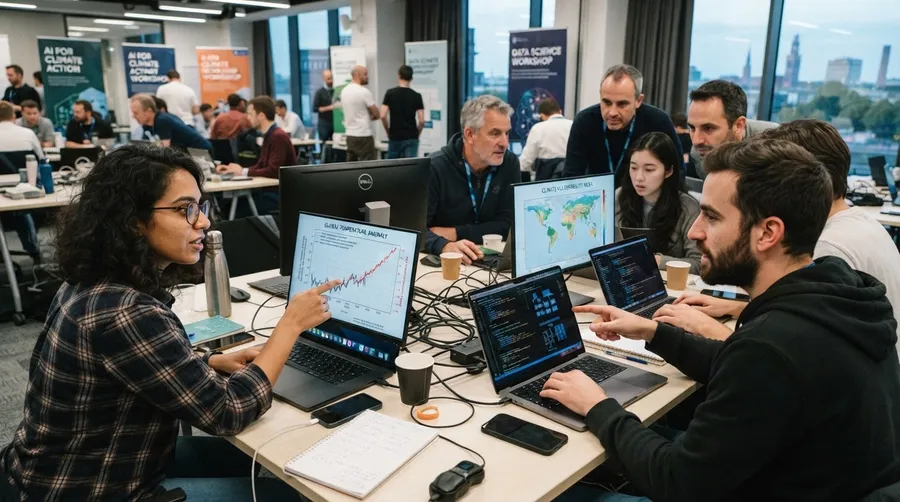
Developers and scientists work on climate solutions.
🇺🇸 Impact on Everyday Life and Policy
AI's impact on climate policy and daily life is already noticeable though not always obvious at first glance. Policymakers are using AI-driven insights to craft legislation that addresses long-term sustainability goals more effectively than ever before. For ordinary people, there are apps that suggest how individuals can reduce their carbon footprints based on their habits after analyzing patterns of behavior using AI.

🇪🇸 Impacto en la Vida Cotidiana y la Política
El impacto de la IA en las políticas climáticas y la vida diaria ya es notable aunque no siempre evidente a simple vista. Los legisladores utilizan conocimientos impulsados por IA para crear leyes que aborden objetivos sostenibles a largo plazo con mayor efectividad que antes. Para las personas comunes, existen aplicaciones que sugieren cómo reducir su huella de carbono según sus hábitos tras analizar patrones conductuales mediante inteligencia artificial.
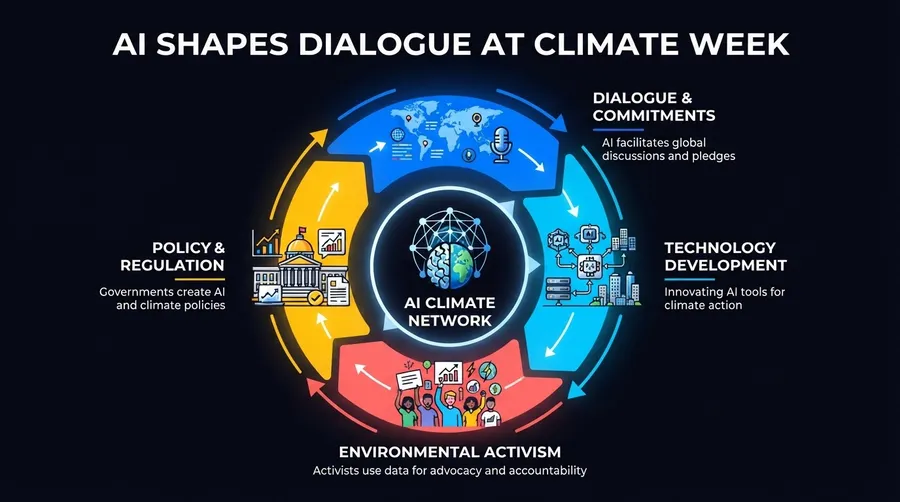
Stakeholder network in AI and climate discussions.
🇺🇸 Remaining Questions About AI and Climate
Unanswered questions remain about how AI will fully integrate with existing climate models over the next decade or so. Researchers are still unsure about the long-term impacts of relying heavily on AI-driven policies without human oversight monitoring their efficacy consistently.

🇪🇸 Preguntas Sin Responder Sobre IA y Clima
Persisten preguntas sin responder sobre cómo se integrará completamente la IA con los modelos climáticos existentes durante la próxima década aproximadamente. Los investigadores aún no están seguros sobre los impactos a largo plazo de depender tanto de políticas impulsadas por IA sin supervisión humana monitoreando su efectividad continuamente.
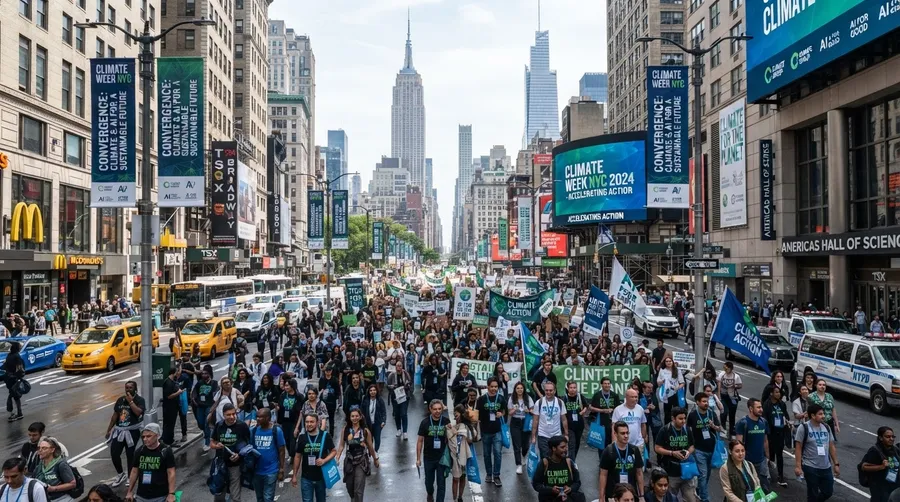
Climate Week brings diverse participants to Manhattan.
🔗 Related Articles | Artículos Relacionados
Nuestro canal transmite datos curiosos de ciencia, IA, espacio y tecnología las 24 horas. | Our channel streams science facts, AI, space and technology around the clock.
▶ Ver transmisión | Watch liveOPEN YOUR MIND
Source: Source
Join the conversation