Meet the Artemis II Astronauts at NASA Marshall
Meet the Artemis II Astronauts at NASA Marshall
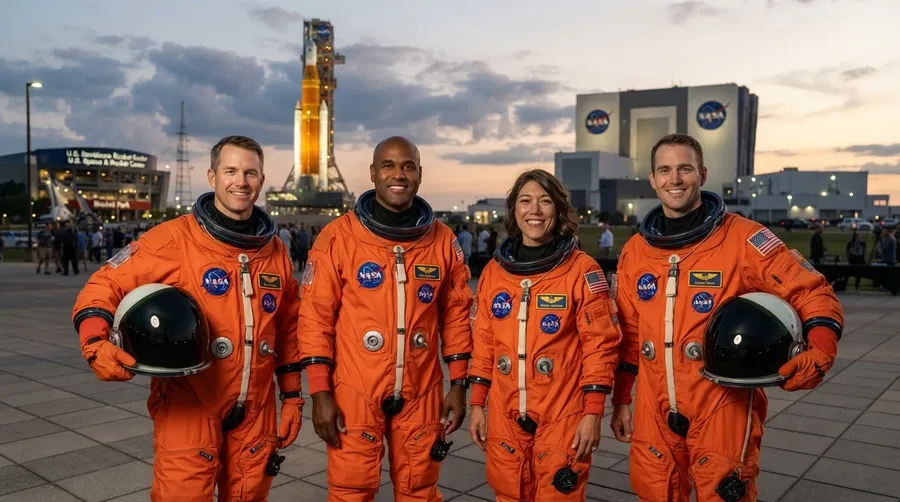
Artemis II astronauts pose at NASA Marshall Space Flight Center.
🇺🇸 The Crew's Visit to NASA Marshall
The crew of Artemis II, with Christina Koch, Victor Glover, Reid Wiseman, and Jeremy Hansen, visited the NASA Marshall Space Flight Center. They stopped by Huntsville, Alabama, on September 1, 2026. It was a chance for these astronauts to connect with the workforce at Marshall. They shared their experiences and insights about the upcoming mission. The crew engaged with engineers and scientists who play a big role in making these missions happen. Seeing the faces behind the technology must have been something special. Listening to the people who build the parts that go into space. It humanizes the process. It's not just machines going up there but a whole team effort.
Como Afiliado de Amazon, obtengo ingresos por las compras adscritas que cumplen los requisitos aplicables.

🇪🇸 La visita de la tripulación a NASA Marshall
La tripulación de Artemis II visitó el Centro de Vuelo Espacial Marshall de la NASA en Huntsville, Alabama, el 1 de septiembre de 2026. Christina Koch, Victor Glover, Reid Wiseman y Jeremy Hansen aprovecharon la oportunidad para conectar con el personal que trabaja en Marshall. Hablaron sobre sus experiencias y lo que esperan de la misión por venir. Los astronautas interactuaron con los ingenieros y científicos que hacen posibles estas misiones. Conocer a quienes están detrás de la tecnología añade un toque humano a todo el proceso espacial.
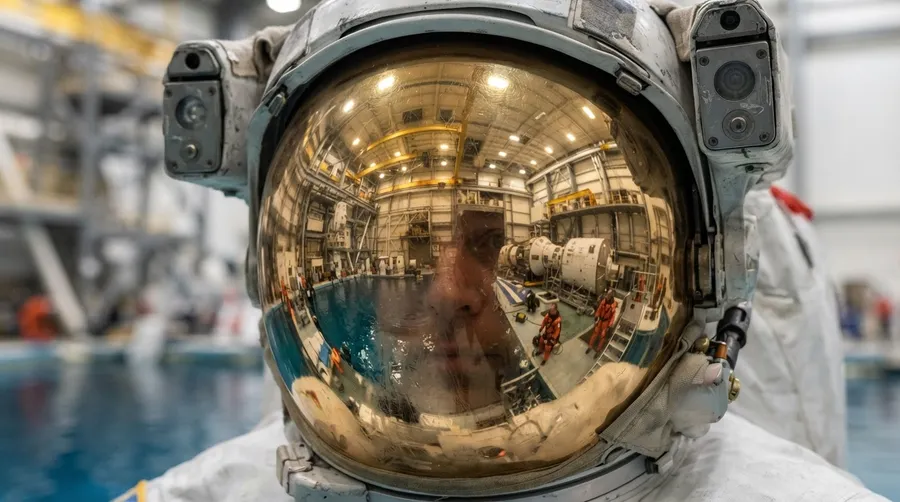
Astronaut helmet visor reflects NASA Marshall Space Flight Center.
🇺🇸 What We Already Knew About Artemis Missions
Artemis missions aim to land humans on the Moon again. It's part of NASA's ongoing efforts to explore deeper into space. The initial goals are set on returning to lunar exploration and establishing a sustainable presence there. Building on past Apollo missions but with updated technology these missions seek long-term exploration opportunities. NASA has been working for years on developing systems like the Space Launch System and Orion spacecraft for this purpose.

🇪🇸 Lo que ya sabíamos sobre las misiones Artemis
Las misiones Artemis tienen el objetivo de llevar nuevamente humanos a la Luna como parte de los esfuerzos continuos de la NASA por explorar más allá en el espacio. Se busca no solo regresar sino establecer una presencia sostenible allí. Basándose en las misiones Apolo pero con tecnología renovada estas misiones se centran en oportunidades de exploración a largo plazo.
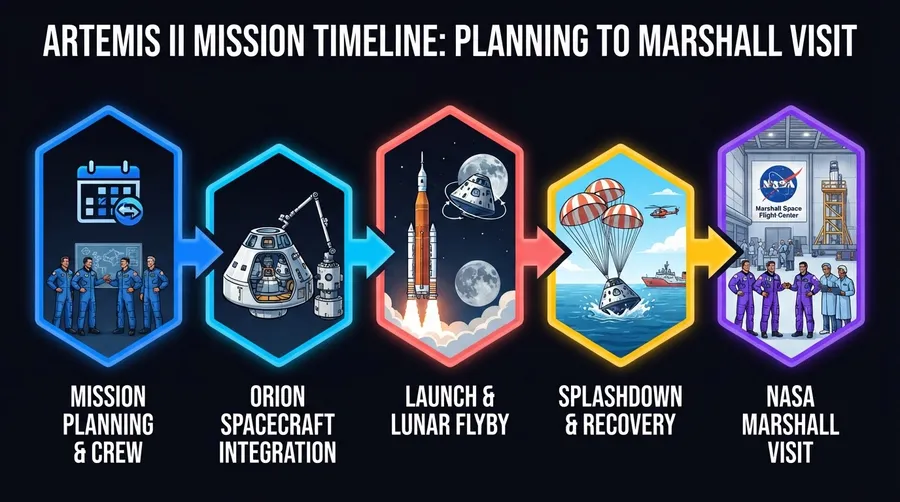
Timeline of the Artemis II mission leading to NASA Marshall visit.
🇺🇸 Mechanical Workings of Artemis II Mission
The mission revolves around systems like the Space Launch System rocket and Orion spacecraft. The rocket provides the necessary thrust to escape Earth's gravity, which is no small feat when you think about it. Orion acts as the crew vehicle designed to withstand deep space environments. The mechanics involve complex coordination between ground control and onboard systems. The spacecraft relies heavily on solar arrays for power during transit. While all this sounds straightforward each component must work flawlessly together.

🇪🇸 El funcionamiento mecánico de la misión Artemis II
La misión se centra en sistemas como el cohete Space Launch System y la nave Orion. Este cohete ofrece el empuje necesario para vencer la gravedad terrestre algo impresionante si lo piensas bien. Orion es el vehículo para la tripulación capaz de resistir los entornos del espacio profundo. Toda esta mecánica necesita una coordinación compleja entre el control en tierra y los sistemas abordo.
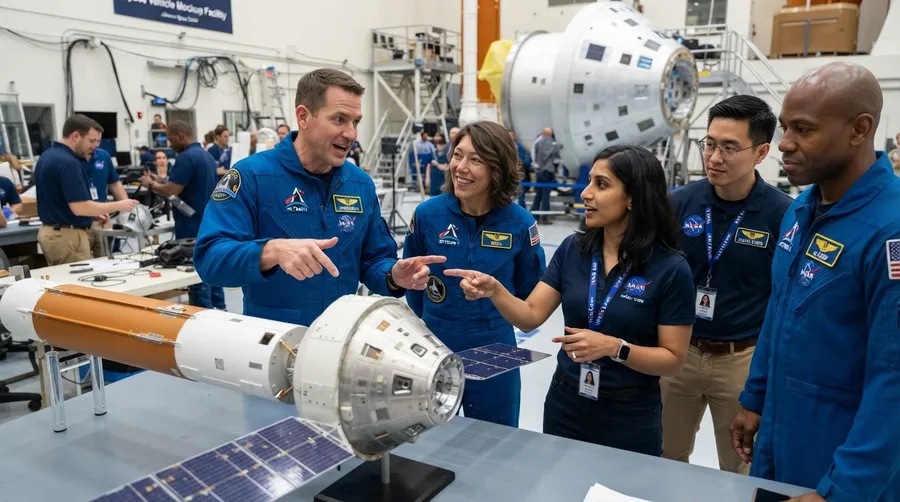
Astronauts and engineers discuss the Artemis II spacecraft model.
🇺🇸 Real-World Consequences of Lunar Exploration
Returning to the Moon opens new opportunities for scientific research and potential economic benefits. Developing technologies for lunar habitats could lead to advancements in materials science and resource management here on Earth too. There's talk of mining resources like helium-3 which could offer cleaner energy alternatives in the future not just hypothetical but real possibilities being explored today.

🇪🇸 Consecuencias del regreso a la Luna
Volver a la Luna abre nuevas oportunidades para investigaciones científicas y beneficios económicos potenciales. El desarrollo de tecnologías para hábitats lunares podría llevar a avances en ciencia de materiales y gestión de recursos también aquí en la Tierra.
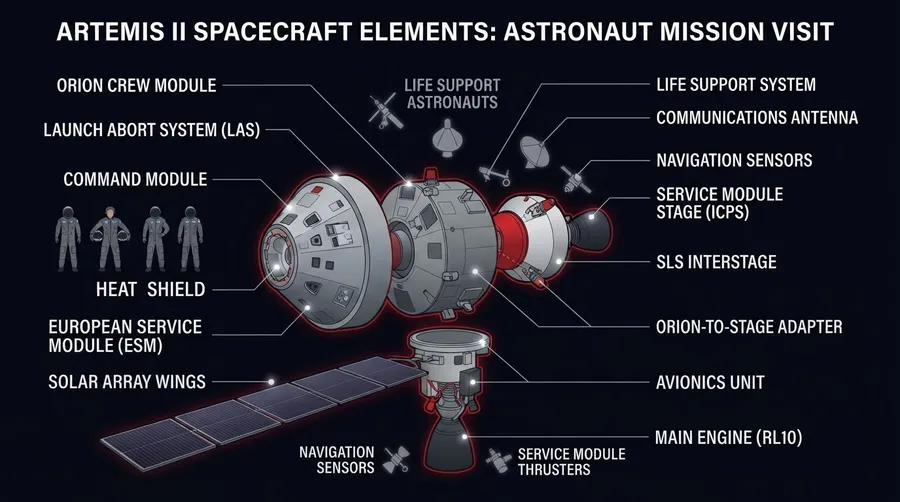
Diagram showing Artemis II spacecraft components discussed by astronauts.
🇺🇸 What Remains Unknown About Artemis II
How will lunar dust affect long-term missions? What is the actual lifespan of systems in deep space? Nobody knows what surprise challenges await once humans start living on the Moon regularly.

🇪🇸 Lo que aún no sabemos sobre Artemis II
¿Cómo afectará el polvo lunar a misiones prolongadas? ¿Cuál es la vida útil real de los sistemas en el espacio profundo? Nadie sabe qué desafíos inesperados surgirán al establecerse humanos regularmente en la Luna.
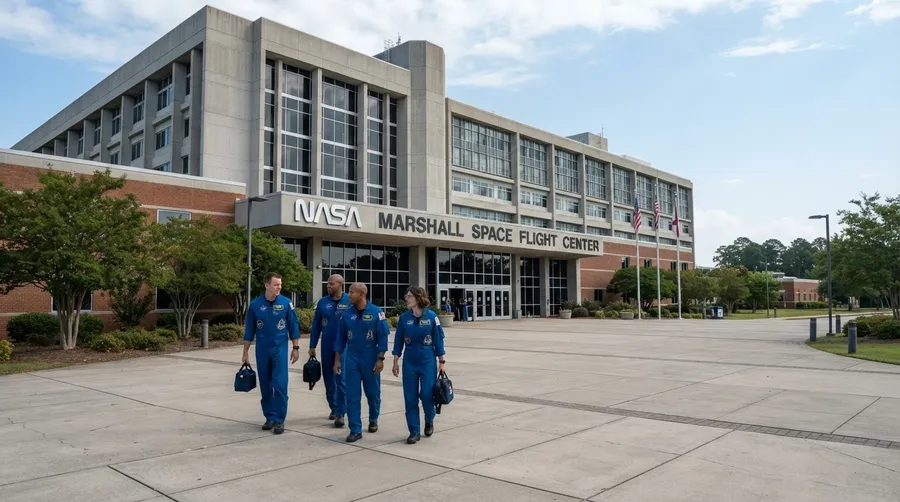
Artemis II crew approaches the NASA Marshall Space Flight Center.
🔗 Related Articles | Artículos Relacionados
Nuestro canal transmite datos curiosos de ciencia, IA, espacio y tecnología las 24 horas. | Our channel streams science facts, AI, space and technology around the clock.
▶ Ver transmisión | Watch liveOPEN YOUR MIND
Source: Source
Join the conversation