Curiosity Rover Marks 5,000 Days Exploring Mars
Curiosity Rover Marks 5,000 Days Exploring Mars
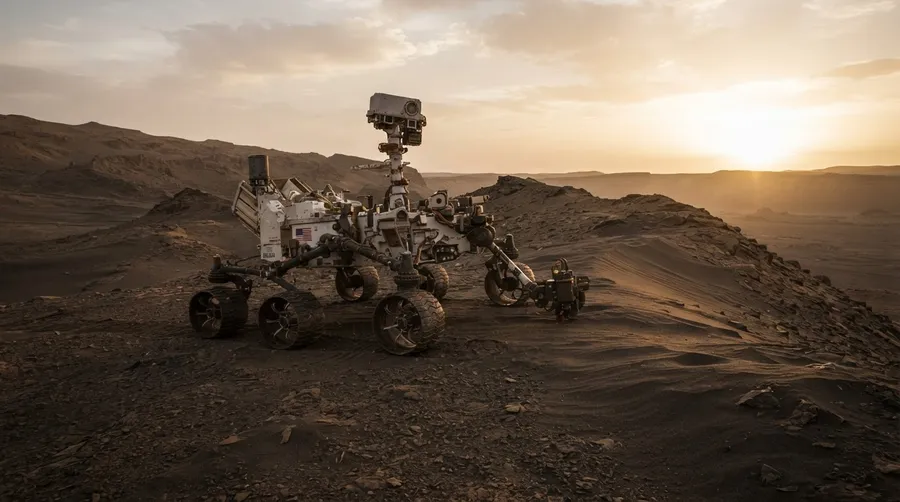
Curiosity Rover at Chocolatal during a Martian sunrise.
🇺🇸 Curiosity's Recent Mars Adventure
The Curiosity Rover, which has been exploring the surface of Mars since 2012, recently marked its 5000th day on the Red Planet. While parked at a sand ridge known as Chocolatal, Curiosity captured stunning black-and-white panoramas. The first was taken in the morning on August 30, 2026, while the second was taken in the evening on September 2, 2026. These images offer a unique perspective of Mars at different times of day, highlighting contrasts in light and shadow. It's fascinating how much Curiosity has achieved over these years. And yet, every snapshot still feels so novel.
As an Amazon Associate I earn from qualifying purchases.

🇪🇸 La reciente aventura en Marte del Curiosity
El rover Curiosity, que ha estado explorando Marte desde 2012, celebró recientemente su día número 5000 en el planeta rojo. Mientras estaba estacionado en una cresta de arena llamada Chocolatal, Curiosity capturó impresionantes panoramas en blanco y negro. La primera imagen se tomó por la mañana el 30 de agosto de 2026, y la segunda por la tarde el 2 de septiembre del mismo año. Estas imágenes ofrecen una perspectiva única del planeta a diferentes horas del día. Es increíble pensar en todo lo que ha logrado Curiosity durante estos años. Sin embargo, cada nueva imagen sigue siendo asombrosa.

Detailed view of the rover's wheel imprint on Martian sand.
🇺🇸 Background: The Journey to This Point
Before landing on Mars, scientists knew the planet was rocky and dry with a thin atmosphere. But the details were fuzzy. Not all theories agreed. Curiosity set out to fill these gaps by analyzing soil samples and taking detailed photographs. One of its major goals was to find conditions that might have supported life. Over time, it has provided evidence of ancient lakes and streams that once crisscrossed the Martian landscape. This new information continues to evolve our understanding of Mars.

🇪🇸 Antecedentes: El camino hasta este punto
Antes de aterrizar en Marte, los científicos sabían que el planeta era rocoso y seco con una atmósfera delgada. Pero los detalles eran inciertos y no todas las teorías coincidían. Curiosity se embarcó en la misión de llenar esos vacíos analizando muestras de suelo y tomando fotografías detalladas. Uno de sus principales objetivos era encontrar condiciones que pudieran haber sustentado vida en el pasado. Con el tiempo, ha proporcionado evidencia de antiguos lagos y riachuelos que alguna vez cruzaron el paisaje marciano. Esta nueva información sigue ampliando nuestra comprensión de Marte.

Timeline of Curiosity's 5,000 days exploring Mars.
🇺🇸 Mechanics Behind Curiosity's Imaging
Curiosity's cameras play a crucial role in its mission on Mars. These cameras are not your typical point-and-shoot devices; they are highly sophisticated systems designed for scientific analysis as well as navigation. The black-and-white navigation cameras are used to capture wide-angle panoramic images needed for both driving and scientific experiments. They work by capturing multiple frames that are then stitched together to form a single comprehensive image of the terrain or sky. This technique offers detailed views and helps scientists decide where Curiosity should head next.
🇪🇸 Mecánica detrás de las imágenes del Curiosity
Las cámaras del Curiosity son esenciales para su misión en Marte. No son cámaras comunes; son sistemas altamente sofisticados diseñados tanto para análisis científicos como para navegación precisa. Las cámaras de navegación en blanco y negro se utilizan para capturar imágenes panorámicas de gran angular necesarias para conducir y realizar experimentos científicos. Funcionan capturando múltiples cuadros que luego se unen para formar una sola imagen completa del terreno o el cielo marciano. Esta técnica ofrece vistas detalladas y ayuda a los científicos a decidir hacia dónde debe dirigirse Curiosity.
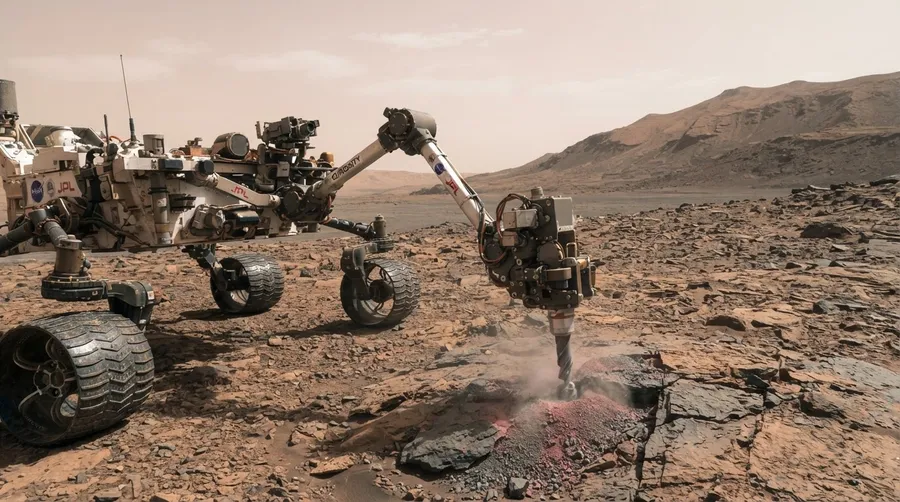
The rover's arm collects a soil sample from the Martian surface.
🇺🇸 Impact of Curiosity's Discoveries
Curiosity's discoveries have reshaped our understanding of Mars, providing clues about its potential to support life long ago and how its climate has changed over millions of years. Scientists now use this information to plan future missions aimed at finding more direct signs of past life or understanding how Mars could be terraformed for human habitation someday. It changes how we think about sending humans there too. All this data informs safety protocols and mission planning for future endeavors on the Martian surface.
🇪🇸 Impacto de los descubrimientos de Curiosity
Los descubrimientos del Curiosity han transformado nuestra comprensión sobre Marte al proporcionar pistas sobre su potencial para haber albergado vida hace mucho tiempo y cómo su clima ha cambiado durante millones de años. Los científicos ahora usan esta información para planificar futuras misiones destinadas a encontrar señales más directas de vida pasada o comprender cómo podría terraformarse Marte para la habitación humana en el futuro. Esto cambia también nuestra manera de pensar sobre enviar humanos allí algún día.
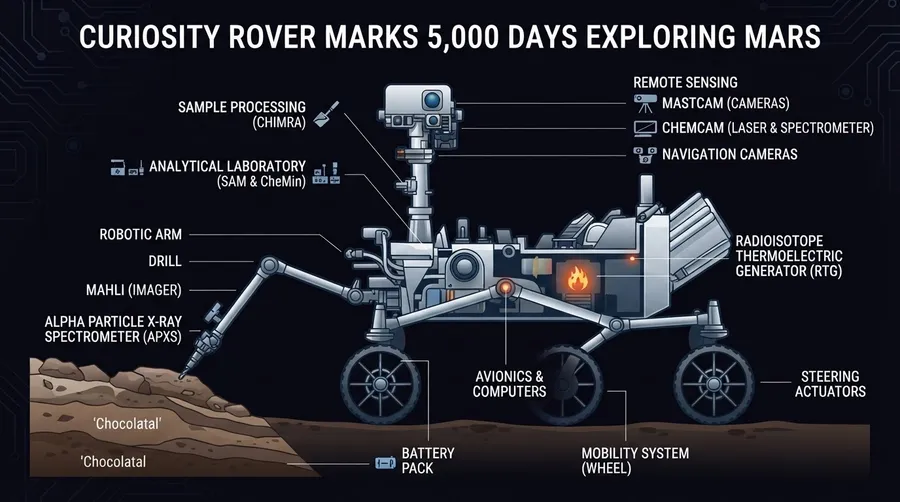
Diagram of Curiosity's internal components and instruments.
🇺🇸 The Unanswered Questions
How does Martian soil chemistry vary seasonally? Is there microbial life surviving below the surface? When will we gather true samples from deeper layers? These are some questions still lingering around Curiosity's mission.
🇪🇸 Las preguntas sin respuesta
¿Cómo varía la química del suelo marciano con las estaciones? ¿Hay vida microbiana debajo de la superficie? ¿Cuándo obtendremos muestras reales de capas más profundas? Estas preguntas siguen pendientes en la misión del Curiosity.
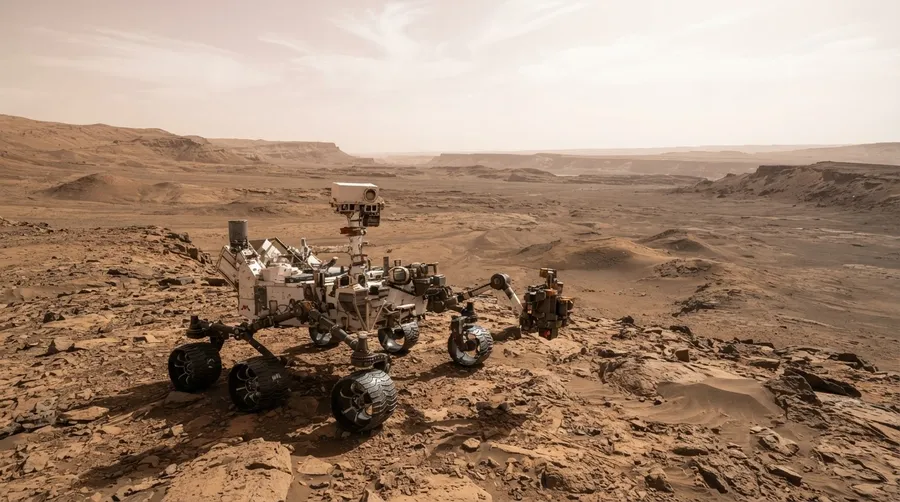
Curiosity Rover highlights the vastness of the Martian landscape.
🔗 Related Articles | Artículos Relacionados
Nuestro canal transmite datos curiosos de ciencia, IA, espacio y tecnología las 24 horas. | Our channel streams science facts, AI, space and technology around the clock.
▶ Ver transmisión | Watch liveOPEN YOUR MIND
Source: Source
Join the conversation