Ancient DNA Reveals True Lineage of 'American Cheetah'
Ancient DNA Reveals True Lineage of 'American Cheetah'
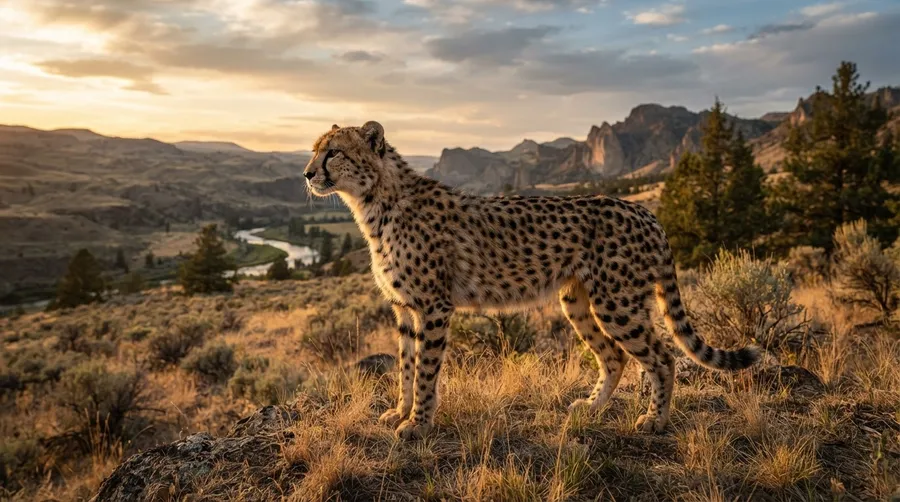
A reconstruction of Miracinonyx trumani in its ancient habitat.
🇺🇸 Ancient DNA Sheds Light
Scientists managed to extract ancient DNA from fossils of the so-called American cheetah, Miracinonyx trumani. This was no small feat. Fossils had been lying around for thousands of years, so getting any viable genetic material required a lot of finesse. But they did it. What they found shakes up what we thought we knew about this creature. Turns out, Miracinonyx trumani is more closely related to pumas than to cheetahs. Yeah, the name American cheetah is kind of a misnomer now. But that’s not all. They also found evidence suggesting these animals had a more varied diet than previously believed. Which raises even more questions about how they lived and survived in their environment.
Como Afiliado de Amazon, obtengo ingresos por las compras adscritas que cumplen los requisitos aplicables.

🇪🇸 Luz Sobre el ADN Antiguo
Científicos lograron extraer ADN antiguo de fósiles del llamado guepardo americano, Miracinonyx trumani. Curioso, ¿verdad? Durante años estas criaturas fueron consideradas parientes de los guepardos africanos por su velocidad y físico. Pero resulta que están más cerca genéticamente de los pumas modernos. Lo que sacudió a la comunidad científica fue que estos fósiles mostraran una dieta más diversa. Eso impacta en cómo entendemos su adaptación al entorno en el que vivieron. No solo cazaban presas grandes como se pensaba antes sino también pequeñas.
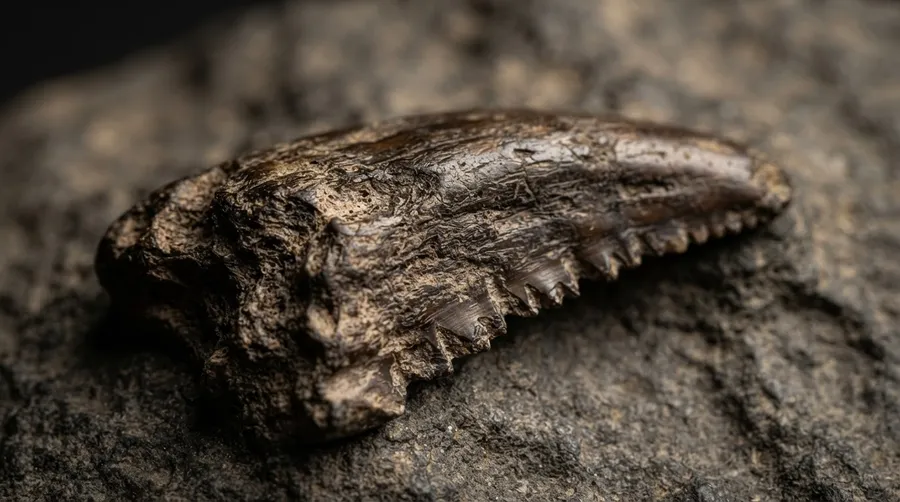
Detailed view of a Miracinonyx trumani tooth fossil.
🇺🇸 What We Thought We Knew
For years, Miracinonyx trumani was thought to be similar to the African cheetah because of its physical traits. It seemed like a logical conclusion. After all, both were fast and had similar body shapes adapted for speed on open plains. Scientists had classified them based on morphological similarities for decades. They assumed their hunting strategies mirrored those of the cheetahs we know today. It was easy to picture them sprinting after prey in vast grasslands, just like their African counterparts do now.

🇪🇸 Lo Que Creíamos Saber
Durante décadas, se pensó que el Miracinonyx trumani era similar al guepardo africano por sus rasgos físicos y velocidad. Esa asociación tenía sentido, ¿no? Ambos animales eran rápidos y sus cuerpos estaban adaptados para correr en llanuras abiertas. Los científicos los clasificaron basándose en esas semejanzas morfológicas durante años sin cuestionar mucho más allá. Se asumía que su estrategia de caza era parecida a la de los guepardos actuales.
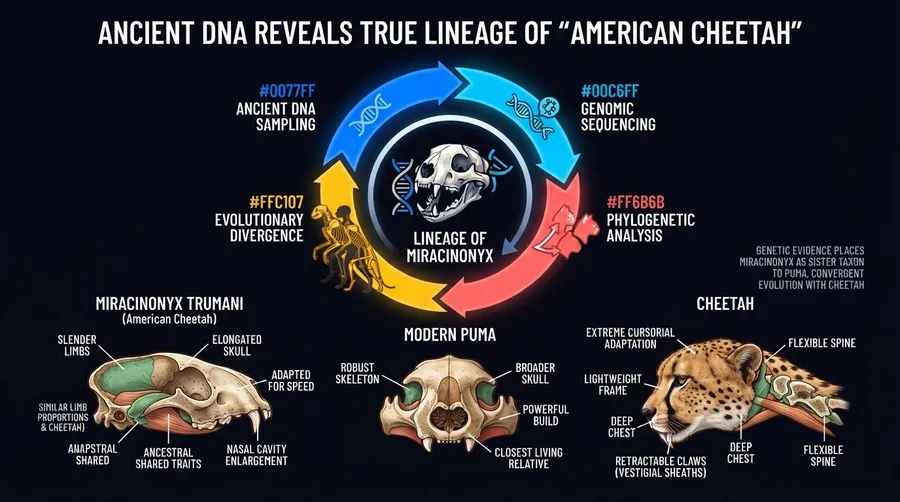
Skeletal comparison of Miracinonyx trumani, pumas, and cheetahs.
🇺🇸 Getting Into The Genetics
The process of extracting ancient DNA is pretty amazing and complex. First, they have to find samples with some surviving genetic material, which is rare given how old these fossils are. Once they have potential samples, they use advanced sequencing technology that can read even fragmented genetic strands. What they’re looking for are specific markers that can tell them about lineage and other traits like diet or habitat preferences. It's almost like piecing together an ancient puzzle with fragments that barely fit together.

🇪🇸 Adentrándonos en la Genética
El procedimiento para extraer ADN antiguo es fascinante y complicado. Primero deben hallar muestras con algo de material genético conservado, lo cual es raro debido a la antigüedad de estos fósiles. Después utilizan tecnología avanzada de secuenciación que puede leer hasta las cadenas genéticas fragmentadas más pequeñas. Buscan marcadores específicos que les indiquen detalles sobre el linaje y otros rasgos como la dieta o las preferencias de hábitat del animal extinto.
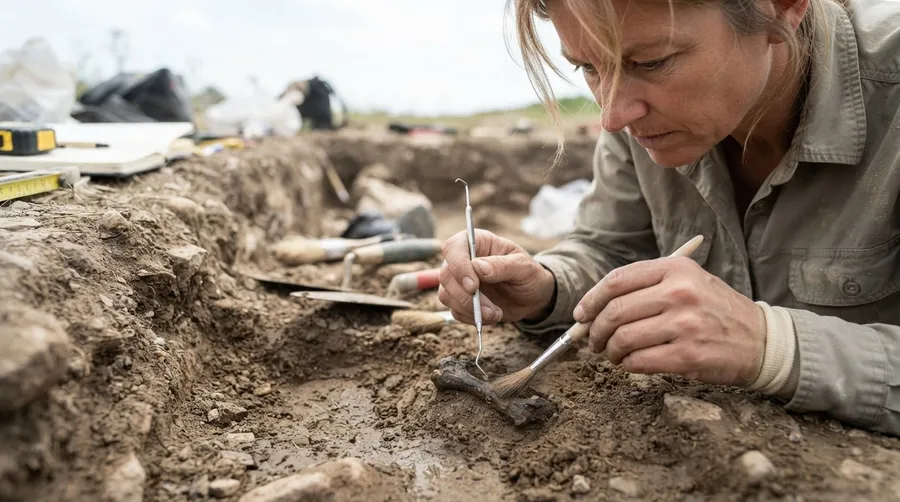
A scientist carefully extracts a bone fragment at a dig site.
🇺🇸 What Changes in Our World
For starters, paleontologists and wildlife biologists will need to update textbooks and teaching materials with this new information about Miracinonyx trumani's lineage and diet. Zoos and museums might rethink how they're presenting exhibits involving this animal or its relatives like pumas and cheetahs. Conservationists could also take note since understanding past ecosystems can help manage current ones better. It could shift focus on preserving certain habitats or species that were previously overlooked.

🇪🇸 Cambios en Nuestro Mundo
Para comenzar, paleontólogos y biólogos deberán actualizar materiales educativos con esta nueva información sobre el linaje y dieta del Miracinonyx trumani. Los zoológicos y museos podrían replantearse sus exposiciones sobre este animal o sus parientes como pumas y guepardos actuales si eso cambia la percepción del público respecto a estos felinos.
🇺🇸 What We Still Don't Know
Nobody knows how many Miracinonyx trumani roamed North America at their peak or why they disappeared entirely around 12,000 years ago. The precise habitats they favored remain unclear as well despite the new diet insights from ancient DNA studies.
🇪🇸 Lo Que Aún No Sabemos
No está claro cuántos Miracinonyx trumani existieron en América del Norte ni por qué desaparecieron hace 12 mil años aunque ahora sabemos un poco más sobre su dieta gracias al ADN antiguo.
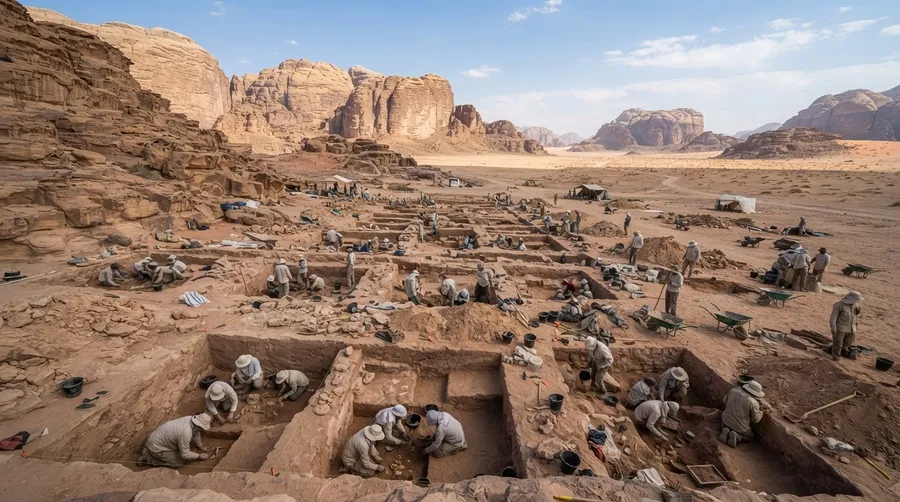
Scientists work at an expansive excavation site.
🔗 Related Articles | Artículos Relacionados
Nuestro canal transmite datos curiosos de ciencia, IA, espacio y tecnología las 24 horas. | Our channel streams science facts, AI, space and technology around the clock.
▶ Ver transmisión | Watch liveOPEN YOUR MIND
Source: Source
Join the conversation