How TikTok Led to a New Eel Discovery in India
How TikTok Led to a New Eel Discovery in India
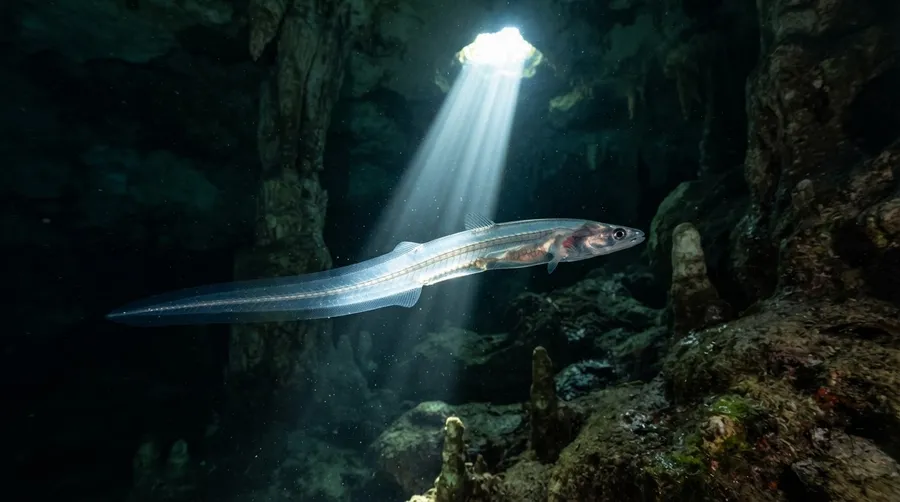
A translucent eel swims in its natural underground habitat.
🇺🇸 A Surprising Eel Discovery
TikTok led to a fascinating discovery in India. Scientists identified a new species of eel, named Gangaichthys indonepalicus. This happened in part because of viral TikTok videos that sparked interest. The videos showed people from local communities catching these unusual eels. That got scientists curious. They traveled to a remote location and pumped over 600 gallons of water from an underground reservoir to find them. Imagine the effort! The eels are translucent and have adapted to live underground. Which is strange, if you think about it, because we usually associate eels with open water or oceanic environments. But here they were, hidden away beneath the surface, discovered in large part thanks to social media.
🇪🇸 Un Descubrimiento Inesperado de Anguilas
TikTok acabó siendo clave para un descubrimiento en la India. Unos científicos encontraron una nueva especie de anguila llamada Gangaichthys indonepalicus. Todo comenzó cuando videos virales en TikTok mostraron a comunidades locales capturando estas anguilas tan raras. Esto despertó la curiosidad de los científicos, quienes decidieron investigar más a fondo. Viajaron a un lugar remoto y tuvieron que extraer más de 600 galones de agua de un depósito subterráneo para encontrarlas. Algo sorprendente es que estas anguilas son translúcidas y se han adaptado a vivir bajo tierra, lo cual no es lo común para ellas. Generalmente asociamos las anguilas con cuerpos de agua abiertas o ambientes oceánicos. Pero gracias a redes sociales, lograron ser descubiertas.
Como Afiliado de Amazon, obtengo ingresos por las compras adscritas que cumplen los requisitos aplicables.


Close-up reveals the unique skin texture of the eel.
🇺🇸 Background Knowledge of Eels
Before this discovery, eels were mostly known for their presence in oceans and some freshwater bodies. The idea of an underground eel was quite unusual. Many had never even considered that eels could adapt to such environments. Eels are typically strong swimmers with elongated bodies, well-suited for navigating open waters. Their ability to migrate long distances has fascinated scientists for years. There's still a lot to learn about how different eel species adapt uniquely to their habitats. This discovery adds another piece to the puzzle, showing that eels can exist in subterranean environments too.
🇪🇸 Lo Que Sabíamos Sobre las Anguilas
Antes de este hallazgo, las anguilas se conocían sobre todo por vivir en océanos y algunos cuerpos de agua dulce. La idea de una anguila subterránea era bastante inusual y muchos ni siquiera pensaban que pudieran adaptarse a esos entornos. Normalmente, las anguilas tienen cuerpos alargados que les permiten nadar eficientemente en aguas abiertas y su capacidad para migrar largas distancias ha intrigado a los científicos durante años. Todavía hay mucho por descubrir sobre cómo las diferentes especies de anguilas se adaptan de manera única a sus hábitats particulares. Este descubrimiento muestra que también pueden existir en ambientes subterráneos.

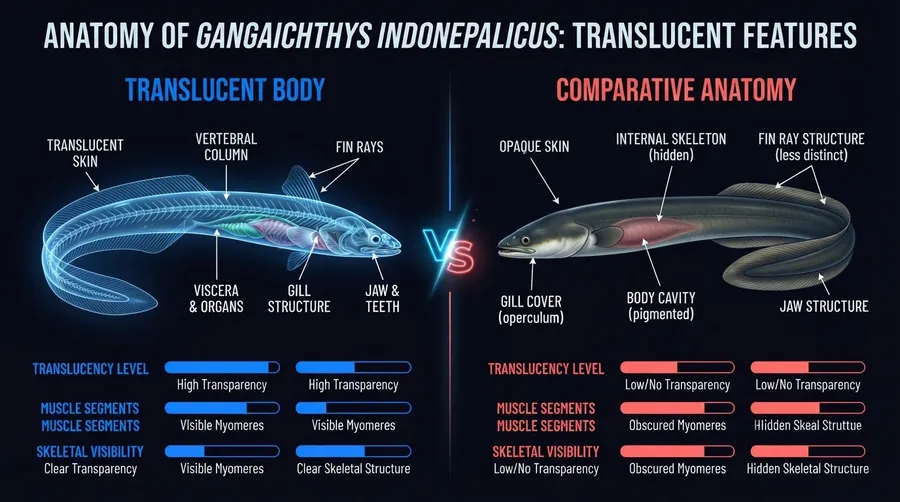
Anatomy of Gangaichthys indonepalicus with labeled features.
🇺🇸 The Mechanics of Discovery
To actually find these eels was no small task and it gets pretty technical here. Scientists had to use hand pumps to remove over 600 gallons of water from an underground reservoir where these eels were hiding out. Once the water was cleared out, researchers could then spot these translucent creatures squirming about in the mud at the bottom of what was once an underwater cave system. It required careful observation and some patience because these eels are not easy to catch given their slippery nature and nearly invisible appearance when submerged.
🇪🇸 La Técnica del Descubrimiento
Encontrar estas anguilas no fue tarea fácil y aquí se pone algo técnico el tema. Los científicos utilizaron bombas manuales para extraer más de 600 galones de agua de un depósito subterráneo donde estaban escondidas las anguilas. Al retirar el agua, los investigadores pudieron observar estas criaturas translúcidas moviéndose en el lodo al fondo de lo que solía ser un sistema de cuevas bajo el agua. La observación cuidadosa y la paciencia fueron cruciales porque estas anguilas no son fáciles de atrapar debido a su naturaleza resbaladiza y apariencia casi invisible cuando están sumergidas.


Scientists extract water using a hand pump.
🇺🇸 Impact on Local Communities
For the local communities involved in the original TikTok videos, this discovery has been quite impactful in terms of raising awareness and potentially even eco-tourism opportunities. People living nearby may see an increase in interest from both scientists and tourists wanting to observe this rare eel species up close. There is also the potential for community-led conservation programs aimed at preserving this unique habitat and its residents. For those who recorded the TikToks, it's like seeing their backyard get international attention overnight and realizing they played a part in something scientific.
🇪🇸 Impacto en las Comunidades Locales
Para las comunidades locales que participaron en los videos originales de TikTok, este descubrimiento ha sido muy importante al generar conciencia y posibles oportunidades de ecoturismo. Los habitantes cercanos podrían notar un aumento del interés por parte tanto de científicos como turistas que deseen observar esta rara especie de anguila de cerca. También existe la posibilidad de crear programas comunitarios enfocados en la conservación del hábitat único y sus habitantes. Para quienes grabaron los TikToks es como ver cómo su entorno recibe atención internacional y darse cuenta del papel que jugaron en algo científico.
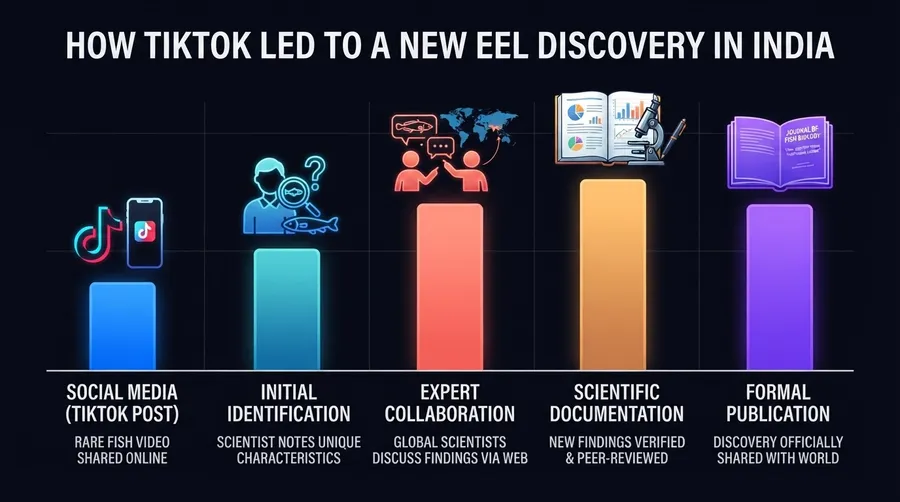
Timeline from TikTok post to scientific discovery.
🔗 Related Articles | Artículos Relacionados
Nuestro canal transmite datos curiosos de ciencia, IA, espacio y tecnología las 24 horas. | Our channel streams science facts, AI, space and technology around the clock.
▶ Ver transmisión | Watch liveOPEN YOUR MIND
Source: Source
Join the conversation