Breakthrough in Superconducting Quantum Heat Engines
Breakthrough in Superconducting Quantum Heat Engines
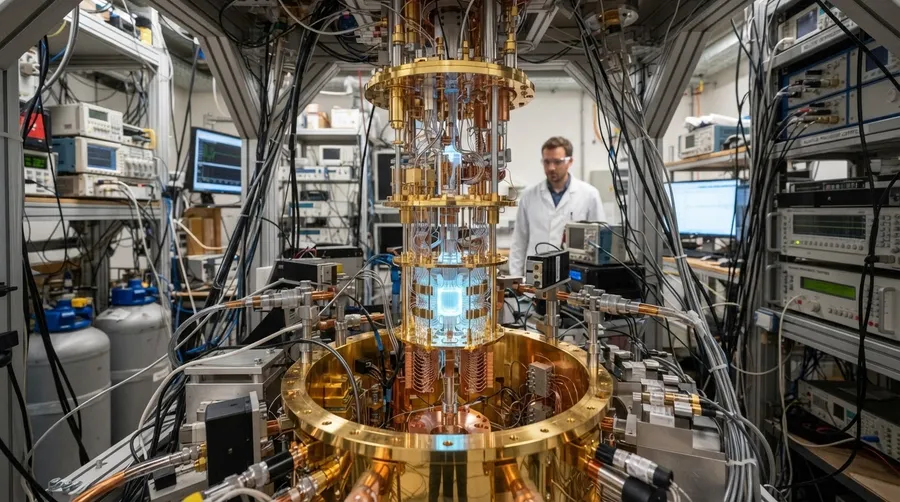
The superconducting quantum heat engine glows as it operates.
🇺🇸 Quantum Heat Engine Breakthrough
A tiny superconducting heat engine has done something remarkable. This quantum engine converted heat into work at temperatures near absolute zero. It's not every day you hear about engines working in such extreme cold. This marks the first cyclic quantum heat engine of its kind, which is strange if you think about it. It operates with materials that become superconducting at these low temperatures. The real kicker? Future versions of this engine could work autonomously inside quantum computers. No more bulky and noisy microwave cables cluttering the setup. They managed to harness heat in a place where you wouldn't expect to find much of it. Lab environments, sure, but the possibilities stretch far beyond.
Como Afiliado de Amazon, obtengo ingresos por las compras adscritas que cumplen los requisitos aplicables.

🇪🇸 Avance en Motores Cuánticos de Calor
Un diminuto motor superconductivo hizo algo fuera de lo común. Este motor cuántico ha convertido el calor en trabajo útil cerca del cero absoluto. No es habitual escuchar de motores funcionando en un frío tan extremo. Es el primer motor cuántico cíclico de su tipo, sorprendente si te pones a pensarlo. Funciona con materiales que se vuelven superconductores a estas bajas temperaturas. Lo más interesante es que futuras versiones podrían operar de forma autónoma dentro de computadoras cuánticas. Sin cables microondas voluminosos y ruidosos por todas partes. Lograron aprovechar el calor en un lugar donde no esperarías encontrar mucho.
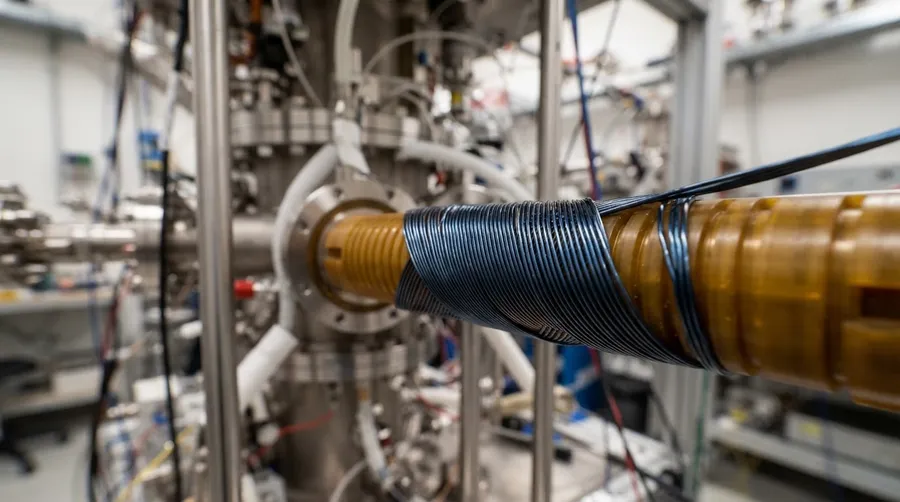
A close-up view of the superconducting coil's intricate winding.
🇺🇸 The Old Knowledge
Before this, we knew engines on an everyday scale convert heat into work efficiently above room temperature. Classical thermodynamics has been around for centuries, dealing with steam engines and whatnot. Superconductivity is another fascinating field, allowing electricity to flow with no resistance in certain materials at low temperatures. But merging these ideas into a functioning engine? That remained theoretical for a long time, more like science fiction than reality. Quantum mechanics added complexity to this dream by introducing weird states like superposition and entanglement. Until now, these principles remained largely isolated from practical engine design.
🇪🇸 El Conocimiento Anterior
Antes de esto, sabíamos que los motores cotidianos convierten el calor en trabajo eficientemente por encima de la temperatura ambiente. La termodinámica clásica lleva siglos entre nosotros, lidiando con motores de vapor y demás. La superconductividad permite el flujo de electricidad sin resistencia a bajas temperaturas en ciertos materiales. Pero unir estas ideas en un motor funcional? Eso era más cosa de ciencia ficción que una realidad alcanzable hasta hace poco. La mecánica cuántica complicaba el asunto con estados extraños como la superposición y el entrelazamiento. Antes, estos principios estaban casi aislados del diseño práctico de motores.

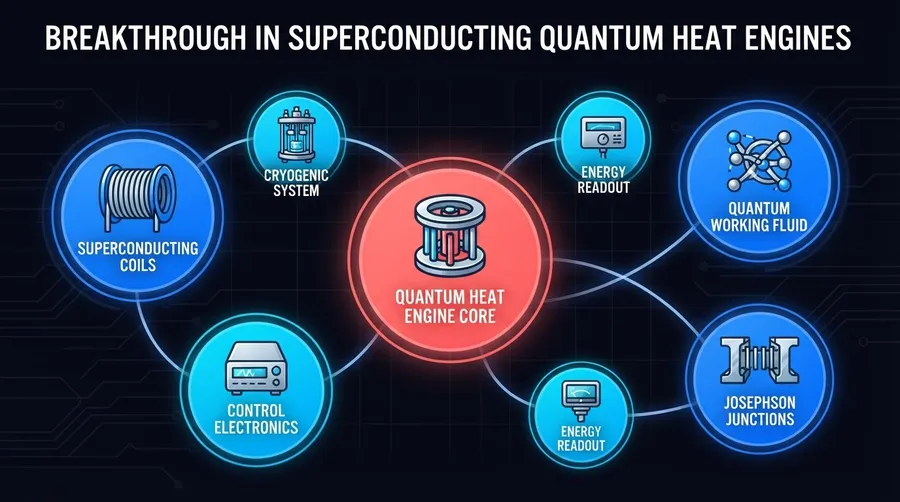
Diagram of the quantum heat engine's components.
🇺🇸 The Mechanism in Action
The heart of this engine relies on superconducting circuits using what's called Josephson junctions. Honestly, I kept rereading that part because it's complex stuff. When cooled to near absolute zero, these circuits experience quantum effects that drive the engine's cycle. Electrons move without losing energy as they interact with magnetic fields generated within the circuit itself. This cycle extracts heat energy and converts it to mechanical energy, then repeats all over again when conditions reset. Lab tests measured tiny movements, but they prove the concept works in practice beyond mere theory.
🇪🇸 El Mecanismo en Marcha
El motor se basa en circuitos superconductores usando lo que se llama uniones Josephson. Bueno, releí esa parte porque es complicado entenderlo todo a la primera. Al enfriarse casi al cero absoluto, estos circuitos experimentan efectos cuánticos que impulsan el ciclo del motor. Los electrones se mueven sin perder energía mientras interactúan con los campos magnéticos generados dentro del propio circuito. Este ciclo extrae energía térmica y la convierte en energía mecánica, repitiéndose cuando las condiciones vuelven a su estado inicial. Las pruebas en laboratorio midieron movimientos diminutos, pero demuestran que el concepto funciona más allá de la teoría pura.
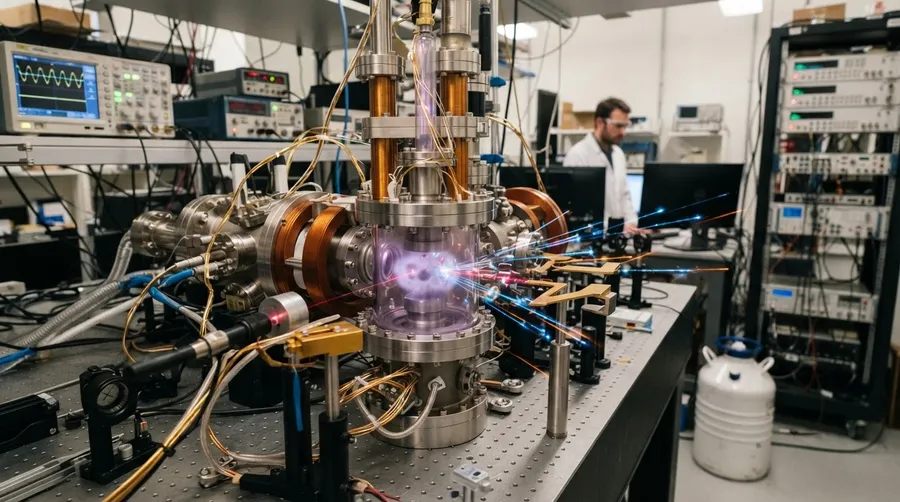
Particles interact with the quantum heat engine during operation.
🇺🇸 Real-World Implications
What does this mean for us ground-dwelling folks? Quantum computers could become more efficient and less reliant on external systems plagued by noise and cluttered cabling. Think about data centers and research facilities able to pack more computing power into smaller spaces with fewer complications from interference or cooling needs. It may alter how we build powerful machines that operate quietly and cleanly at low temperatures without extravagant cooling systems.
🇪🇸 Implicaciones en el Mundo Real
¿Qué significa esto para nosotros? Las computadoras cuánticas pueden volverse más eficientes y menos dependientes de sistemas externos llenos de ruido y cables desordenados por todos lados. Imagina centros de datos o instalaciones de investigación con más potencia de cálculo en espacios reducidos y con menos complicaciones por interferencias o necesidades de enfriamiento.

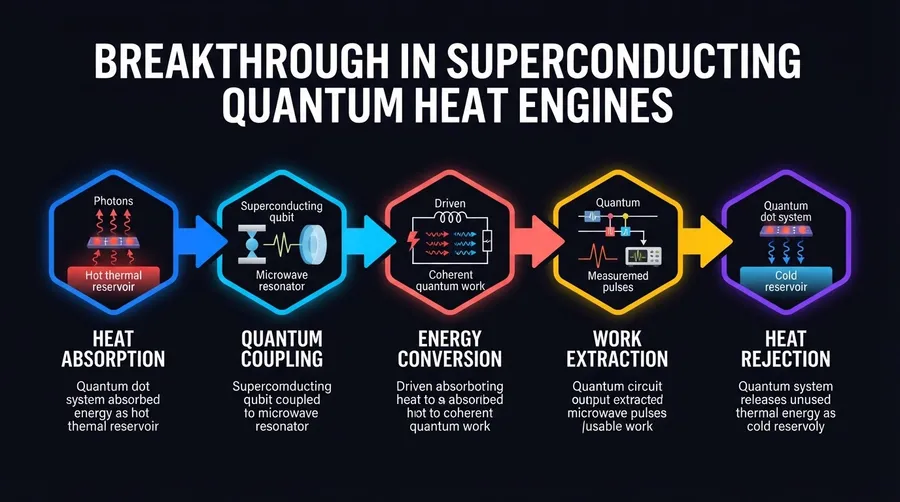
Flowchart of the heat conversion cycle in the engine.
🇺🇸 What We Still Don't Know
Several questions linger as researchers push forward with this tech: How will the engine perform over extended periods? What materials can best optimize efficiency at such low temperatures? How long before integration into existing systems becomes feasible?
🇪🇸 Lo Que Aún Desconocemos
Quedan preguntas pendientes: ¿Cómo rendirá el motor durante períodos prolongados? ¿Qué materiales optimizan mejor la eficiencia a esas bajas temperaturas? ¿Cuánto tiempo falta para integrarlo en sistemas existentes?
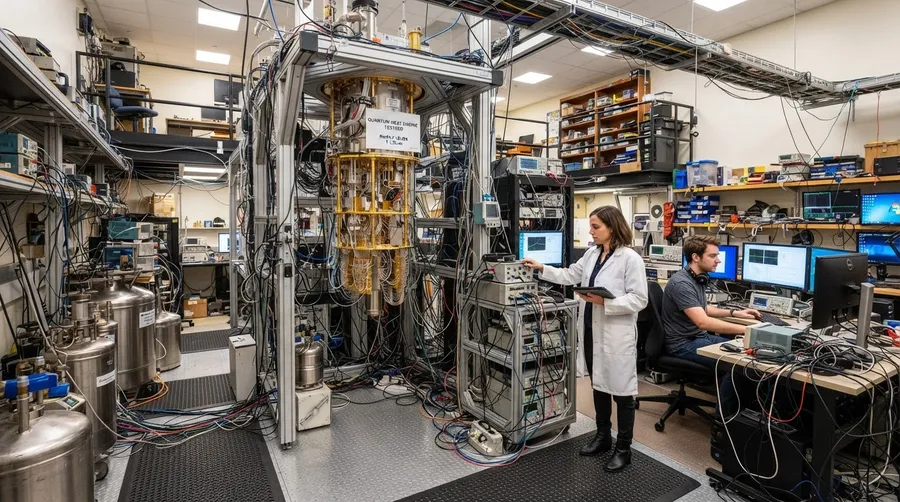
The lab houses the quantum heat engine and advanced equipment.
🔗 Related Articles | Artículos Relacionados
Nuestro canal transmite datos curiosos de ciencia, IA, espacio y tecnología las 24 horas. | Our channel streams science facts, AI, space and technology around the clock.
▶ Ver transmisión | Watch liveOPEN YOUR MIND
Source: Source
Join the conversation