Exoplanet Spin Mystery Winds vs. Reality
Exoplanet Spin Mystery Winds vs. Reality
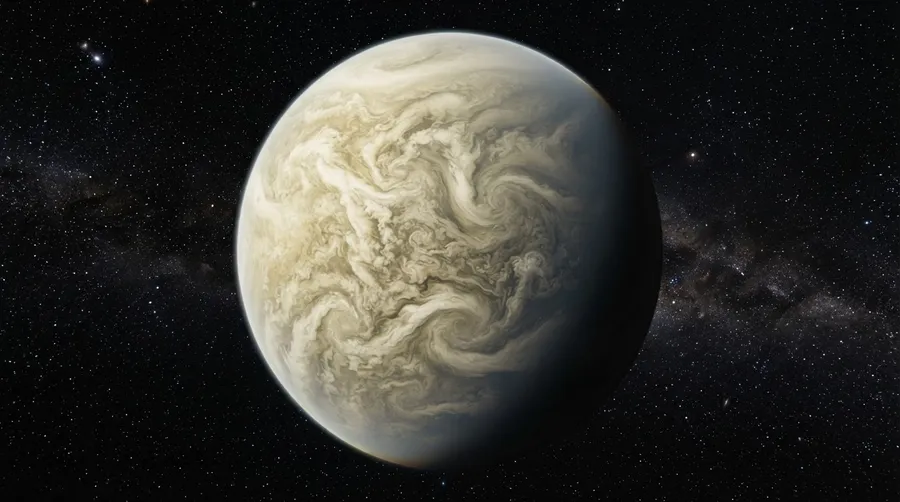
Venus's atmosphere moves faster than its surface spins.
🇺🇸 The Exoplanet Spin Dilemma
Imagine looking at a distant exoplanet and thinking you're seeing its actual rotation when in fact, you're fooled by its atmospheric winds. It's not just a rare error; it turns out this could be a common mistake. A recent study highlights that astronomers might often confuse the rotation speed of an exoplanet with the speed of its atmospheric winds. Venus is a cautionary tale here. Its clouds whip around the planet at speeds nearly 60 times faster than the planet's actual spin. This discrepancy leads to potentially huge miscalculations for exoplanets. Kane suggests that using multi-wavelength observations could correct these errors. Once the PLATO mission by the ESA launches in 2027, this method may become crucial, especially with the expected discovery of many Venus-like exoplanets.
🇪🇸 El dilema de la rotación de exoplanetas
Imagina observar un exoplaneta distante y pensar que ves su verdadera rotación mientras en realidad estás siendo engañado por sus vientos atmosféricos. Esto no es un simple error ocasional; de hecho, es algo que podría ser bastante común. Un estudio reciente advierte que los astrónomos podrían confundir la velocidad de rotación de un exoplaneta con la velocidad de sus vientos atmosféricos. Venus nos da una lección importante en este sentido. Sus nubes giran alrededor del planeta a unas velocidades casi 60 veces más rápidas que su rotación real. Una gran discrepancia que lleva a errores enormes en los cálculos para exoplanetas. Kane propone el uso de observaciones con múltiples longitudes de onda para corregir estos errores. Cuando la misión PLATO de la ESA se lance en 2027, esta metodología será esencial ante el descubrimiento previsto de muchos exoplanetas similares a Venus.
Como Afiliado de Amazon, obtengo ingresos por las compras adscritas que cumplen los requisitos aplicables.

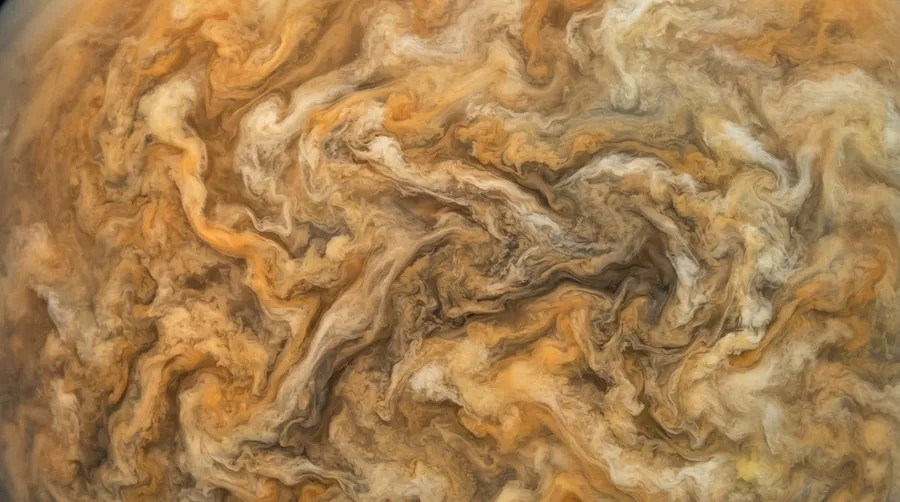
Detailed view of Venus's cloud dynamics and textures.
🇺🇸 What We Thought We Knew
Before this study, many assumed that measuring an exoplanet’s rotation was straightforward. You look at the cloud movements and translate that into rotation speed. Simple enough, right? But Venus has always been a weird case. Its thick atmosphere acts almost like a separate entity from the planet itself. While we knew about this peculiarity with Venus, not everyone considered that similar conditions could exist on other planets outside our solar system. Now it turns out this oversight could lead to incorrect assumptions about those distant worlds.
🇪🇸 Lo que pensábamos saber
Antes de este estudio, muchos creían que medir la rotación de un exoplaneta era algo sencillo. Se miraban los movimientos de las nubes y se traducían directamente en velocidad de rotación. Sencillo, ¿verdad? Pero Venus siempre ha sido extraño en este sentido; su atmósfera densa actúa casi como una entidad separada del propio planeta. Sabíamos sobre esta peculiaridad en Venus, pero pocos consideraban que condiciones similares pudieran darse en otros planetas fuera de nuestro sistema solar. Ahora resulta que esta omisión podría llevarnos a suposiciones incorrectas sobre esos mundos lejanos.

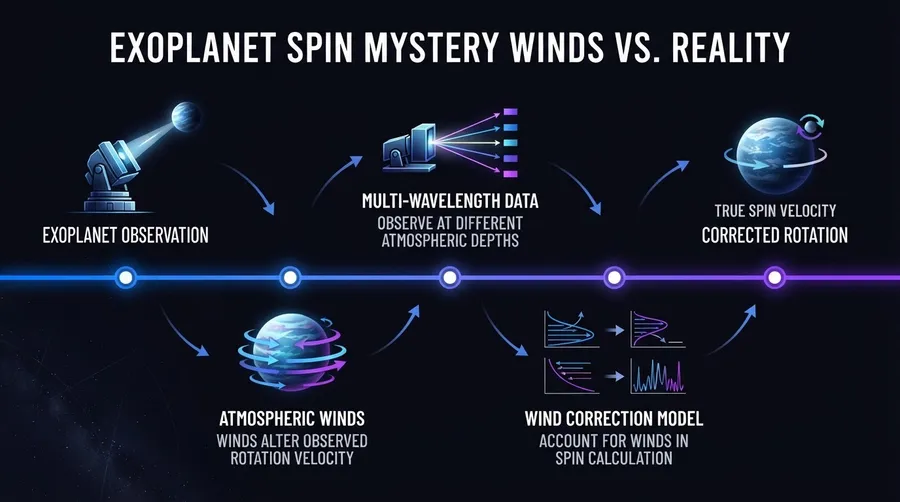
How winds affect exoplanet rotation measurements.
🇺🇸 How Winds Affect Measurements
The mechanics of this miscalculation stem from not accounting for fast-moving atmospheric winds. On planets like Venus, where clouds speed around rapidly, measuring cloud movement gives us atmospheric wind speed rather than planetary rotation speed. When you look at an exoplanet and track cloud movement over time thinking it's rotating, you're often measuring how quickly its atmosphere is moving instead. Using multiple wavelengths could differentiate between cloud layers and planetary surface motion, but that's challenging without sophisticated equipment focused on different spectra.
🇪🇸 Cómo los vientos afectan las mediciones
La mecánica detrás de este error radica en no tener en cuenta los vientos atmosféricos rápidos. En planetas como Venus donde las nubes se mueven rápidamente, medir ese movimiento da la velocidad del viento atmosférico y no la velocidad de rotación del planeta. Al observar un exoplaneta y rastrear el movimiento de las nubes pensando que está girando, muchas veces se mide lo rápido que se mueve su atmósfera en lugar de su rotación real. Usar múltiples longitudes de onda podría ayudar a diferenciar entre las capas de nubes y el movimiento del planeta pero eso requiere equipos sofisticados que se centren en diferentes espectros.

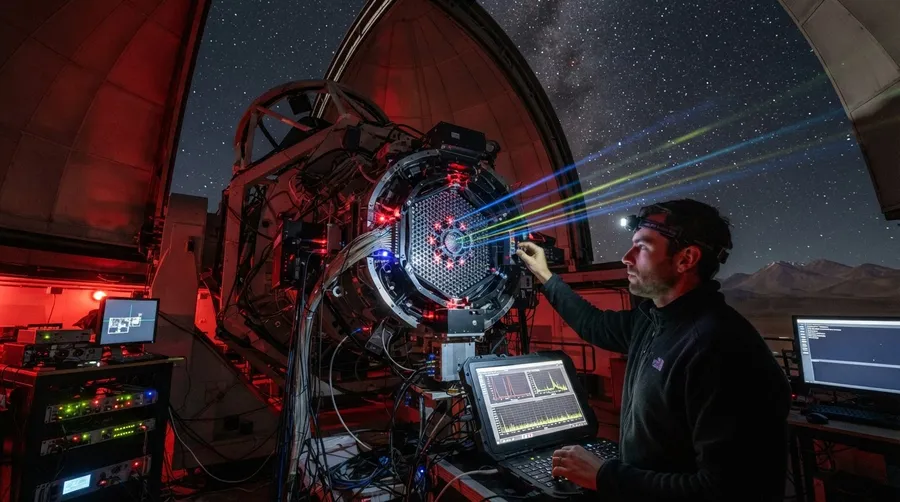
Telescope captures exoplanet data in various wavelengths.
🇺🇸 Real-World Implications
Getting the spin wrong can seriously affect how astronomical models predict weather patterns and climate on those planets far away from us. This misinformation might impact future missions planning to send probes or landers because knowing planetary conditions accurately matters a lot in planning such missions accurately or even identifying potentially habitable zones on these distant worlds. Researchers are rethinking how they interpret data from telescopes so future findings align closer to reality instead of being swayed by misleading atmospheric speeds.
🇺🇸 Implicaciones reales
Equivocarse en la rotación puede afectar gravemente cómo los modelos astronómicos predicen patrones climáticos y meteorológicos en esos planetas tan alejados de nosotros. Esta desinformación podría impactar futuras misiones que planeen enviar sondas o aterrizadores porque conocer las condiciones planetarias con precisión es crucial para planificar correctamente tales misiones o incluso identificar zonas potencialmente habitables en estos mundos lejanos. Los investigadores están reconsiderando cómo interpretar los datos provenientes de telescopios para que futuros hallazgos estén más alineados con la realidad y no influenciados por velocidades atmosféricas engañosas.


Venus's surface vs. atmospheric rotation speeds.
🇺🇸 Unanswered Questions
Can multi-wavelength techniques truly separate cloud from surface movement? Will PLATO provide enough data to establish new baselines for these measurements? How do atmospheric compositions affect wind speeds on other planets? Still much to learn in this field.

🇪🇸 Preguntas sin responder
¿Pueden las técnicas multilenguaje separar realmente el movimiento de las nubes del movimiento superficial? ¿Dará PLATO suficientes datos para establecer nuevas bases para estas mediciones? ¿Cómo afectan las composiciones atmosféricas las velocidades del viento en otros planetas? Aún queda mucho por aprender aquí.
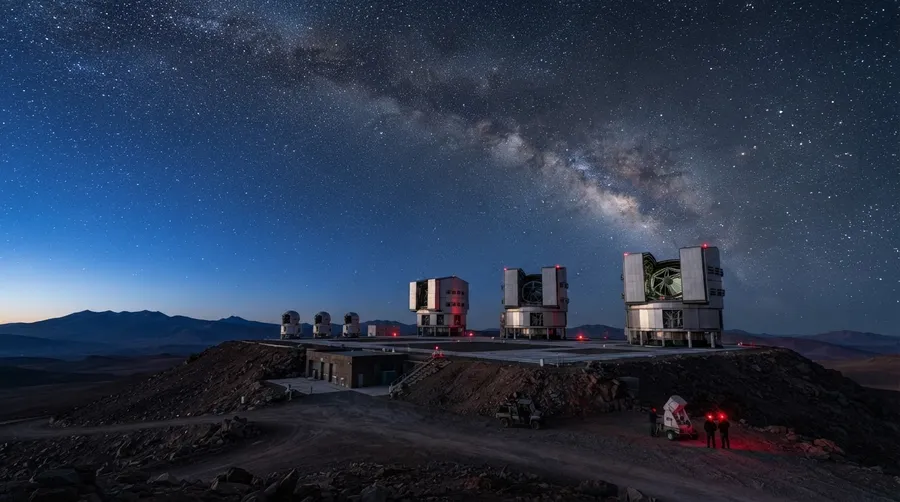
Observatory in the desert studies exoplanets under starry sky.
🔗 Related Articles | Artículos Relacionados
Nuestro canal transmite datos curiosos de ciencia, IA, espacio y tecnología las 24 horas. | Our channel streams science facts, AI, space and technology around the clock.
▶ Ver transmisión | Watch liveOPEN YOUR MIND
Source: Source
Join the conversation