Reliving Europe's 2026 Total Solar Eclipse Experience
Reliving Europe's 2026 Total Solar Eclipse Experience
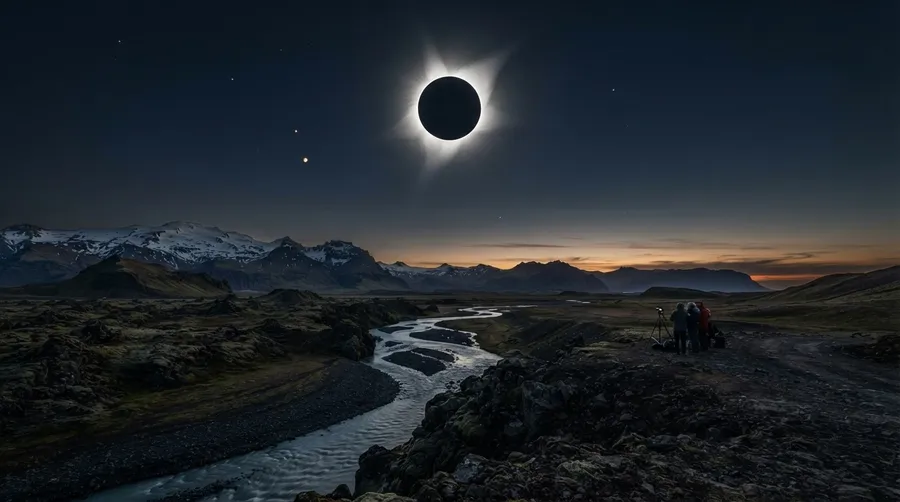
The total solar eclipse as seen from Iceland.
🇺🇸 The Experience of Totality
On August 12, 2026, Europe saw something they hadn't seen in over two decades. The Moon slipped between Earth and the Sun, blocking out the Sun's bright disc completely. For a few minutes, everything changed. The sky turned dark in the middle of the day. Stars appeared. A strange chill filled the air. For those in Greenland, Iceland, and parts of Spain and Portugal, this was totality. Other parts of Europe experienced a partial eclipse, where only part of the Sun was covered. People gathered in open fields and on rooftops to watch and celebrate. A solar eclipse is more than just an event. It’s an experience that brings people together and reminds them of their place in the universe.
🇪🇸 La Experiencia de la Totalidad
El 12 de agosto de 2026, Europa vivió un evento que no se veía desde hacía más de veinte años. La Luna se interpuso entre la Tierra y el Sol, ocultando completamente su disco brillante. Durante unos minutos, el día se hizo noche. Las estrellas se hicieron visibles y una sensación extraña recorrió el ambiente. En Groenlandia, Islandia y algunas zonas de España y Portugal, se presenció la totalidad. En el resto del continente solo se vio parcialmente cubierto el Sol. Multitudes se reunieron en campos y azoteas para observar y celebrar juntos. Un eclipse solar va más allá de ser un simple evento astronómico. Es una experiencia que une a las personas y les recuerda su lugar en el universo.
Como Afiliado de Amazon, obtengo ingresos por las compras adscritas que cumplen los requisitos aplicables.

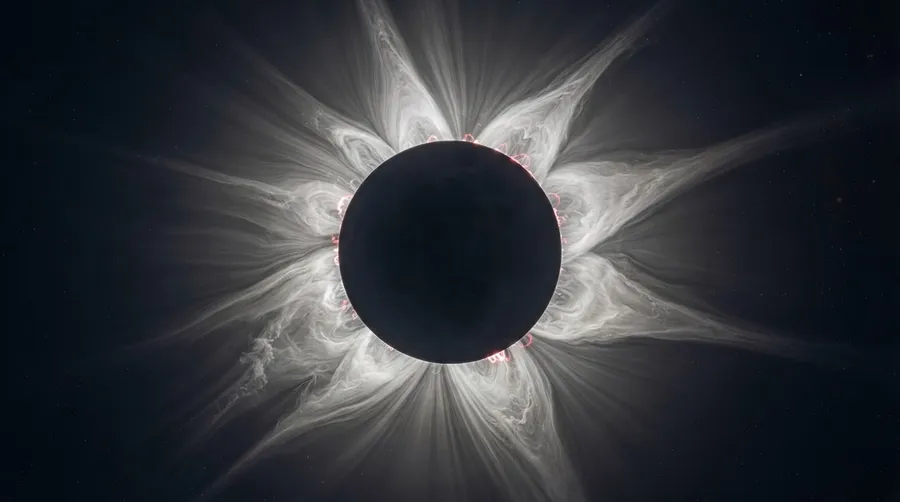
Detailed view of the sun's corona during totality.
🇺🇸 Background: Past Eclipses
Before this eclipse, the last time Europe got such a show was back in 1999. That one passed through parts of the UK, France, and beyond, drawing huge crowds even then. Solar eclipses have fascinated humans forever—ancient cultures saw them as omens or messages from gods. But now we have science to demystify these events. We know they happen because of celestial alignments that are predictable with precision today. Total solar eclipses are rare for any single location on Earth because the Moon's shadow only traces a narrow path as it moves across Earth’s surface.
🇺🇸 Antecedentes: Eclipses Pasados
Antes de este eclipse, Europa no había tenido un espectáculo similar desde 1999. Aquel atravesó partes del Reino Unido y Francia, atrayendo multitudes incluso entonces. Los eclipses solares siempre han fascinado a la humanidad; antiguas culturas los veían como presagios o mensajes de los dioses. Ahora tenemos la ciencia para desmitificar estos eventos. Sabemos que ocurren por alineamientos celestiales que hoy podemos predecir con gran precisión. Los eclipses solares totales son raros para cualquier ubicación porque la sombra de la Luna solo recorre un camino estrecho sobre la superficie terrestre.

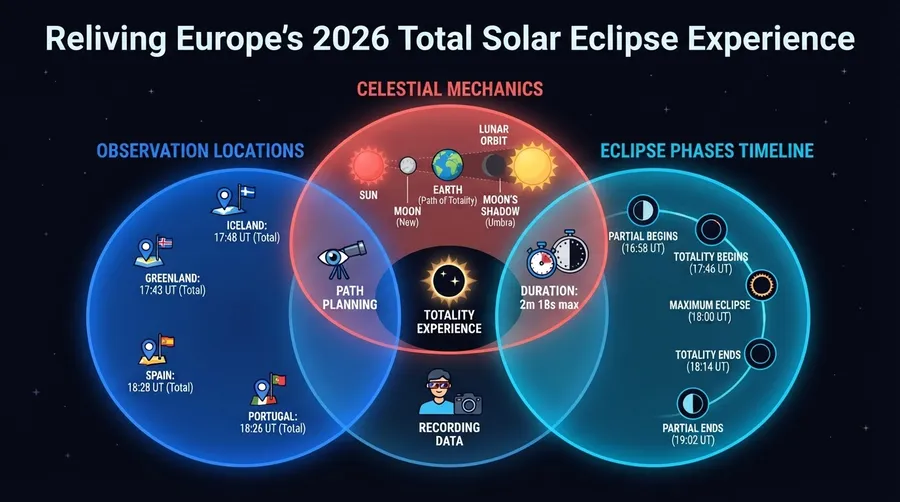
Timeline of the 2026 solar eclipse across Europe.
🇺🇸 Mechanics of an Eclipse
The mechanics behind a solar eclipse are simple yet amazing when you think about it. The Sun, Moon, and Earth are positioned in such a way that the Moon blocks out the Sun from Earth's view for a brief period. The Sun is about 400 times larger than the Moon but also about 400 times farther away from Earth than the Moon is—this coincidence makes total eclipses possible at all! During totality, you can see something really cool—the Sun's corona or outer atmosphere becomes visible because the bright light from its surface is hidden.
🇪🇸 Mecánica de un Eclipse
La mecánica detrás de un eclipse solar es sencilla pero increíble cuando lo piensas bien. El Sol, la Luna y la Tierra se alinean de manera que la Luna bloquea al Sol desde nuestra perspectiva por un breve tiempo. El Sol es aproximadamente 400 veces más grande que la Luna pero también está unas 400 veces más lejos de nosotros—esta coincidencia única hace posibles los eclipses totales! Durante la totalidad puedes ver algo realmente asombroso—la corona solar o atmósfera externa del Sol se vuelve visible ya que su luz brillante queda oculta.

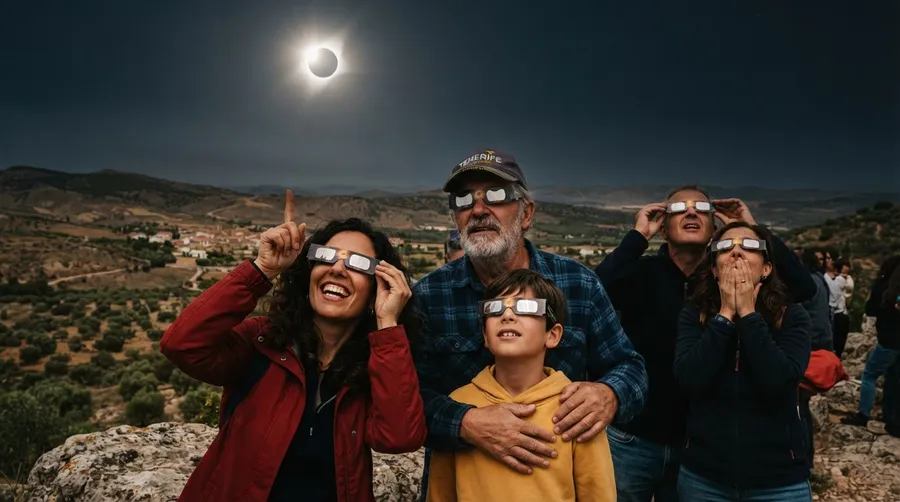
Eclipse watchers in Spain using special glasses.
🇺🇸 Impact on Communities
Solar eclipses can feel like big celebrations for communities lucky enough to be under their paths of totality. Local economies often get a boost as tourists flock to see nature's spectacle up close and personal. Hotels fill up quickly during these events with visitors eager to get a prime viewing spot for this rare occurrence; it's almost like a festival atmosphere sets in around towns located along its path! But there can be downsides too—like traffic chaos or businesses needing extra staff temporarily to handle increased demand during peak times.
🇪🇸 Impacto en las Comunidades
Los eclipses solares pueden sentirse como grandes celebraciones para las comunidades afortunadas bajo sus caminos de totalidad. Las economías locales suelen recibir un impulso ya que los turistas acuden en masa para presenciar el espectáculo natural de cerca y personal! Los hoteles se llenan rápidamente durante estos eventos con visitantes deseosos por obtener un lugar privilegiado desde donde observar este fenómeno raro; casi parece que se establece una atmósfera festiva en torno a las ciudades situadas en su trayectoria! Pero también puede haber inconvenientes como caos vehicular o negocios necesitando más personal temporalmente debido al aumento repentino en la demanda durante momentos pico.

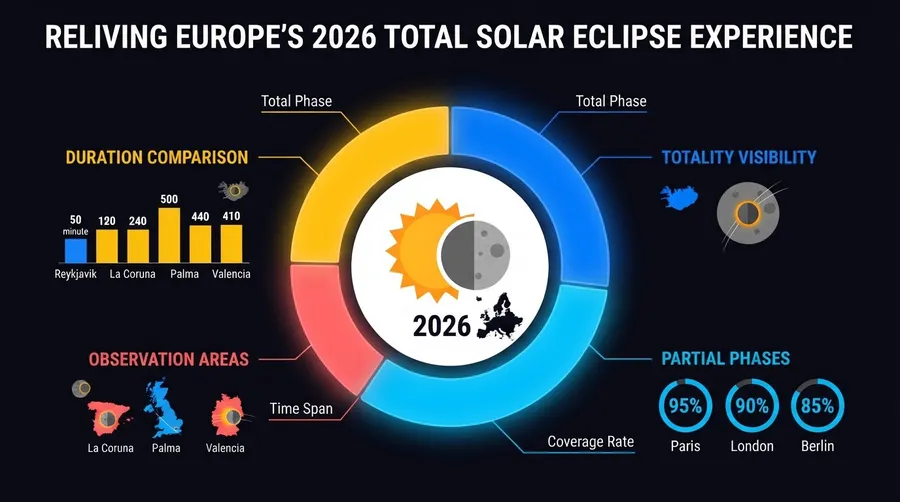
Visibility and duration of the eclipse in Europe.
🇺🇸 Unanswered Questions
Scientists still wonder how solar winds affect the visibility of the corona during an eclipse. Another question floating around: could atmospheric conditions skew our observations? I honestly do not know how long it will take to find answers but researchers everywhere are curious.
🇪🇸 Preguntas Sin Respuesta
Los científicos aún tienen dudas sobre cómo influyen los vientos solares en la visibilidad de la corona durante un eclipse. Otra pregunta es si ciertas condiciones atmosféricas pueden distorsionar nuestras observaciones? No sé cuánto tiempo tomará encontrar respuestas pero los investigadores están muy interesados.

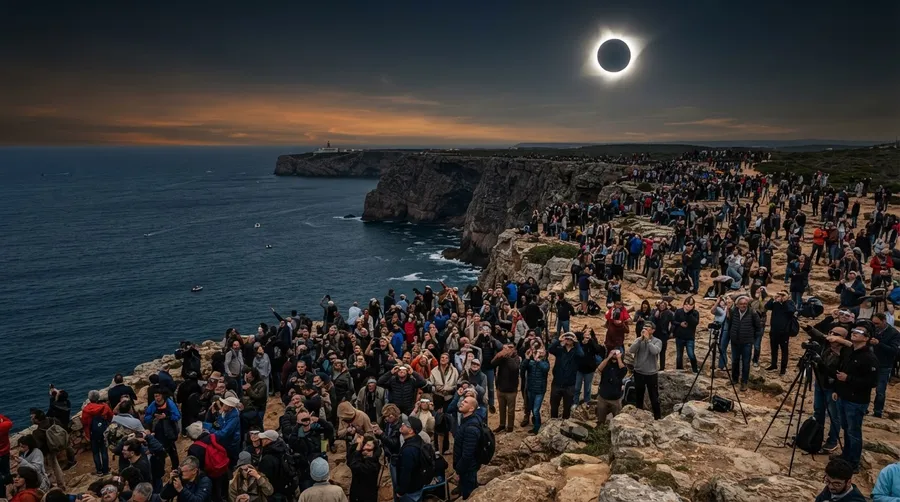
A large crowd gathers in Portugal to see the eclipse.
🔗 Related Articles | Artículos Relacionados
Nuestro canal transmite datos curiosos de ciencia, IA, espacio y tecnología las 24 horas. | Our channel streams science facts, AI, space and technology around the clock.
▶ Ver transmisión | Watch liveOPEN YOUR MIND
Source: Source
Join the conversation