Neutron Star Collision Helps Gauge Universe's Growth
Neutron Star Collision Helps Gauge Universe's Growth
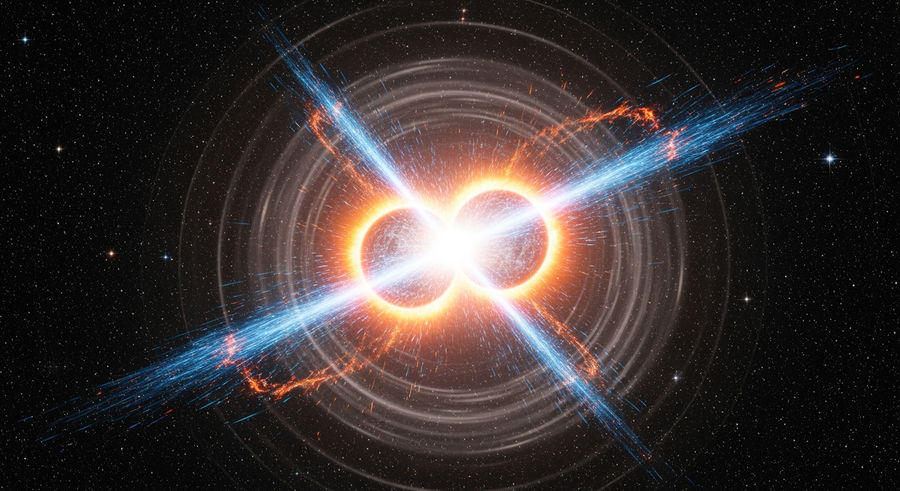
A neutron star collision emits intense light and energy in space.
🇺🇸 The Cosmic Collision Event
A neutron star collision is no small thing. It's a cosmic event that sends ripples through space-time itself. Recently, scientists combined data from telescopes and gravitational waves to analyze one of these massive clashes. This particular collision was not just an ordinary observation. The Swinburne University of Technology and CSIRO teamed up on this project, looking to refine our understanding of something massive: the Universe's rate of expansion. By examining the aftermath of such a colossal event, they hope to gain insights into measuring the Hubble Constant more accurately. Does it solve all debates? Not yet, but it's a significant step in untangling the mysteries out there.🇪🇸 Un Choque Estelar Colosal
Una colisión de estrellas de neutrones es un evento cósmico increíblemente poderoso que deja huella en el tejido del espacio-tiempo. Recientemente, científicos analizaron una de estas colisiones masivas usando datos combinados de telescopios y ondas gravitacionales. No fue solo una observación más: este proyecto conjunto entre la Universidad Tecnológica de Swinburne y CSIRO busca afinar nuestro entendimiento sobre la expansión del Universo. La meta es medir con mayor precisión la Constante de Hubble. ¿Resuelve todos los debates? Todavía no, pero representa un avance importante para desentrañar los misterios que nos rodean.
Close-up of a telescope lens used at Swinburne University.
🇺🇸 Background Knowledge
We've known for ages that the Universe is expanding, thanks to Edwin Hubble's work in the early 20th century. But measuring how fast it’s expanding has been less straightforward than you might think. There are different ways to calculate what's called the Hubble Constant and they don’t all agree with each other which is strange if you think about it since we're still talking about the same Universe here! The debate over precise numbers has been going strong for over ten years now among cosmologists who often find themselves on opposing sides based on which method or data set they trust more.🇪🇸 Lo Que Ya Sabíamos
Sobre la expansión del Universo se sabe desde hace mucho tiempo gracias al trabajo pionero de Edwin Hubble a principios del siglo XX. Sin embargo medir la velocidad exacta de esa expansión ha resultado ser complicado y menos directo de lo esperado hay diferentes métodos para calcular lo que se llama la Constante de Hubble y sorprendentemente no coinciden todos entre sí lo cual resulta curioso cuando pensamos que estamos hablando del mismo Universo ¿no? Esta diferencia en las cifras ha generado un intenso debate durante más de diez años en el ámbito cosmológico dividiendo opiniones según el método o conjunto de datos que cada uno considere más válido.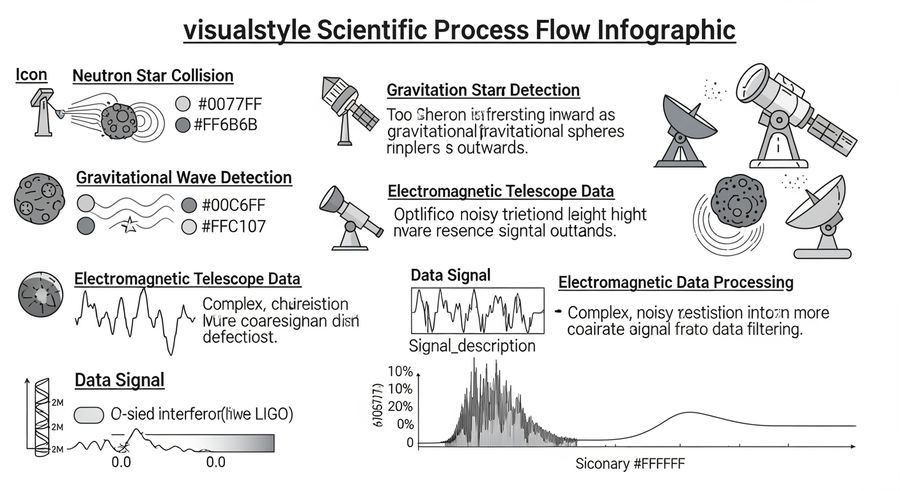
Flowchart of data combination process for measuring the Hubble Constant.
🇺🇸 Mechanics Behind It All
How do we even use a neutron star collision to measure cosmic expansion? Well when these stars collide they release gravitational waves measurable ripples in space time along with light emissions that can be captured by telescopes here on Earth or even satellites up above us somewhere crazy far away but still reachable through science magic These dual signals offer two distinct pieces of information One lets us calculate distances while the other provides insight into velocity By combining them scientists attempt to cross-check results leading hopefully toward more accurate measurements of universal scale phenomena It's almost like throwing stones in water but cosmic sized🇪🇸 La Mecánica Detrás Del Proceso
Pero cómo podemos usar una colisión estelar para medir la expansión cósmica Cuando estas estrellas chocan liberan ondas gravitacionales unas ondulaciones medibles en el espacio-tiempo junto con emisiones luminosas capturables por telescopios en la Tierra o incluso por satélites ubicados allá arriba bastante lejos pero aún accesibles gracias a nuestros avances científicos Estas dos señales ofrecen información clave Una permite calcular distancias mientras que la otra arroja luz sobre velocidades Al combinar ambos tipos los científicos pueden verificar resultados intentando así lograr medidas más precisas en fenómenos universales Es como lanzar piedras al agua pero a escala cósmica
Scientists analyze gravitational wave data on a computer.
🇺🇸 Consequences For Us Earthlings
Does this change your daily life right now? Probably not But understanding how much faster or slower our Universe is growing impacts everything from future space travel plans to theoretical physics models that shape technology Although direct effects might not trickle down immediately knowing whether we need to recalibrate basic assumptions about cosmology could inform industries dependent upon accurate stellar navigation Over time as this data becomes integrated into broader scientific consensus it might lead us toward innovations rooted in deeper comprehension Who knows Maybe one day it'll help humans reach further than current spacecrafts allow🇪🇸 Consecuencias Para Nosotros Terrícolas
¿Qué cambia esto para tu vida diaria ahora mismo? Probablemente poco Pero conocer cuánto más rápido o lento crece nuestro Universo impacta todo desde futuros planes para viajar al espacio hasta modelos teóricos físicos que moldean tecnologías Aunque los efectos directos quizá no se sientan inmediatamente saber si debemos recalibrar supuestos básicos sobre cosmología podría influir en industrias dependientes navegación estelar precisa Con el tiempo cuando estos datos se integren al consenso científico más amplio podrían llevarnos hacia innovaciones cimentadas en una comprensión más profunda Quién sabe Quizá algún día ayude humanos llegar más lejos allá donde las naves actuales aún no alcanzan
Timeline of advancements in measuring the Hubble Constant.
🇺🇸 Open Questions Remain
Despite leaps forward uncertainties linger We still don't know why different methods yield conflicting results regarding cosmic expansion Were errors made Are instruments insufficient Or is there some unknown factor skewing observations Scientists strive for answers yet significant gaps remain Even after successful measurement refinement new puzzles emerge What does dark energy really do How does it affect calculations Could unforeseen variables explain discrepancies among many techniques Being honest there's so much left unexplored and that's kinda daunting That said every question ignored leaves knowledge incomplete and curiosity unsatisfied Our quest continues propelled by both bafflement excitement🇺🇸 Quedan Preguntas Abiertas
A pesar del avance existen incertidumbres Nos seguimos preguntando por qué diferentes métodos producen resultados contradictorios respecto al ritmo expansivo cósmico Se cometieron errores Son instrumentos insuficientes O hay alguna variable desconocida afectando observaciones Los científicos buscan respuestas sin embargo aún persisten brechas importantes Incluso tras mejorar medidas exitosamente surgen nuevos enigmas Qué papel juega realmente energía oscura Cómo afecta cálculos Variables imprevistas podrían explicar discrepancias entre diversas técnicas Siendo sinceros falta tanto por explorar resulta algo intimidante Eso sí cada pregunta ignorada deja saber incompleto curiosidad insatisfecha Nuestra búsqueda prosigue impulsada tanto por desconcierto como entusiasmo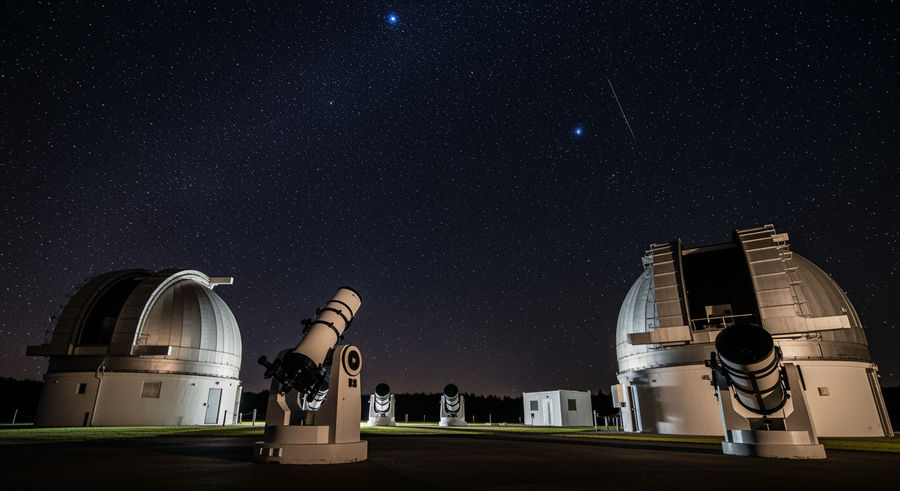
The Swinburne University observatory under a starry night sky.
🔗 Related Articles | Artículos Relacionados
Ciencia en vivo 24/7 | Science Live 24/7
Nuestro canal transmite datos curiosos de ciencia, IA, espacio y tecnología las 24 horas. | Our channel streams science facts, AI, space and technology around the clock.
▶ Ver transmisión | Watch liveOPEN YOUR MIND
Source: Source
Support Open Your Mind
If this article helped you, consider buying me a coffee.
Buy me a coffee
Join the conversation