Explore the Universe with Sound ESA's Sonic Journey
Explore the Universe with Sound ESA's Sonic Journey
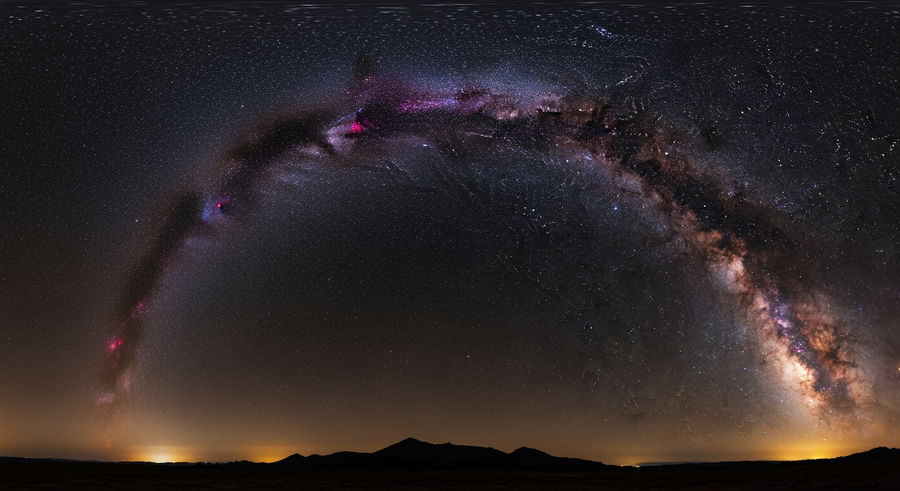
The Milky Way galaxy as seen from a remote location on Earth.
🇺🇸 A Universe of Sound
This podcast by ESA lets you hear the universe. How wild is that? The idea is simple yet mind-bending: translate data into sound. You can listen to the Sun or a distant galaxy. It's not just sound for sound's sake, though. Each note or tone stands for something specific, letting you hear what scientists usually see in graphs and charts. Imagine being able to listen to cosmic rays or the murmur of a black hole. This is what Expedition Sound offers. Zsófi Szalavári guides you through this sonic landscape, showing how space telescopes collect data that’s turned into music for the ears.
🇪🇸 Un Universo de Sonido
El podcast de la ESA te permite escuchar el universo. Qué increíble es eso, ¿verdad? No se trata solo de convertir datos en sonidos al azar. Cada nota tiene un significado preciso, permitiéndote escuchar lo que los científicos suelen ver en gráficos. Imagina escuchar los rayos cósmicos o el susurro de un agujero negro. Expedition Sound hace esto posible, guiado por Zsófi Szalavári. Ella te lleva por un paisaje sonoro increíble. Los telescopios espaciales recopilan datos que luego puedes disfrutar como música para tus oídos.


Close-up of the technology inside an ESA space telescope.
🇺🇸 What We Already Knew
Before this whole sonic exploration thing, science mostly relied on visual data. Graphs and charts were the language of the cosmos. Even if they look cool, they’re not exactly easy to understand for everyone. Especially if you're not a scientist, right? Humans are wired for sound in ways that we're only beginning to appreciate fully. Sure, we’ve known that stars emit light across a range of wavelengths and that we can detect various forms of radiation from space—nothing new there.
🇪🇸 Lo Que Ya Sabíamos
Antes de esta exploración sonora del universo, la ciencia dependía sobre todo de datos visuales. Gráficas y tablas eran la lengua del cosmos. Aunque pueden parecer impresionantes no son fáciles de entender para todos nosotros sin formación científica. Estamos diseñados para captar sonidos de maneras que apenas empezamos a comprender bien. Sabíamos que las estrellas emiten luz en varios rangos y que podemos detectar diferentes formas de radiación desde el espacio—eso no era novedoso.

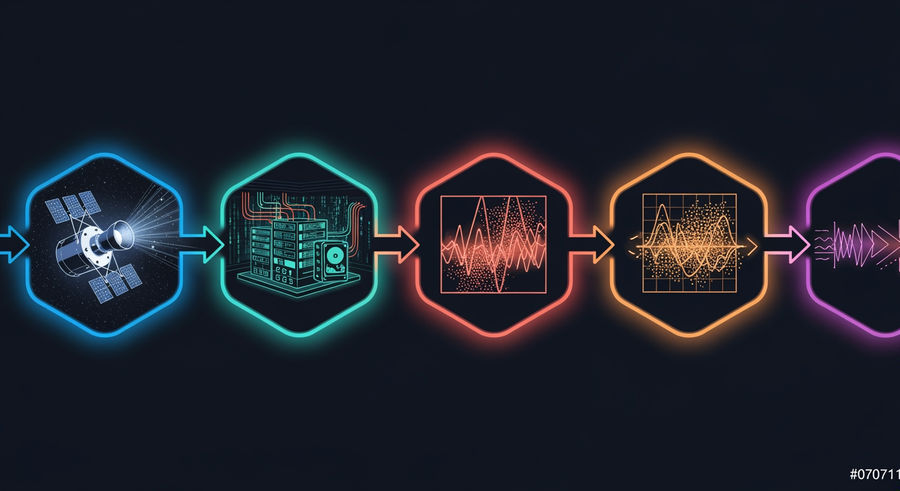
Diagram of converting space data into sonifications.
🇺🇸 Turning Data Into Music
How do you even start with something like this? Transforming data into sound involves several steps. First, scientists collect raw data through space telescopes and missions far from Earth. Then comes the real trick: converting these numbers into sound waves we can actually hear as music or tones or whatever fits best with the data set in question. It’s like translating one language into another but here it's scientific lingo into auditory experience.
🇪🇸 Convertir Datos en Música
¿Pero cómo empiezas con algo así? El proceso tiene varios pasos para transformar datos en sonido auditible para nosotros aquí en la Tierra. Se recopilan datos crudos usando telescopios espaciales y misiones lejanas al planeta azul primero que nada claro luego hay que convertir esos números fríos a ondas sonoras que podamos escuchar como música tonos o lo que sea más adecuado según el conjunto específico de cifras recolectadas este caso es como traducir un idioma complejo científico al mundo sensorial auditivo.

A scientist listens to space data sonifications at a computer.
🇺🇸 Impact Here on Earth
So what changes down here because of all this? For people who have visual impairments, it's an amazing way to access astronomical data without relying on sight alone. Schools could use these sounds to teach kids about space in a more engaging way than just showing pictures or videos all the time plus it’s more inclusive too really makes science come alive for everyone involved wouldn’t you agree? It brings a new layer to how we engage with the universe.

🇪🇸 Impacto Aquí en la Tierra
¿Qué cambia para nosotros aquí abajo entonces gracias a todo esto? Para las personas con discapacidades visuales es una forma alucinante de tener acceso a datos astronómicos sin depender solo del sentido de la vista claro está escuelas podrían usar estos sonidos para enseñar a niños sobre el espacio haciendo más atractivas las clases y dejando atrás imágenes o videos por un rato además hace la ciencia más inclusiva y cercana no crees también? Agrega una capa nueva sobre cómo nos relacionamos con nuestro vasto universo allá afuera.

Flow of the sonic journey from the Sun to deep space.
🇺🇸 The Big Unknowns
Not everything is neatly wrapped up with a bow though far from it really some questions linger even as we listen to these cosmic tunes Where did we get lost along the way perhaps Are there phenomena out there that would sound completely different from what we expect For now those remain open-ended mysteries Besides do all sounds translate equally Do we maybe miss crucial details because of how we choose or filter which frequencies become audible? So many unknown variables still at play when you think about it.
🇪🇸 Las Grandes Incógnitas
No todo queda resuelto claramente aún mientras escuchamos estas melodías cósmicas quedan muchas preguntas abiertas Por ejemplo hay fenómenos allá afuera que sonarían totalmente distinto de lo esperado Hasta ahora esos misterios siguen sin respuesta. Además se traducen igual todos los sonidos Perdemos detalles cruciales quizá debido a cómo elegimos o filtramos qué frecuencias se hacen audibles Muchísimas variables todavía sin conocer bien si lo piensas detenidamente no?


An ESA observatory in a remote natural landscape.
🔗 Related Articles | Artículos Relacionados
Nuestro canal transmite datos curiosos de ciencia, IA, espacio y tecnología las 24 horas. | Our channel streams science facts, AI, space and technology around the clock.
▶ Ver transmisión | Watch liveOPEN YOUR MIND
Source: Source
Join the conversation