Underground lab clears crucial hurdle for dark matter hunt
Underground lab clears crucial hurdle for dark matter hunt

Australia's Underground Laboratory Advances Dark Matter Quest
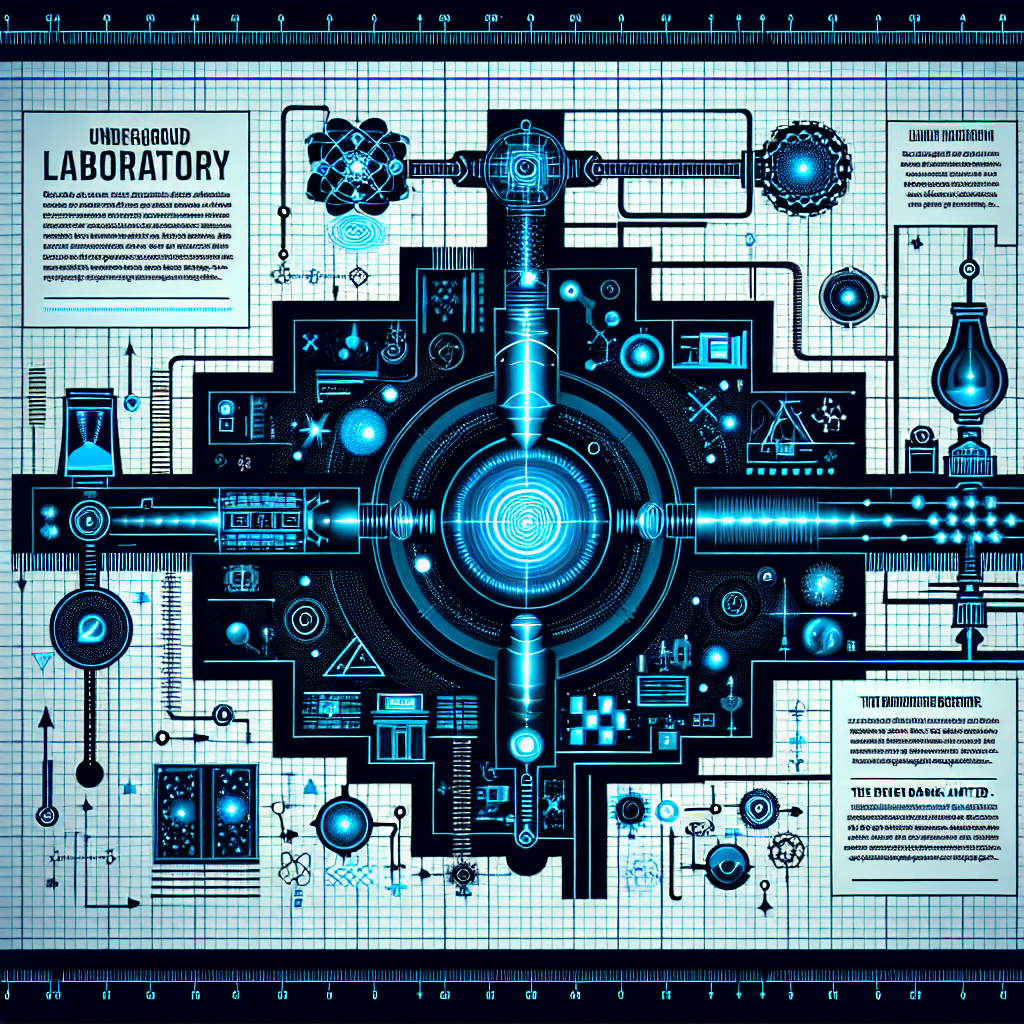
Australia has taken a significant step forward in the global race to detect dark matter, an elusive substance that constitutes approximately 27% of the universe. The Stawell Underground Physics Laboratory (SUPL) in Victoria has achieved a critical milestone by confirming that cosmic radiation levels in its depths are sufficiently low. This breakthrough clears a major hurdle for the world-class dark matter experiments scheduled to begin later this year. The SUPL, situated 1,025 meters beneath the Earth's surface, is one of the few laboratories globally capable of conducting such sensitive research. Its location and design are crucial for shielding experiments from cosmic rays that could interfere with the detection of dark matter particles.

The Challenge of Cosmic Radiation
Cosmic radiation is one of the primary obstacles in the search for dark matter. These high-energy particles constantly bombard the Earth's surface, making it difficult to detect the faint signals expected from dark matter interactions. The SUPL's underground location significantly reduces this interference, providing a controlled environment for experiments. Recent research conducted at the lab has confirmed that cosmic radiation levels are indeed low enough to support dark matter studies. This finding is crucial because it validates the SUPL as a viable site for experiments that require extreme sensitivity. The confirmation came after extensive testing and analysis of the radiation levels, ensuring that the lab can support the precise measurements necessary for dark matter detection.
The Global Race for Dark Matter Discovery
The quest to uncover dark matter is a pivotal aspect of modern physics, with researchers around the globe striving to understand its properties and behavior. Dark matter does not emit, absorb, or reflect light, making it invisible and detectable only through its gravitational effects on visible matter. The SUPL's progress marks Australia's entry into this prestigious international effort, joining a select group of underground labs worldwide that are equipped to tackle this monumental scientific challenge. By confirming the lab's low radiation levels, Australia positions itself as a key player in the global race to discover dark matter, potentially leading to groundbreaking advancements in our understanding of the universe.

Future Prospects and Implications
With the SUPL now ready to host dark matter experiments, researchers are poised to embark on investigations that could revolutionize our comprehension of the cosmos. The experiments planned at the SUPL will search for the rare interactions between dark matter particles and ordinary matter, which could provide insights into the fundamental nature of the universe. Success in this endeavor could have profound implications for physics, potentially leading to new theories that extend beyond the current Standard Model. As the world anticipates the launch of these experiments later this year, the SUPL stands as a beacon of scientific innovation and collaboration, driving Australia to the forefront of dark matter research. The outcomes of these experiments could reshape our understanding of the universe and open new frontiers in the study of fundamental physics.


OPEN YOUR MIND !!!
Source: STEM News Feed
Support Open Your Mind
Donate via PayPal

Comments
Post a Comment