Why Polar Bears Are Gathering Near a Canadian Town
Why Polar Bears Are Gathering Near a Canadian Town
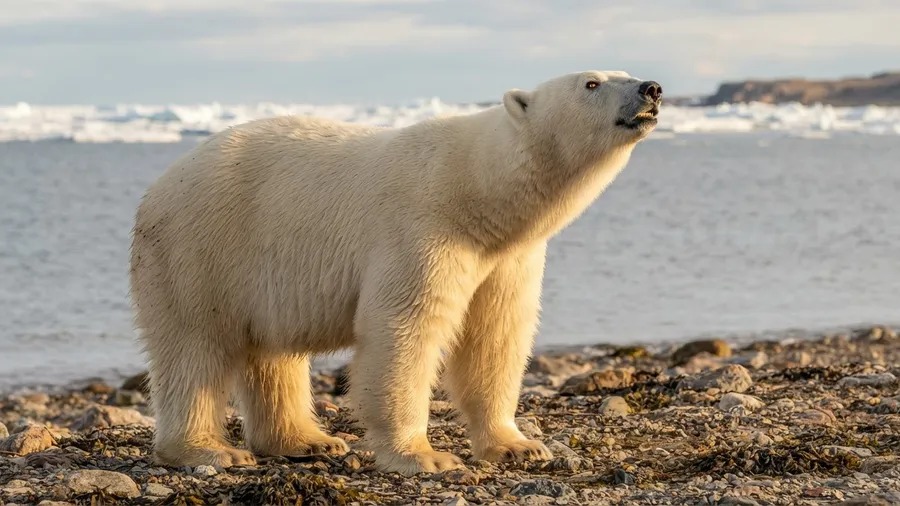
A large male polar bear surveys the Hudson Bay shoreline near Churchill, Manitoba.
🇺🇸 Stuck on Shore in Churchill
Churchill, Manitoba, has about 900 residents. Every October and November, polar bears show up anyway. They drift along the shoreline, sit in willow scrub, and nap on rocks just past the edge of town. They are waiting. Hudson Bay has not frozen yet, and without ice they cannot hunt seals. So they sit on land and burn through the fat they built up in spring. Locals leave car doors unlocked on Halloween night so a kid can duck inside if a bear turns up. I kept rereading that detail. It sounds like folklore, but it is just a safety plan. The bears are not invading. They are stuck.
🇪🇸 Un pueblo que espera con los osos
En Churchill, un pueblo de Manitoba con unas 900 personas, los osos polares aparecen cada otoño y nadie se sorprende ya. Hay un programa de alerta, patrullas y hasta una cárcel para osos que se meten donde no deben. Pero el punto no es el susto. Es la espera. La bahía de Hudson tarda en congelarse, los osos no pueden salir a cazar focas sobre el hielo, y se quedan en la costa gastando la grasa que acumularon en primavera. Me parece curioso que un pueblo entero organice su octubre alrededor de un animal que simplemente tiene hambre. No son invasores. Son vecinos incómodos con el estómago vacío.
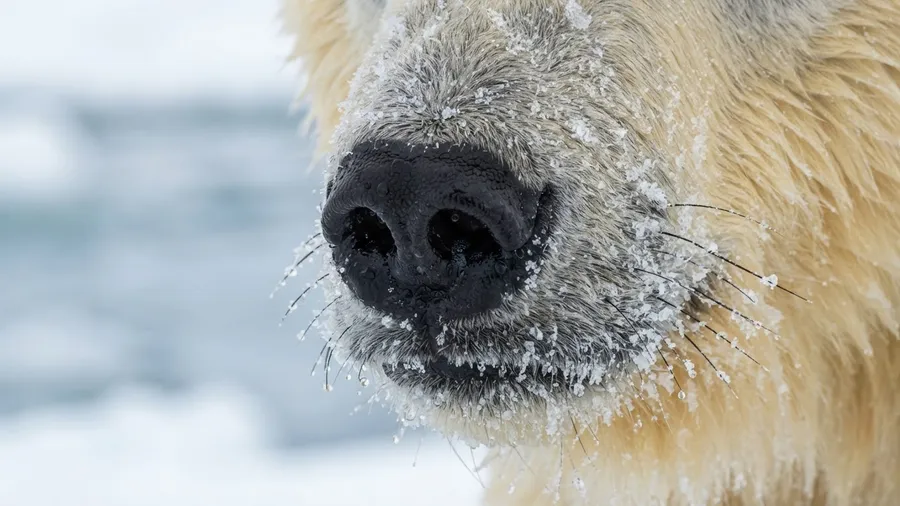
A close view of a polar bear's frost-tipped whiskers and water-beaded fur.
🇺🇸 Forty Years of Shrinking Ice
None of this started last year. Biologists have tracked the western Hudson Bay bears since the 1980s, and the trend line is ugly. Back then the population sat near 1,200. A 2021 aerial survey counted about 618. That is roughly half. The bay is among the southernmost places polar bears live, which makes it an early warning system, if you want to be dramatic about it. I would rather say it is simply where the squeeze shows first. Sea ice now breaks up earlier in summer and forms later in fall, by several weeks compared with four decades ago. Every extra week ashore is a week without seals.
🇪🇸 Lo que ya sabíamos del hielo
Los biólogos siguen a los osos de la bahía de Hudson occidental desde los años ochenta, y la tendencia no es buena. En aquella época se hablaba de unos 1,200 animales. El censo aéreo de 2021 contó cerca de 618. Casi la mitad. Esa bahía queda en el extremo sur del territorio del oso polar, así que las señales aparecen ahí primero. El hielo se rompe antes en verano y vuelve más tarde en otoño, con semanas de diferencia frente a hace cuarenta años. Las hembras con crías son las que más sufren, porque amamantan mientras ayunan. Cada semana extra en tierra es una semana sin comida de verdad.
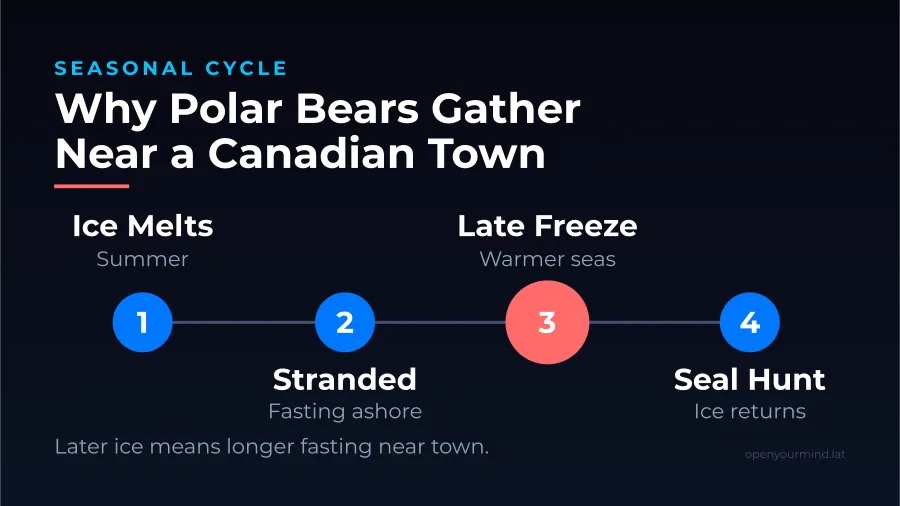
Scientific diagram: Why Polar Bears Are Gathering Near a Canadian Town
🇺🇸 Fat, Ice, and a Ticking Clock
Here is the mechanism, roughly. Polar bears are built to hunt from ice. A ringed seal has to surface to breathe, and the bear waits at a breathing hole or ambushes a pup near its lair. Spring and early summer are the feast, because pups are mostly blubber. A bear eats enough then to carry it through months of nothing. When the ice goes, the bear walks ashore and the clock starts. Adult males can lose around a kilogram a day. Females nursing cubs pay extra, since milk is expensive. How much a bear saves by lying still in a shallow pit, I am not sure. Researchers argue about it.
🇪🇸 Cómo se gasta la grasa
Todo depende del hielo. El oso polar no persigue a la foca por el agua, la espera. La foca anillada tiene que salir a respirar, y el oso se queda quieto junto al agujero durante horas. En primavera nacen las crías de foca, que son casi pura grasa, y ese banquete tiene que alcanzarle al oso para el resto del año. Si el hielo se retira temprano, el oso sube a tierra con menos reservas de las que necesita. Un macho adulto puede perder cerca de un kilo diario. Cuánto ahorra quedándose echado en un hoyo sobre la turba, no lo sé con certeza. Los investigadores tampoco se ponen de acuerdo.
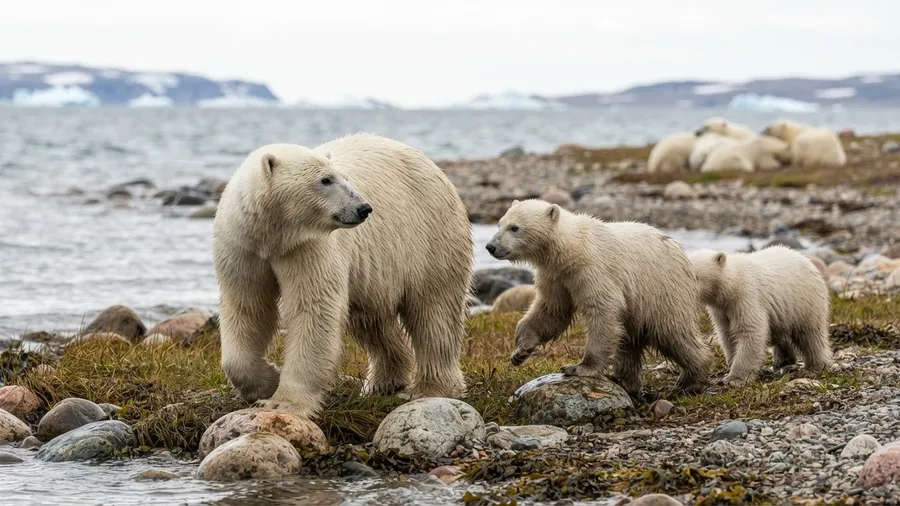
A mother polar bear pauses to look back at her cubs along the tundra shoreline.
🇺🇸 What Changes for the People There
For Churchill, the bears are the economy and the hazard at once. Tourists pay to ride tundra buggies out to the shore in fall. Those dollars keep hotels and guides employed in a town with few other options. Meanwhile a patrol answers calls, uses noisemakers to push bears away, and moves trouble animals to a holding facility until the bay freezes. Garbage is locked down. Children learn bear safety at school. If the bear count keeps sliding, the tourism income goes with it. Hungrier bears also test doors and fences more often. That is the real change for people there. Fewer bears, and more desperate ones.
🇪🇸 El costo de convivir
Para Churchill, el oso es la economía y el peligro al mismo tiempo. Los turistas pagan por recorrer la tundra en vehículos altos y ver a los animales desde cerca. Ese dinero sostiene hoteles y guías en un pueblo con pocas alternativas. Mientras tanto, una patrulla atiende llamadas, ahuyenta con ruido y encierra a los osos problemáticos hasta que la bahía se congele. La basura va bajo llave. Si la población sigue cayendo, el turismo cae con ella. Para las comunidades indígenas de la región, que llevan siglos conviviendo con el oso, el cambio también es cultural. Y un oso con hambre empuja más fuerte cada puerta.
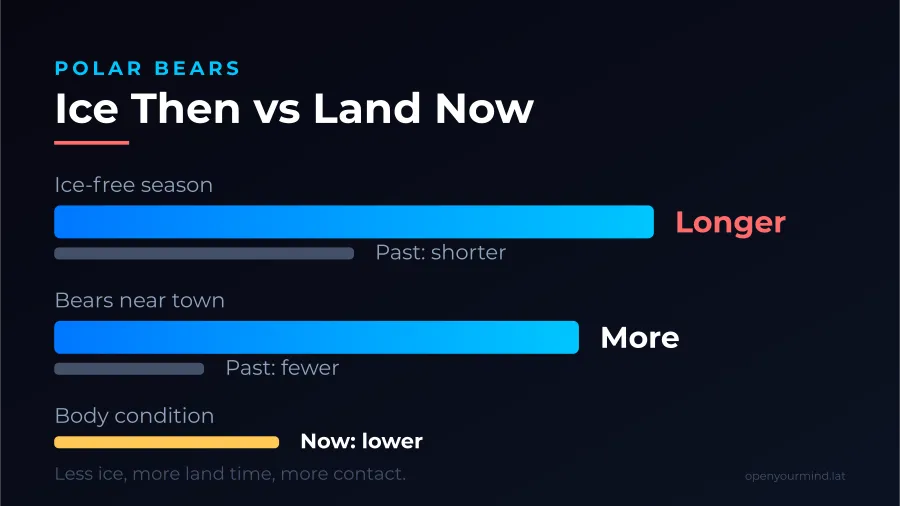
Scientific diagram: Why Polar Bears Are Gathering Near a Canadian Town
🇺🇸 What Nobody Has Measured Yet
Nobody knows how many ice free days the western Hudson Bay population can absorb before cub survival collapses. Researchers have not pinned down that number. Nobody knows whether snow goose eggs and berries on land replace even a fraction of a seal's fat, and early studies suggest not. The next full aerial survey, after the 618 count in 2021, will show whether the decline continued.
🇪🇸 Lo que falta por medir
Falta saber cuántos días sin hielo puede aguantar la población antes de que sobrevivan muchas menos crías. Nadie ha fijado ese número. Tampoco está claro si los huevos de ganso y las bayas en tierra reemplazan siquiera una parte de la grasa de una foca, y los primeros estudios dicen que no. El próximo censo aéreo dirá si el conteo de 618 en 2021 siguió bajando.

Why Polar Bears Are Gathering Near a Canadian Town
🔗 Related Articles | Artículos Relacionados
Nuestro canal transmite datos curiosos de ciencia, IA, espacio y tecnología las 24 horas. | Our channel streams science facts, AI, space and technology around the clock.
▶ Ver transmisión | Watch liveOPEN YOUR MIND
Source: Source
Join the conversation