Why Embodied AI Is the Next Big Test, per the 2026 AI100
Why Embodied AI Is the Next Big Test, per the 2026 AI100
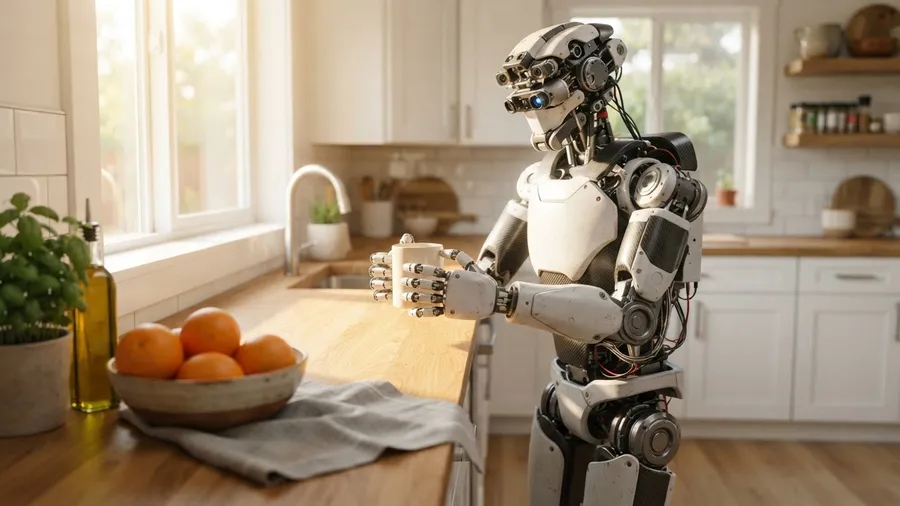
A humanoid robot carefully picks up a mug, showing the dexterity embodied AI must master.
🇺🇸 The report that treats chatbots as the past tense
Every five years a panel of researchers sits down and tries to say what AI actually did to the world. The 2026 AI100 is the third edition, and its title is AI Goes Mainstream: The Scaling Era and the Rise of Generative AI. Read that slowly. It describes something already finished, or at least already absorbed. I have only worked from the title and the framing, not every chapter, so take my next claim as a reading and not a quotation. The reading is this. Chatbots and image generators are the settled part of the story. Machines that move, grasp and fail in physical space are the exam still waiting.
🇪🇸 Lo que el informe da por resuelto
Lo primero que me llamó la atención fue el verbo del título. Goes mainstream, ya pasó. La edición 2026 del AI100 es la tercera, después de las de 2016 y 2021, y se titula AI Goes Mainstream: The Scaling Era and the Rise of Generative AI. Confieso que trabajé con el título y el planteamiento general, no con cada capítulo, así que lo que sigue es mi lectura. Para mí, el informe deja a los chatbots y a los generadores de imágenes como la parte ya resuelta. Lo que viene es la prueba difícil: máquinas que se mueven en el mundo físico, agarran cosas y se equivocan delante de nosotros.
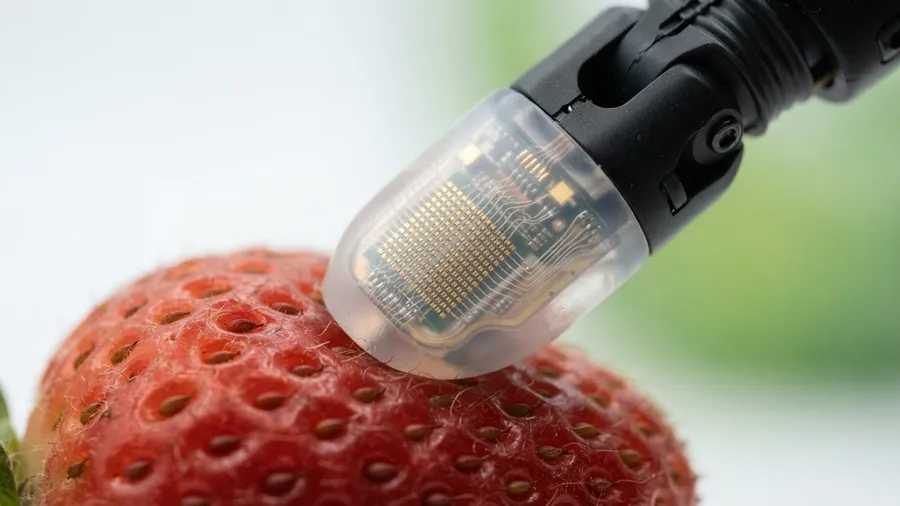
A robotic fingertip with embedded tactile sensors gently touches a strawberry.
🇺🇸 Why robots fell behind while text took off
The first AI100 report came in 2016 under the title Artificial Intelligence and Life in 2030. It spent real pages on transportation and home robots, which tells you what people expected back then. The 2021 edition, Gathering Strength, Gathering Storms, was warier. What exploded afterward was text. Models trained on enormous piles of writing started producing essays, code and passable summaries of legal documents. Robots did not follow at the same speed. Autonomous cars still struggle with odd situations, like a road worker waving them through at a strange angle. That gap has a name, Moravec's paradox, from the 1980s. Reasoning is cheap for machines, and a toddler's hands are brutally expensive.
🇪🇸 La paradoja que todavía duele
Moravec lo dijo en los años ochenta y sigue vigente. Lo que le cuesta a una persona, como jugar ajedrez, le sale barato a una máquina. Lo que parece fácil, como abrir una puerta con una mano mientras cargas una funda, le sale carísimo. El AI100 de 2016 ya dedicaba páginas al transporte y a los robots de servicio doméstico, y el de 2021 llegó con más cautela. Lo que explotó después fue el texto. Modelos entrenados con montañas de escritura empezaron a redactar código y resúmenes. Los robots se quedaron atrás. Yo crecí escuchando promesas de carros que se manejan solos, así que me cuesta no sonreír.
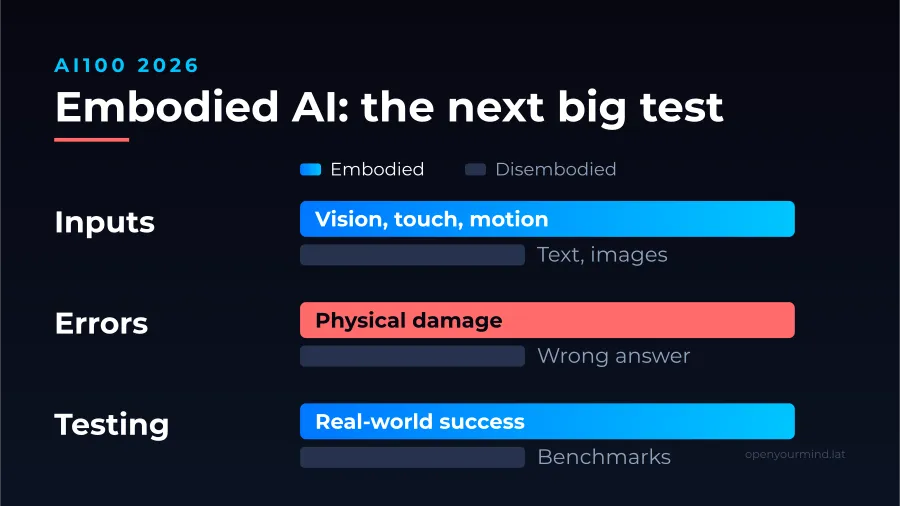
Generative AI models differ from embodied AI, which acts through physical robots.
🇺🇸 Turning a language model into a pair of hands
Here is the mechanism, as far as I follow it. Take a model already trained on text and images. Then show it robot demonstrations: camera frames, an instruction like put the cup in the sink, and the motor commands a human operator used. Google DeepMind's RT-2, from 2023, wrote those commands as tokens, the same kind of unit a chatbot uses for words. So the model predicts the next movement the way it predicts the next word. It sounds too neat, and maybe it is. The trouble is time and friction. A chatbot can pause for two seconds. A gripper cannot, and a wet glass does not behave like a sentence.
🇪🇸 Cómo un modelo de lenguaje aprende a mover un brazo
Piénsalo como un modelo que aprendió a leer y a mirar, y al que después le enseñan a mover un brazo. Le muestran las imágenes de la cámara, una orden tipo pon la taza en el fregadero y los comandos que usó un operador humano. RT-2, de Google DeepMind, en 2023 escribía esos comandos como tokens, igual que las palabras. Predice el próximo movimiento como un chatbot predice la próxima palabra. Hay un detalle que se me escapa: cómo se reparte el trabajo entre ese modelo lento y los controladores rápidos que sostienen el brazo. Releí esa parte varias veces. Un vaso mojado no se comporta como una frase.
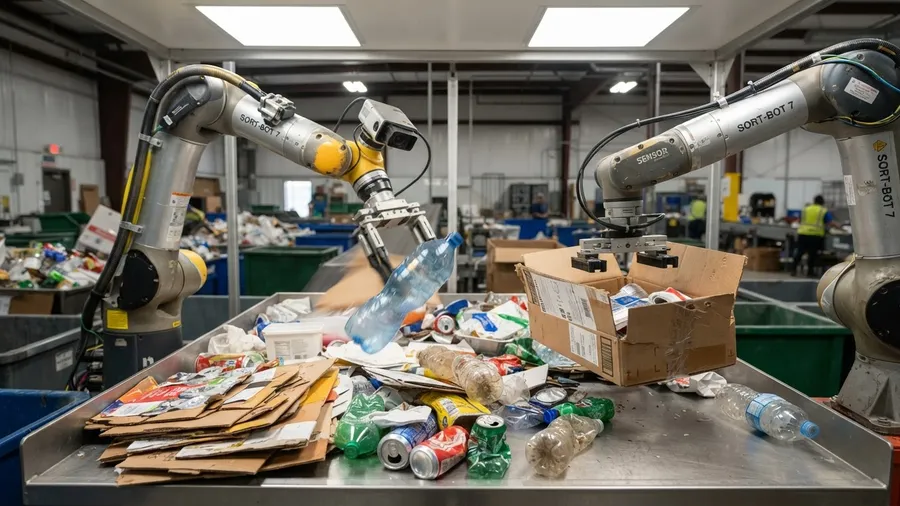
Dual-arm robots sort recyclables, handling objects of varying shape and fragility.
🇺🇸 What changes first, and for whom
Nothing here puts a robot butler in your kitchen next year. What changes first is narrower. Warehouses already use arms that pick items, and better models mean fewer moments when the arm freezes and a human has to step in. Factories could, in principle, retrain a robot from a modest set of demonstrations instead of months of custom code. For a worker, that can mean the repetitive shift disappears while a smaller number of supervisory jobs appear. That is not the same as breaking even. Home care is the hard case. An older person who needs help standing up needs a machine that is wrong almost never, and nobody has shown that yet.
🇪🇸 El cambio llega por la puerta de atrás
Para la gente común, el cambio llega por la puerta de atrás. Primero en almacenes y fábricas, donde un brazo que antes se trababa con cualquier caja rara ahora pide ayuda menos veces. El empleado que cargaba cajas ocho horas puede terminar vigilando cinco máquinas, y el salario de ese puesto nuevo no tiene por qué igualar al viejo. En el hogar la historia es otra. Cuidar a un abuelo que se levanta de la cama exige una máquina que casi nunca falle, y eso nadie lo ha demostrado. Un error de texto se corrige borrando. Un error de un brazo rompe cosas o lastima a alguien.
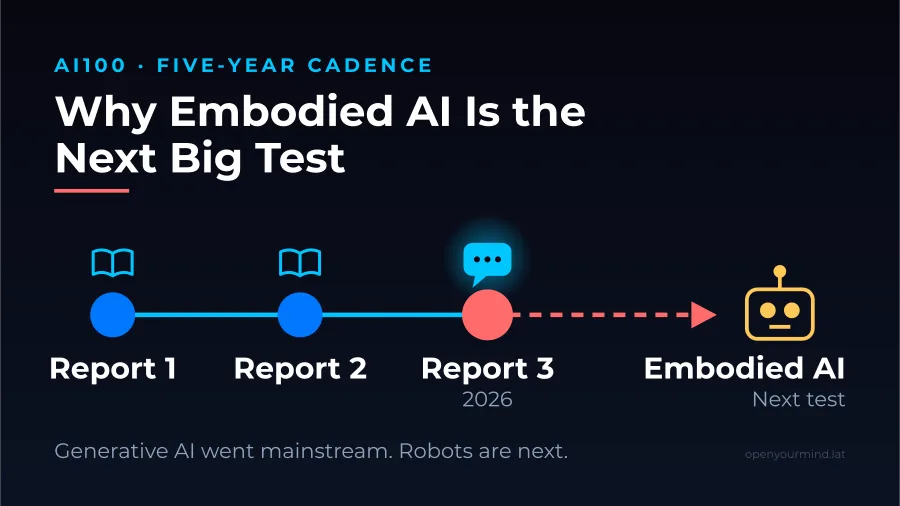
The AI100 series reached its third report in 2026, titled AI Goes Mainstream.
🇺🇸 Three gaps nobody has closed
Nobody knows whether scaling laws hold for robots. Text models improved smoothly with more data, but the largest open robot collection, Open X Embodiment, holds about one million trajectories, a sliver of what chatbots read. Nobody knows how many failures per thousand tasks a home robot produces outside a lab. And nobody can say whether the 2031 AI100, if the schedule holds, will call this test passed.
🇪🇸 Tres vacíos que siguen abiertos
Nadie sabe si las leyes de escala funcionan igual con robots. Los modelos de texto mejoraron de forma pareja con más datos, pero la mayor colección abierta de robots, Open X Embodiment, tiene alrededor de un millón de trayectorias, una migaja frente a lo que lee un chatbot. Tampoco hay cifras claras de cuántos fallos por cada mil tareas comete un robot doméstico fuera del laboratorio. Y falta ver si el AI100 de 2031 dará esta prueba por pasada.
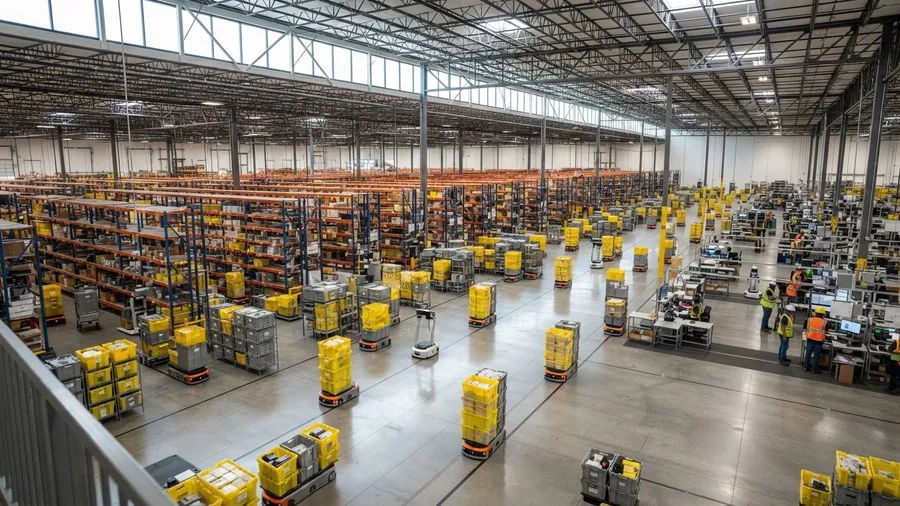
Robots work alongside each other in a fulfillment center, moving goods through aisles.
🔗 Related Articles | Artículos Relacionados
Nuestro canal transmite datos curiosos de ciencia, IA, espacio y tecnología las 24 horas. | Our channel streams science facts, AI, space and technology around the clock.
▶ Ver transmisión | Watch liveOPEN YOUR MIND
Source: Source
Join the conversation