How LISA Could Spot Hidden Exoplanets Using Gravitational Waves
How LISA Could Spot Hidden Exoplanets Using Gravitational Waves
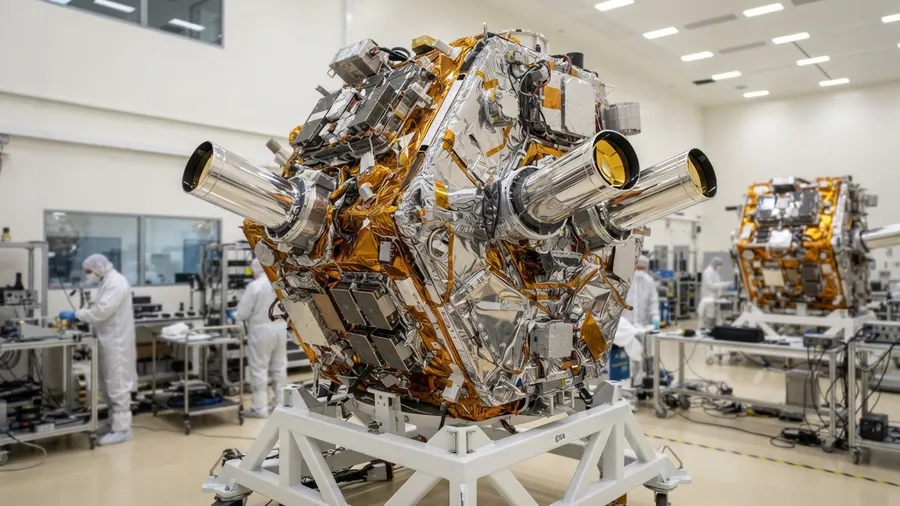
A flight-ready LISA spacecraft sits in a cleanroom, one of three identical units.
🇺🇸 A Planet Hiding in a Wobble
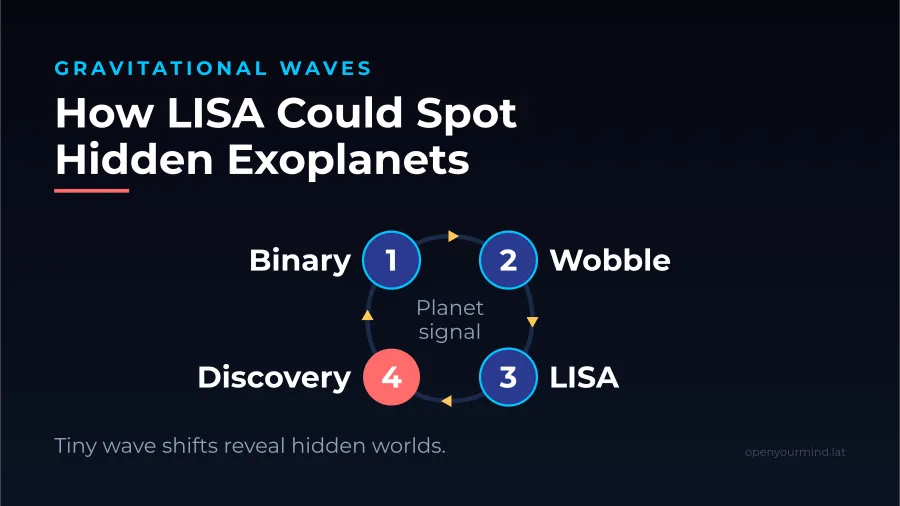
Here is the claim. Two studies led by NASA astrophysicists argue that LISA, the space antenna ESA is building with NASA contributing, should be able to find planets by listening to dead stars. Not seeing them. Listening. The targets are tight pairs of white dwarfs, each circling the other every few minutes or hours, and those pairs already broadcast gravitational waves at millihertz frequencies. If a giant planet orbits the pair from far out, it tugs the whole system back and forth. The tone of the signal shifts, very slightly. I kept rereading that part, because the planet never has to shine or cross in front of anything. It just has to have mass.
🇪🇸 Un planeta escondido en un tambaleo
Lo curioso de estos dos estudios es que el planeta no necesita brillar ni pasar frente a ninguna estrella. Basta con que tenga masa. LISA, que ESA construye con aportes de la NASA y que despegaría hacia mediados de la década de 2030, escucharía parejas de enanas blancas muy cerradas que giran una alrededor de la otra. Esas parejas ya emiten ondas gravitacionales constantes. Si un planeta gigante las rodea, jala todo el sistema y el tono de la señal cambia un poquito. Eso es lo que buscarían los astrofísicos. No una sombra, sino una desafinación.
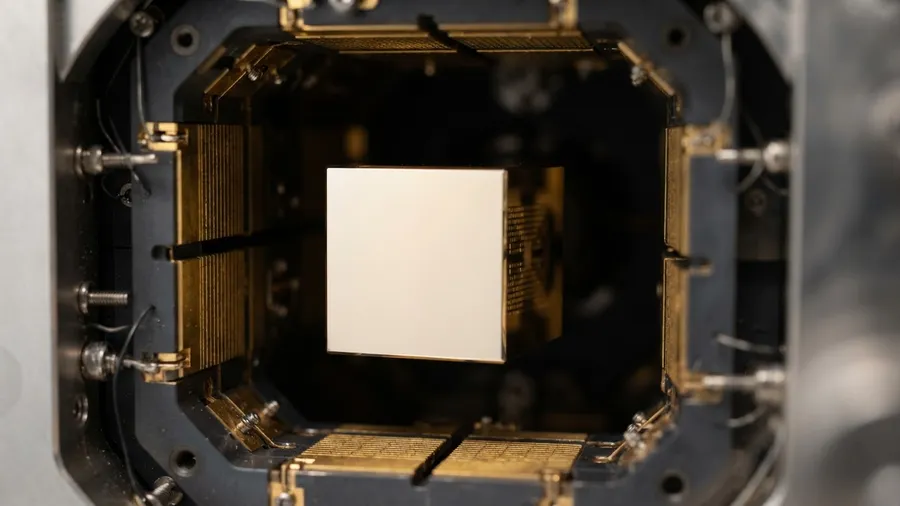
A LISA test mass floats inside its electrode housing, sensing gravitational wave motion.
🇺🇸 What We Already Had
We have confirmed thousands of exoplanets, and almost all of them came from two tricks. Watch a star dim when a planet crosses it, or watch the starlight wobble from the planet's pull. Both methods love quiet, bright, Sun like stars. White dwarfs are a harder case. They are faint, and when two of them orbit each other the light gets messy. So planets around white dwarf pairs are close to a blank spot on the map. The gravitational wave side is older news. Theorists have predicted thousands of these binaries in the Milky Way for decades, and counting them was always part of LISA's job. Planets were the side quest.
🇪🇸 El mapa que ya teníamos
Los astrónomos llevan años contando planetas con dos métodos básicos. Uno mide cuánto se oscurece una estrella cuando un planeta pasa por delante. El otro detecta cómo la estrella se mueve por el tirón del planeta. Ambos funcionan mejor con estrellas parecidas al Sol. Las enanas blancas son otra historia, porque son tenues, y alrededor de parejas de ellas casi no hay planetas confirmados. Mientras tanto, la teoría predijo hace décadas que nuestra galaxia está llena de esas parejas emitiendo ondas gravitacionales. Contarlas era el trabajo principal de LISA. Buscar planetas ahí entró después, casi como una idea extra.
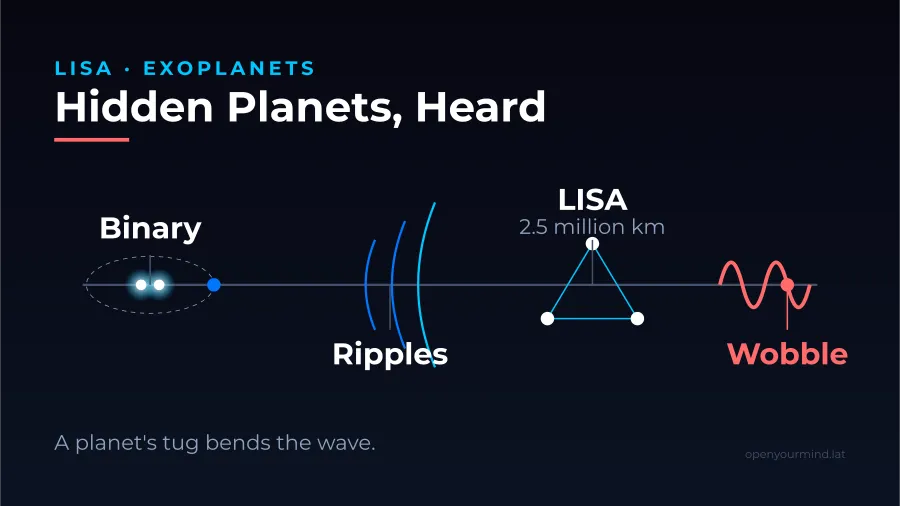
Scientific diagram: How LISA Could Spot Hidden Exoplanets Using Gravitational Waves
🇺🇸 How a Planet Bends a Wave
Think of the binary as a clock that ticks in gravitational waves. A planet orbiting far outside makes the pair drift toward us and away from us over years, circling the shared center of mass. When the pair moves toward us, the wave crests arrive slightly closer together. When it moves away, they stretch out. That is the Doppler effect, the same thing that changes an ambulance siren as it passes, just applied to ripples in spacetime. LISA would track the phase of the signal and look for a slow, repeating drift. A heavier planet gives a bigger drift. I am flattening the data analysis here, and that part is its own beast.
🇪🇸 Cómo un planeta dobla una onda
Imagina tres naves separadas por unos dos millones y medio de kilómetros, formando un triángulo que mide estiramientos diminutos del espacio con láseres. Eso es LISA. Ahora imagina que la pareja de enanas blancas se acerca y se aleja de nosotros porque un planeta la arrastra en una órbita larga. Las crestas de la onda llegan más juntas cuando se acerca y más separadas cuando se aleja. Es el efecto Doppler, igual que la sirena de una ambulancia. La señal acumula un desfase lento y repetitivo, y ahí está la huella del planeta. Cuánto cuesta separar eso del ruido, no lo sé del todo.
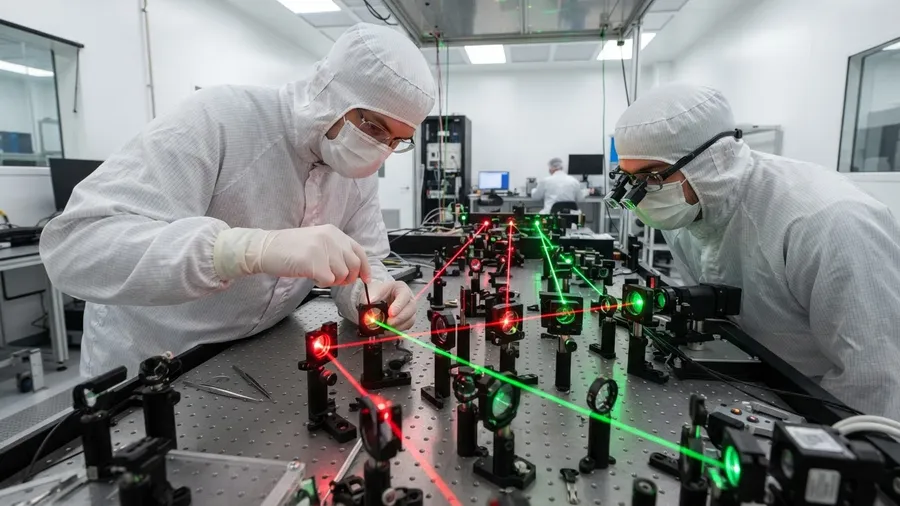
Engineers align the laser optical bench that will measure LISA's spacecraft separations.
🇺🇸 What Changes on the Ground
Nobody's commute changes. Let me say that first. What changes is the census. Gravitational waves are not blocked by dust, so LISA could find planets across the galaxy where optical telescopes see nothing, including regions we have barely sampled. That gives planet formation models a new sample to fail against. Some of those worlds may have survived the death of their stars. Others may have formed afterward from debris, which would be strange and wonderful. It also touches our own future. The Sun will become a white dwarf in about five billion years, and these systems are the nearest thing we have to a preview of what happens to Jupiter.
🇪🇸 Qué cambia de verdad
Nadie va a notar esto en la factura de la luz. Digamos eso primero. Lo que cambia es el censo de planetas. Las ondas gravitacionales no se frenan con el polvo, así que LISA podría encontrar mundos en rincones de la Vía Láctea donde los telescopios ópticos no ven nada. Los modelos de formación planetaria tendrían que enfrentarse a una muestra nueva, y algunos podrían salir mal parados. Hay otra pregunta de fondo. Si un planeta gigante sobrevive a la muerte de dos estrellas, quizás Júpiter también sobreviva a la muerte del Sol, dentro de unos cinco mil millones de años. Estos sistemas son lo más parecido a un adelanto.
Scientific diagram: How LISA Could Spot Hidden Exoplanets Using Gravitational Waves
🇺🇸 What Is Still Unknown
Nobody knows how many white dwarf pairs actually host planets heavy enough to register, and published estimates vary widely. The nominal mission lasts about four years, so a planet with a longer orbit may only show a partial drift. And no one has measured whether giant planets survive the common envelope phase, when two stars merge into one tight pair, or whether new ones form later from debris.
🇪🇸 Lo que aún no se sabe
Nadie sabe cuántas parejas de enanas blancas tienen planetas con masa suficiente para ser detectados, y las estimaciones publicadas varían mucho. La misión nominal dura unos cuatro años, así que un planeta con órbita más larga solo dejaría una parte de su desfase. Tampoco está medido si los gigantes sobreviven a la fase de envoltura común, cuando dos estrellas se funden en una pareja cerrada, o si nacen después de los restos.
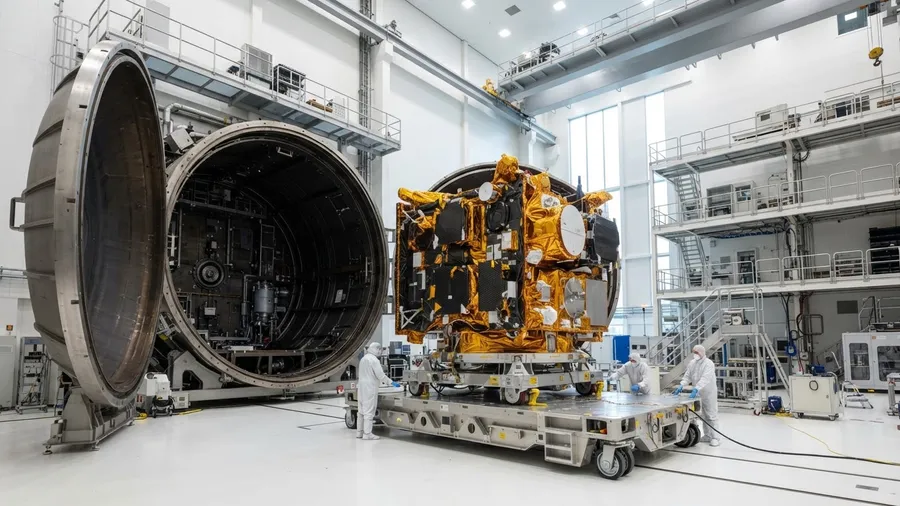
A LISA test model is prepared inside a
🔗 Related Articles | Artículos Relacionados
Nuestro canal transmite datos curiosos de ciencia, IA, espacio y tecnología las 24 horas. | Our channel streams science facts, AI, space and technology around the clock.
▶ Ver transmisión | Watch liveOPEN YOUR MIND
Source: Source
Join the conversation