How AI Spots Bladder Cancer Clues Up to 5 Years Early
Discover how AI early detection of bladder cancer spots warning clues up to 5 years before diagnosis and what it means for patient screening.
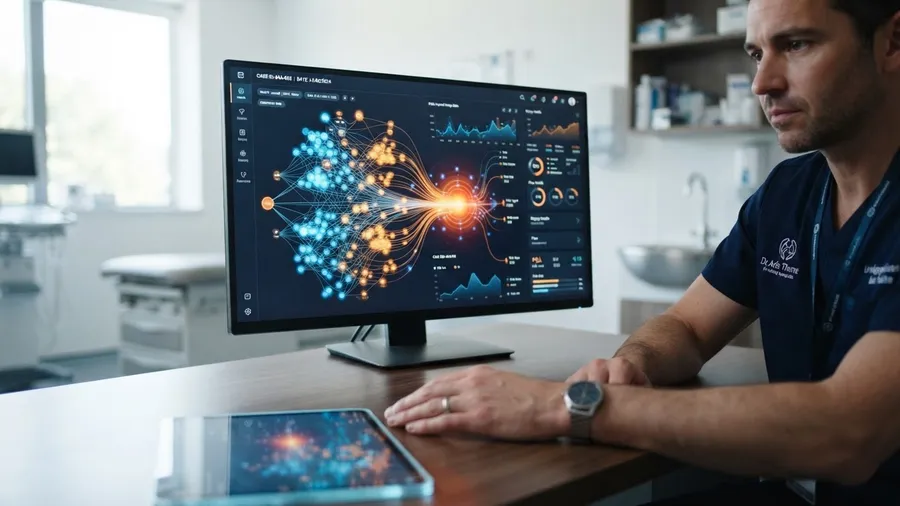
A urology monitor shows AI risk patterns drawn from pseudonymized patient health records.
🇺🇸 The number that made me stop
Here is the number that stopped me. An AI tool picked out 85 percent of bladder cancer cases in a study of nearly 70,000 patients. And it did so up to five years before the diagnosis. Five years. That is long enough for a person to change jobs, move house, and forget the odd symptom they once mentioned to a nurse. The tool did not find a tumor on a scan. It found a pattern, something sitting in the data that nobody had been trained to see. I kept rereading the summary to make sure I had the timeframe right. I did. Whether the pattern is a cause, a symptom or just a shadow of something else, I cannot tell you yet.
🇪🇸 Cinco años antes de que nadie lo notara
Cinco años antes. Eso fue lo que me hizo releer el resumen dos veces. Una herramienta de inteligencia artificial analizó datos de casi 70,000 pacientes y señaló el 85 por ciento de los casos de cáncer de vejiga. No miró un tumor. Miró rastros escondidos en la información médica que nadie sabía buscar. Si lo piensas, es raro que algo así pase inadvertido durante tanto tiempo. Una persona puede cargar con una señal mínima durante años y ningún médico la conecta con nada. Todavía no sé decirte si ese patrón causa algo o solo acompaña a la enfermedad. Eso les toca explicarlo a los autores.
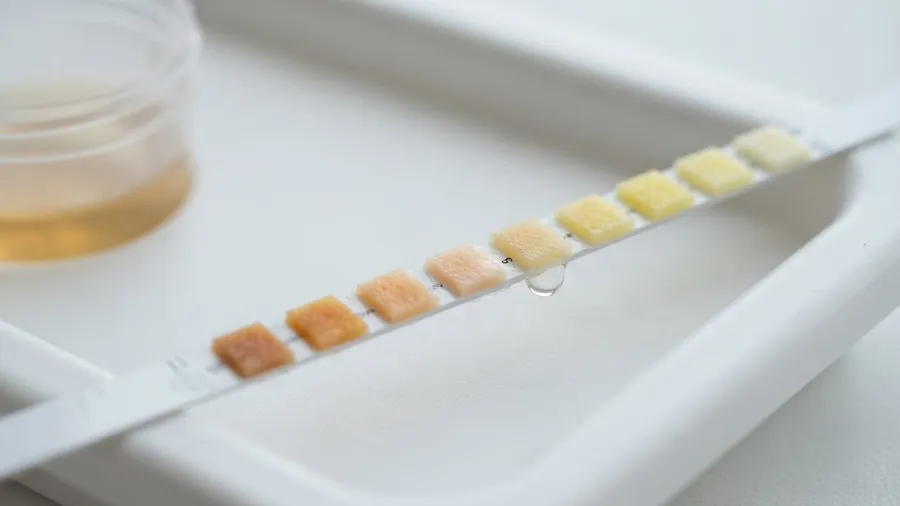
A urine sample and dipstick strip illustrate the everyday tests used in bladder cancer screening.
🇺🇸 Blood in the urine and not much else
Bladder cancer usually announces itself with blood in the urine. Sometimes you can see it, sometimes only a lab can. Then comes the cystoscopy, a thin camera passed through the urethra, which is exactly as pleasant as it sounds. There is no routine screening for the general population, so most people get checked only after a symptom shows up. Smoking is the biggest known risk factor, and age matters too. That leaves a gap. Plenty of people carry early disease with no flag at all, and doctors have little reason to send a healthy looking patient for an invasive test. Blood in the urine also has a dozen harmless explanations, so the one classic warning sign is a noisy one.
🇪🇸 Lo que ya sabíamos, que no era mucho
Lo que ya sabíamos es poco glamoroso. El cáncer de vejiga suele avisar con sangre en la orina, a veces visible y a veces solo detectable en el laboratorio. Después viene la cistoscopia, una cámara delgada que entra por la uretra, y nadie la pide por gusto. No existe un cribado de rutina para la población general. Fumar es el factor de riesgo más claro, y la edad también pesa. El problema es que la sangre en la orina tiene mil explicaciones inofensivas, así que la señal clásica es ruidosa. Mucha gente llega al diagnóstico tarde porque nada obligó a mirar antes.
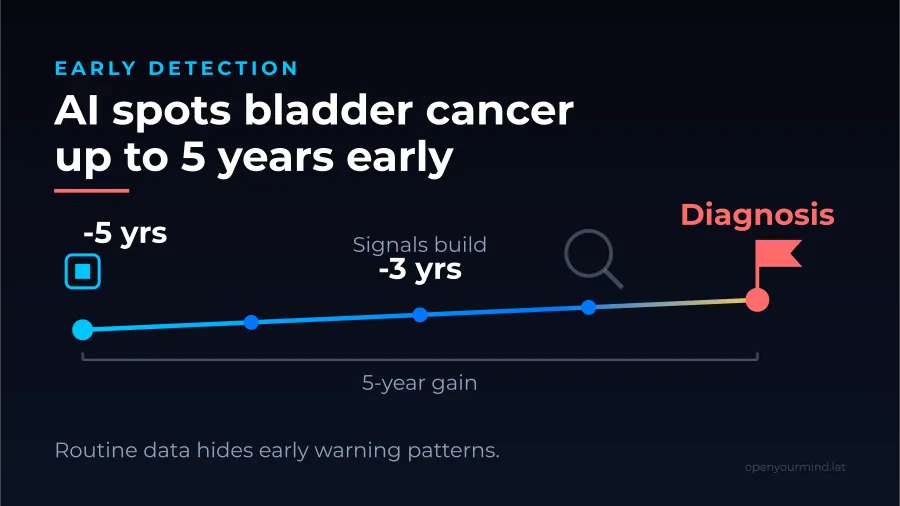
The AI tool flags warning patterns up to five years before a bladder cancer diagnosis.
🇺🇸 Pattern matching with a risk score
Strip away the branding and it is pattern matching. You feed a model the records of thousands of people, some of whom later got bladder cancer and most of whom did not. It hunts for combinations that separate the two groups. No single clue needs to be dramatic. A slightly odd lab value here, a repeat visit there, an age and a smoking history sitting side by side. Each one means nothing alone. Together they nudge a risk score upward, and past a chosen cutoff the person gets flagged. I am not sure exactly which inputs this team used, and I would not pretend otherwise. The cutoff matters a lot, though. Set it low and you catch more cancers but alarm more healthy people. That 85 percent lives inside that tradeoff.
🇪🇸 Un detective que no necesita una gran pista
Pensémoslo como un detective que no necesita una pista grande. El modelo recibe historiales de miles de personas, algunas con cáncer de vejiga más adelante y la mayoría sin él. Aprende qué combinaciones de datos separan a un grupo del otro. Un análisis un poco raro, una visita repetida, la edad, el historial de tabaco. Cada cosa por separado no dice nada. Juntas empujan un puntaje de riesgo hacia arriba, y si el puntaje pasa cierto umbral, la persona queda marcada. No tengo claro qué datos exactos usó este equipo. Pero el umbral importa muchísimo, porque uno bajo atrapa más cánceres y también asusta a más gente sana.

A urologist uses a risk-trend curve on a tablet to explain results to a patient.
🇺🇸 Who gets a camera and who does not
Picture a man of 62, a former smoker, whose routine results look fine to any human reader. The tool flags him. A doctor now has a reason to order a cystoscopy years earlier than usual, and a small tumor gets caught while it is still small. Now flip it. A different patient scores low, and the tool backs a decision to skip the camera. That second case is the one that interests me, the procedures that never happen. Still, nothing here is in clinics today. A flag is a probability, not a diagnosis, and some flagged people will be perfectly healthy and will worry anyway. That cost is real.
🇪🇸 El paciente al que no le hacen nada
Hay una consecuencia que se ve menos. Casi todos piensan en el paciente al que le detectan el tumor a tiempo, y eso importa, porque un tumor pequeño se trata con mucha más facilidad. Pero también está el paciente con puntaje bajo, a quien quizás se le evita una cistoscopia que no necesitaba. Menos molestia, menos costo, menos listas de espera. La otra cara es incómoda. Una alerta es una probabilidad, no un diagnóstico, y alguien marcado por error puede pasar meses angustiado. Hoy nada de esto se usa en consultas normales. Falta confirmar que funciona fuera del estudio.
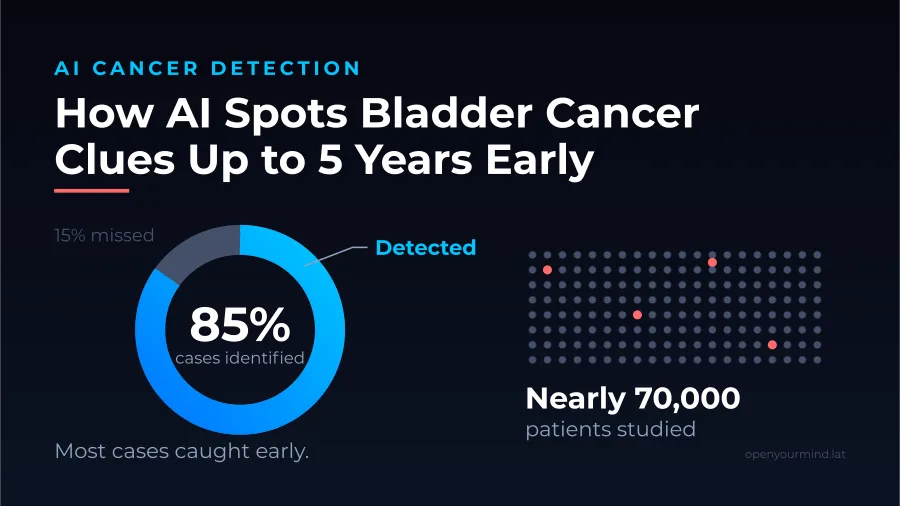
Scientific diagram: How AI Spots Bladder Cancer Clues Up to 5 Years Early
🇺🇸 Three things nobody has answered
Nobody knows yet whether the 85 percent holds in a different country with different record systems. That needs testing outside the original study. I could not find the false alarm rate, meaning how many healthy people get flagged for each cancer caught. And it is unclear whether a flag five years early improves survival, or only moves the diagnosis date earlier. That last one needs years of follow up.
🇪🇸 Tres preguntas sin respuesta
Falta saber si el 85 por ciento se mantiene en otro país, con otros sistemas de registros. Tampoco encontré cuántas personas sanas quedan marcadas por cada cáncer detectado. Y nadie sabe aún si avisar cinco años antes mejora la supervivencia, o solo adelanta la fecha del diagnóstico. Eso exige años de seguimiento.

Hospital analytics servers process the large datasets used to train the AI tool.
🔗 Related Articles | Artículos Relacionados
Nuestro canal transmite datos curiosos de ciencia, IA, espacio y tecnología las 24 horas. | Our channel streams science facts, AI, space and technology around the clock.
▶ Ver transmisión | Watch liveOPEN YOUR MIND
Source: Source
Join the conversation