How Space Radiation Can Trigger Cancer in Astronauts
How Space Radiation Can Trigger Cancer in Astronauts

An astronaut floats outside the spacecraft, highlighting vulnerability in space.
🇺🇸 Space Radiation and Its Link to Cancer in Astronauts
Researchers from Oklahoma State University and the University of Texas Health Science Center have been examining how space radiation can lead to cancer in astronauts. Cosmic rays and solar particles are everywhere in deep space. They slam into our bodies like invisible bullets. It's intense. So they dug into this problem. Instead of just adding more protective walls around spacecraft, they're exploring ways to understand and reduce the damage. What's fascinating is their approach goes beyond conventional shields. They aim to understand how radiation affects cellular processes directly. It's not just about stopping the radiation from getting to astronauts but about learning what happens when it does.
As an Amazon Associate I earn from qualifying purchases.

🇪🇸 Radiación espacial y su conexión con el cáncer en astronautas
Investigadores de la Universidad Estatal de Oklahoma y del Centro de Ciencias de la Salud de la Universidad de Texas están investigando cómo la radiación espacial podría causar cáncer en astronautas. Los rayos cósmicos y las partículas solares inundan el espacio profundo como un océano invisible. Ellos no se limitan a buscar más capas protectoras para las naves espaciales. Quieren entender los procesos celulares afectados directamente por la radiación. Esto es importante porque va más allá del enfoque convencional de simplemente detener la radiación antes de que toque a los astronautas. Buscan comprender el daño real una vez que ha ocurrido.

Cosmic rays reflect on the astronaut's helmet visor, showing visor details.
🇺🇸 What We Already Knew About Space Radiation
The risks of space radiation have been known since the Apollo missions. But how much did we really know back then? We understood that cosmic rays are high-energy particles, capable of penetrating through materials and biological tissues. Lead is good at stopping them, but we can't just build everything out of lead, can we? We've launched research into space stations to better grasp these effects. NASA keeps tabs on radiation levels on the International Space Station and develops countermeasures for astronauts' safety. Still, knowing doesn't always mean we fully grasp the intricacies of how it all works.

🇪🇸 Lo que ya sabíamos sobre la radiación espacial
Sabíamos desde las misiones Apolo que la radiación espacial presenta riesgos importantes. Pero qué tanto entendíamos realmente en ese entonces? Los rayos cósmicos son partículas con alta energía capaces de atravesar materiales y tejidos biológicos. Usar plomo puede ser una solución, pero no podemos construirlo todo con plomo, verdad? Por eso llevamos investigadores a estaciones espaciales para observar estos efectos más de cerca. La NASA monitorea los niveles de radiación en la Estación Espacial Internacional para desarrollar medidas de seguridad. Saber algo no siempre equivale a comprenderlo completamente.

Diagram shows layers of materials protecting astronauts from radiation.
🇺🇸 The Mechanics of Radiation-Induced Cancer
Mechanically, it's all about DNA damage. Space radiation rips through cells, causing breaks in DNA strands or rearranging them entirely. Imagine a train track suddenly twisted by an earthquake; that's DNA after radiation exposure. Cells try to repair themselves, but errors creep in. These errors can lead to cancerous mutations over time and there's no magic wand to fix it instantly. The new study highlights how focused understanding of these mechanisms is essential for developing better countermeasures than just thicker walls around spacecraft.

🇪🇸 La mecánica del cáncer inducido por radiación
El proceso consiste principalmente en el daño al ADN. La radiación espacial atraviesa las células rompiendo cadenas del ADN o reordenándolas completamente. Es como si una vía de tren se torciera repentinamente por un terremoto; así queda el ADN tras la exposición a la radiación. Las células intentan repararse pero los errores pueden aparecer causando mutaciones cancerosas con el tiempo y no hay varitas mágicas para solucionarlo al instante. El estudio destaca que comprender estos mecanismos es vital para desarrollar mejores contramedidas más allá de paredes más gruesas en las naves espaciales.

Inside the spacecraft, an astronaut adjusts shielding to manage radiation.
🇺🇸 Real-World Impact for Astronauts
This understanding could change how space missions are planned and executed. If we can minimize DNA damage directly rather than relying solely on physical barriers, it might extend mission durations or even make long-term colonies safer in the future. Astronauts would face less risk of developing cancer from extended exposure to space radiation, which is a big deal considering the ambitions for Mars exploration and beyond. Imagine being able to plan longer missions without constantly fearing unseen dangers lurking in cosmic rays.

🇪🇸 Impacto real para los astronautas
Este conocimiento podría cambiar cómo se planifican y ejecutan las misiones espaciales. Si podemos minimizar el daño al ADN directamente en lugar de depender solo de barreras físicas, podría extenderse la duración de las misiones o hacer colonias a largo plazo más seguras en el futuro. Los astronautas enfrentarían menos riesgo de desarrollar cáncer debido a una exposición prolongada a la radiación espacial lo cual es crucial considerando las ambiciones para explorar Marte y más allá. Imaginarse planificando misiones más largas sin temer constantemente peligros invisibles acechando en los rayos cósmicos sería un gran avance.
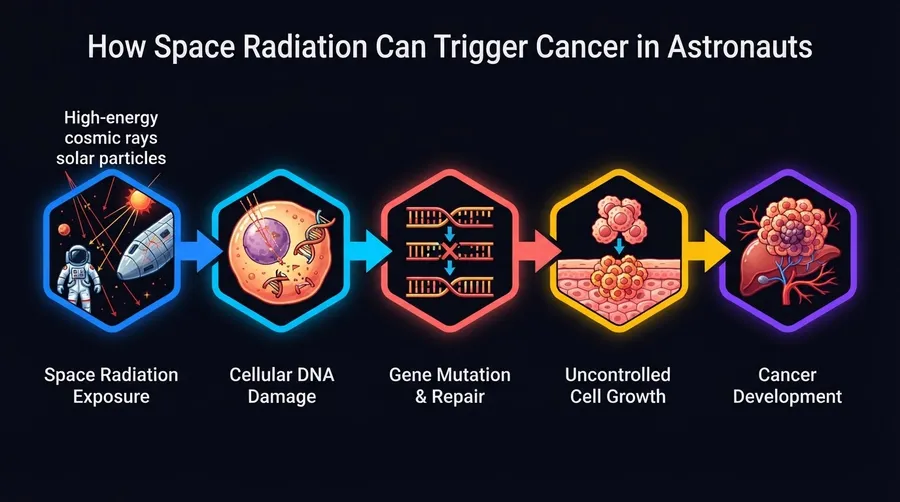
Flowchart illustrates how space radiation can lead to cancer in astronauts.
🇺🇸 Lingering Questions and Future Research Directions
Nobody knows exactly how DNA repair mechanisms differ in microgravity compared to Earth conditions yet. What level of radiation exposure can humans tolerate over years without significant harm? How effective can pharmacological interventions be at reducing mutations? These open questions guide future experiments aimed at keeping astronauts safe during extended space missions.

🇺🇸 Preguntas pendientes y futuras investigaciones
No sabemos exactamente cómo difieren los mecanismos de reparación del ADN en microgravedad comparado con condiciones terrestres aún. Qué nivel de exposición a la radiación podrían tolerar los humanos durante años sin daños significativos? Cuán efectivas pueden ser las intervenciones farmacológicas para reducir mutaciones? Preguntas abiertas que guían futuras experimentaciones para proteger astronautas en misiones prolongadas.

A spacecraft travels through the vastness of deep space.
🔗 Related Articles | Artículos Relacionados
Nuestro canal transmite datos curiosos de ciencia, IA, espacio y tecnología las 24 horas. | Our channel streams science facts, AI, space and technology around the clock.
▶ Ver transmisión | Watch liveOPEN YOUR MIND
Source: Source
Join the conversation