New Telescope to Illuminate the Dark Universe
New Telescope to Illuminate the Dark Universe
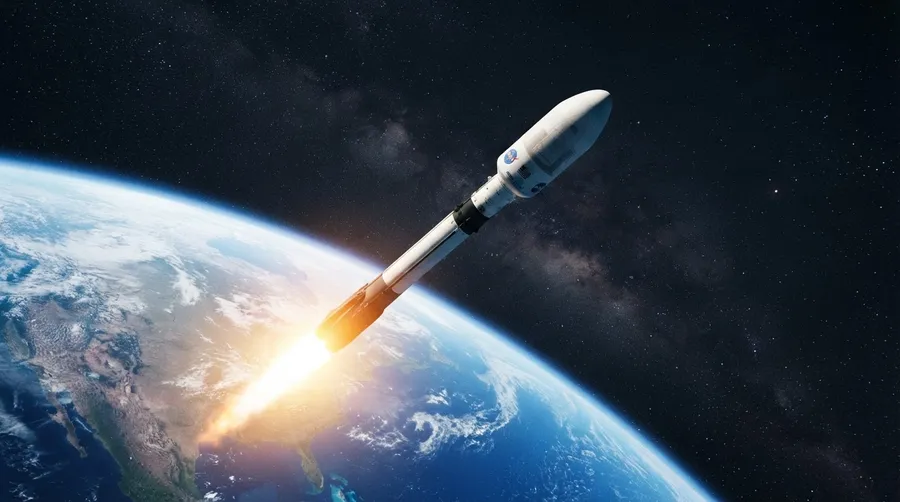
The telescope launches into space, breaking through Earth's atmosphere.
🇺🇸 NASA Launches New Telescope into Space
NASA has just launched the Nancy Grace Roman Space Telescope. This powerful tool is designed to explore the dark universe. It is named after the first woman to serve as NASA's Chief of Astronomy. The telescope will tackle some big questions about our universe's mysterious substances and forces. It will also look at exoplanets and black holes, among other things. Imagine mapping billions of galaxies with a single instrument. The data collected could change how we understand cosmic phenomena. The launch marks a significant step in space exploration, but what will it actually find out there?
Como Afiliado de Amazon, obtengo ingresos por las compras adscritas que cumplen los requisitos aplicables.

🇪🇸 Un Nuevo Telescopio de la NASA Comienza su Misión Espacial
La NASA acaba de lanzar al espacio el telescopio espacial Nancy Grace Roman. Esta herramienta poderosa investigará el universo oscuro. Lleva el nombre de la primera mujer que fue Jefa de Astronomía en la NASA. Además del universo oscuro, estudiará exoplanetas y agujeros negros. También está diseñado para mapear miles de millones de galaxias. Un solo instrumento manejando tanto trabajo es impresionante, ¿no? Los datos podrían cambiar nuestra comprensión del cosmos. Aunque el lanzamiento es un paso importante, ¿qué encontraremos realmente allí afuera?
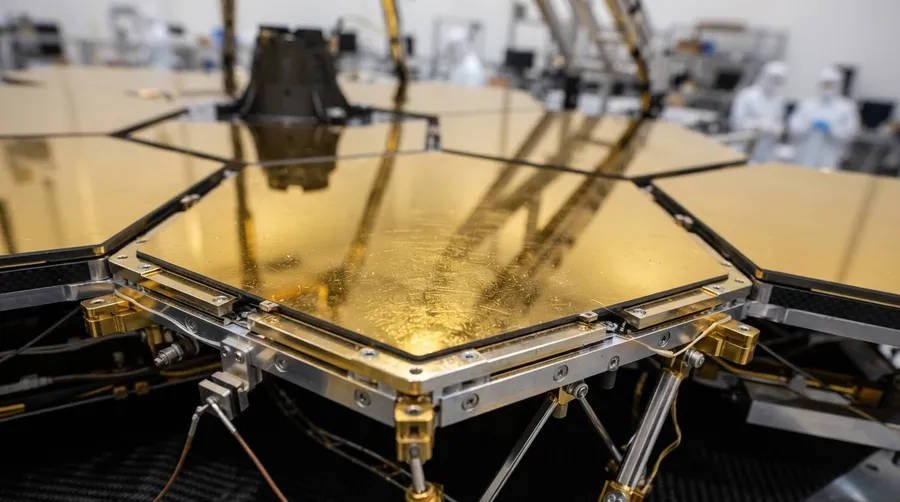
A close-up view of the telescope's primary mirror and its reflective surface.
🇺🇸 Background on Cosmic Mysteries
Before this launch, scientists had pieced together a fragmented view of the dark universe. We knew about dark matter and dark energy only from their indirect effects on visible matter. These mysterious elements make up a significant portion of the universe, but remain largely invisible and unmeasured directly. The gaps in our understanding have sparked debates and driven many research projects over the years. Exoplanets? Those were only discovered about 30 years ago and have since opened a whole new field in astronomy.

🇪🇸 Contexto sobre los Misterios Cósmicos
Antes del lanzamiento del telescopio, los científicos tenían una visión incompleta del universo oscuro. Sabíamos sobre la materia oscura y la energía oscura solo por sus efectos indirectos en la materia visible. Estos elementos misteriosos constituyen una gran parte del universo pero no se pueden medir directamente todavía. Estas lagunas en nuestra comprensión han generado debates y motivado muchas investigaciones durante años. ¿Exoplanetas? Fueron descubiertos hace apenas 30 años, abriendo todo un nuevo campo en la astronomía.


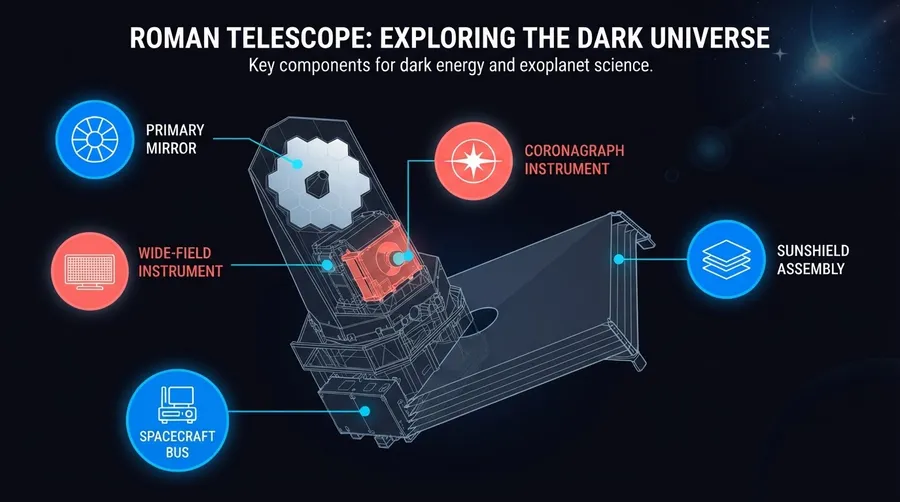
Diagram showing the telescope's key components and instruments.
🇺🇸 How the Telescope Works
So how does this telescope operate in space? It uses a wide-field camera to capture light across vast regions of the sky. Pretty cool if you think about it. This camera allows it to create panoramic images at unprecedented scales. It also has advanced spectroscopy tools that let it analyze the light from distant cosmic objects in detail. These instruments work together to study phenomena like gravitational lenses and cosmic events over long periods of time.
🇪🇸 El Funcionamiento del Telescopio
¿Cómo funciona este telescopio en el espacio? Utiliza una cámara de campo amplio para capturar luz en enormes regiones del cielo. Increíble si lo piensas bien. Esta cámara permite crear imágenes panorámicas a escalas nunca antes vistas. También tiene herramientas espectroscópicas avanzadas que analizan en detalle la luz de objetos cósmicos lejanos. Estos instrumentos colaboran para estudiar fenómenos como lentes gravitacionales y eventos cósmicos durante largos períodos de tiempo.
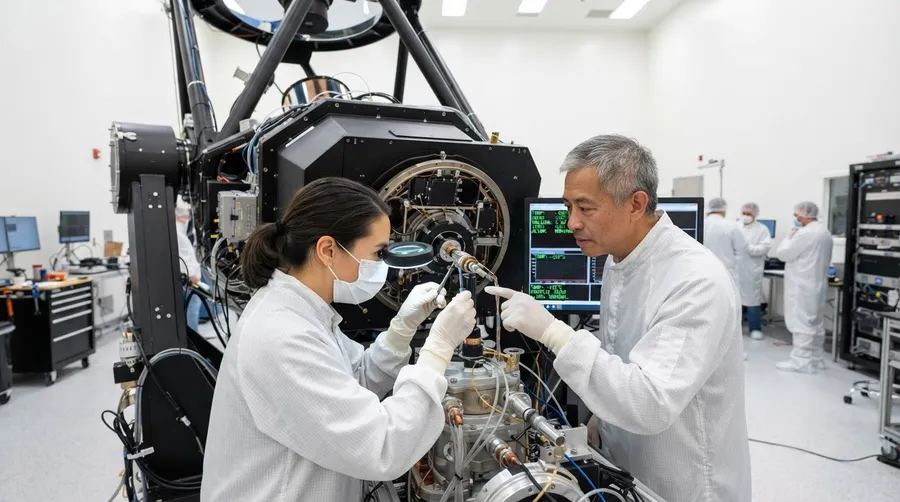
Scientists calibrate the telescope's instruments in a clean room.
🇺🇸 Impact on Earthly Life
Now onto what changes for us here on Earth with this launch happening above our heads. First off, the wealth of data could lead to technological advancements that trickle down into everyday life. Better imaging technology for medical scans maybe? Or more efficient energy systems inspired by cosmic discoveries? Educational opportunities also expand as students and teachers gain access to cutting-edge research materials and insights into the latest astronomical findings.
🇪🇸 Impacto en la Vida Terrestre
¿Qué cambia para nosotros aquí en la Tierra con este lanzamiento? Para empezar, la avalancha de datos podría llevar a avances tecnológicos que impacten nuestra vida diaria. ¿Mejor tecnología de imagen para exploraciones médicas? ¿O sistemas energéticos más eficientes inspirados en descubrimientos cósmicos? Las oportunidades educativas también se amplían al tener acceso a materiales de investigación avanzada y conocimientos sobre los últimos hallazgos astronómicos.

Timeline of the telescope's development and launch milestones.
🇺🇸 Questions Yet to Answer
Plenty of questions remain unanswered despite this major leap forward in technology. How do black holes influence galaxy formation? Can we precisely measure the rate of cosmic expansion using this new tool? What unexpected phenomena might turn up when observing distant galaxies?
🇪🇸 Preguntas Sin Responder
Aún quedan muchas preguntas sin respuesta tras este avance tecnológico importante. ¿Cómo influyen los agujeros negros en la formación de galaxias? ¿Podemos medir con precisión la tasa de expansión cósmica con esta nueva herramienta? ¿Qué fenómenos inesperados podrían aparecer al observar galaxias distantes?
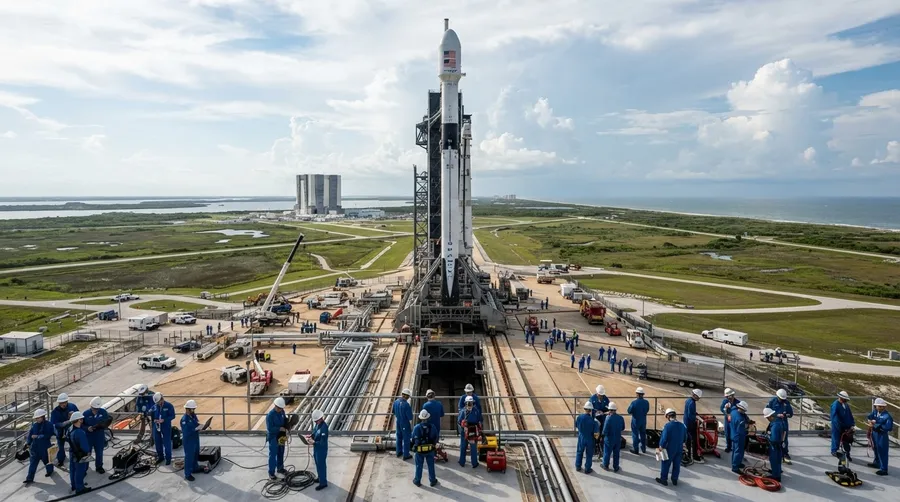
Wide shot of the launch site with the rocket and preparation teams.
🔗 Related Articles | Artículos Relacionados
Nuestro canal transmite datos curiosos de ciencia, IA, espacio y tecnología las 24 horas. | Our channel streams science facts, AI, space and technology around the clock.
▶ Ver transmisión | Watch liveOPEN YOUR MIND
Source: Source
Join the conversation