New Compound Shows Promise in Reversing Bone Loss
New Compound Shows Promise in Reversing Bone Loss

A scientist examines a 3D bone model illuminated in the lab.
🇺🇸 A Surprising New Compound Strengthens Bones
Researchers have created an experimental compound known as AP503. They found that it significantly strengthens bones in mice. What makes this discovery stand out is how AP503 activates a receptor called GPR133. This receptor boosts bone formation while also slowing down bone loss. The mice given this compound showed impressive results with stronger bones. This kind of finding could be pretty important for people dealing with brittle bones or age-related bone loss. There is a lot more work to do before this can help humans, but the initial results are promising. It's strange to think that a tiny molecule could have such effects on the body, right? I had to reread some parts of the paper.
Como Afiliado de Amazon, obtengo ingresos por las compras adscritas que cumplen los requisitos aplicables.
🇪🇸 Un Nuevo Compuesto Fortalece los Huesos
Un grupo de investigadores ha desarrollado un compuesto experimental llamado AP503. Lo interesante de este hallazgo es su capacidad para activar el receptor GPR133, el cual fomenta la formación ósea y también frena la pérdida de hueso. En los ratones que recibieron este compuesto, los resultados fueron impresionantes con huesos más fuertes. Esto podría ser significativo para personas con huesos frágiles o pérdida ósea relacionada con la edad. Hay mucho por hacer antes de que esto pueda aplicarse a humanos, pero los resultados iniciales son alentadores. Es curioso pensar que una molécula tan pequeña pueda tener tales efectos en el cuerpo.
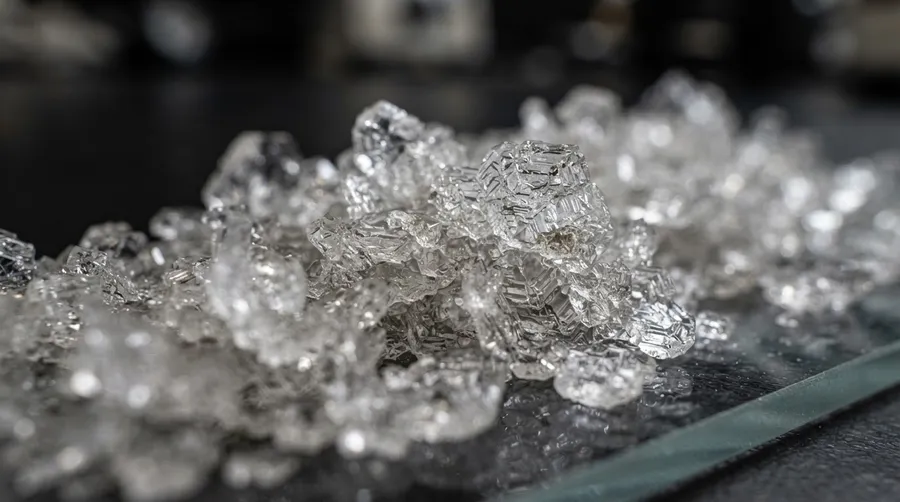
Close-up view of the crystallized AP503 compound structure.
🇺🇸 What We Already Knew About Bone Loss
Before AP503 came along, scientists understood quite a bit about bone decay and its causes. As we age, our bones naturally become weaker and less dense. This happens because the balance between bone-building cells, called osteoblasts, and bone-destroying cells, called osteoclasts, gets out of whack. Osteoporosis is common among older adults and leads to increased risk of fractures and even death in severe cases. Researchers have been exploring ways to fix this balance for years but most treatments only slow bone loss instead of also improving bone strength. It is a tough problem that needed a fresh perspective.
🇪🇸 Lo Que Ya Sabíamos Sobre la Pérdida Ósea
Antes de que apareciera el AP503, los científicos ya sabían mucho sobre la disminución ósea y sus causas. A medida que envejecemos, nuestros huesos se debilitan y pierden densidad naturalmente. Esto sucede porque el equilibrio entre las células formadoras de hueso llamadas osteoblastos y las células destructoras de hueso llamadas osteoclastos se desajusta. La osteoporosis es común en adultos mayores y aumenta el riesgo de fracturas e incluso la muerte en casos graves. Durante años, los investigadores han buscado formas de corregir este desequilibrio pero la mayoría de los tratamientos solo ralentizan la pérdida ósea.
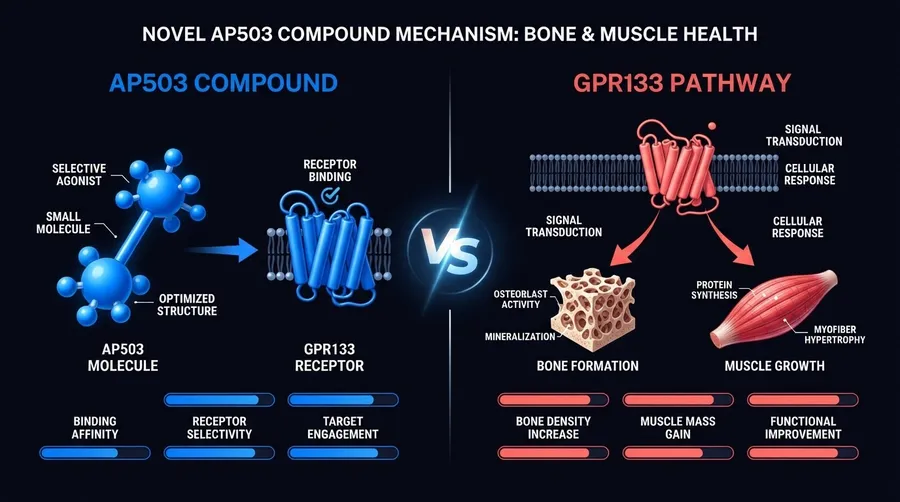
Diagram of AP503 interacting with the GPR133 receptor.
🇺🇸 How Activating GPR133 Works
Now let's talk about how this compound actually works inside the body. GPR133 is a receptor on cell surfaces involved in many biological processes like cell signaling. In simple terms, when AP503 activates GPR133, it enhances pathways that lead to greater bone production and less bone destruction. Imagine flipping a switch that turns on new construction at the same time it stops demolition work. That is kind of how this works in mice anyway. The trick lies in properly activating these cellular pathways without disturbing others essential for normal function which is no easy task.

🇪🇸 Cómo Funciona la Activación del GPR133
Hablemos ahora de cómo funciona realmente este compuesto dentro del cuerpo. El GPR133 es un receptor en la superficie celular involucrado en muchos procesos biológicos como la señalización celular. Cuando el AP503 activa el GPR133 mejora las rutas que conducen a una mayor producción ósea y menos destrucción del hueso. Es como encender un interruptor que inicia una nueva construcción mientras detiene trabajos de demolición al mismo tiempo. La clave está en activar correctamente estas rutas celulares sin alterar otras esenciales para el funcionamiento normal lo cual es difícil.
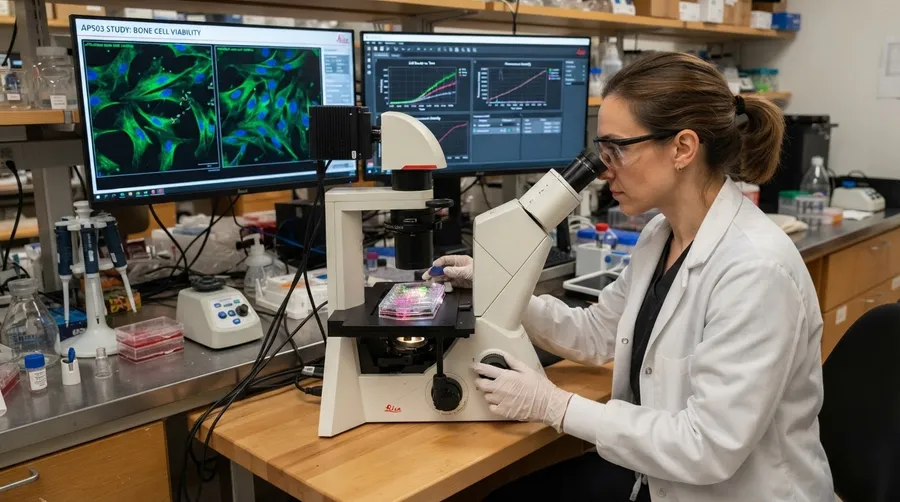
Researcher observes AP503's effects on bone cells under a microscope.
🇺🇸 Potential Real-World Impacts of AP503
If AP503 proves effective in humans, it could change life for millions struggling with bone health issues like osteoporosis or age-related decline. People with fragile bones often live in fear of fractures which can be life-threatening especially for the elderly who take longer to heal and recover from injuries than younger people do. Imagine not having to worry as much about breaking a hip or losing mobility as you get older because your bones stayed healthy longer than they otherwise would have thanks to something like AP503.

🇪🇸 Impactos Potenciales del AP503 en el Mundo Real
Si el AP503 demuestra ser efectivo en humanos podría cambiar la vida de millones que luchan con problemas de salud ósea como osteoporosis o deterioro relacionado con la edad. Las personas con huesos frágiles viven con miedo a las fracturas que pueden ser mortales especialmente para los ancianos quienes tardan más en sanar y recuperarse de lesiones que las personas más jóvenes. Imagina no tener que preocuparte tanto por romperte una cadera o perder movilidad al envejecer porque tus huesos se mantuvieron saludables más tiempo gracias al AP503.
🇺🇸 Lingering Questions About AP503
Researchers still need answers to key questions before celebrating too much how does AP503 affect other vital systems long-term? What dosage is safe for humans without unwanted side effects? Will different age groups respond similarly or will results vary? Only time and further studies will tell us more.

🇪🇸 Preguntas Pendientes Sobre el AP503
Todavía hay preguntas claves por responder antes de celebrar demasiado cómo afecta el AP503 otros sistemas vitales a largo plazo? Qué dosis es segura para humanos sin efectos secundarios no deseados? Responderán los diferentes grupos de edad de manera similar o variarán los resultados? Solo el tiempo y más estudios nos dirán más.
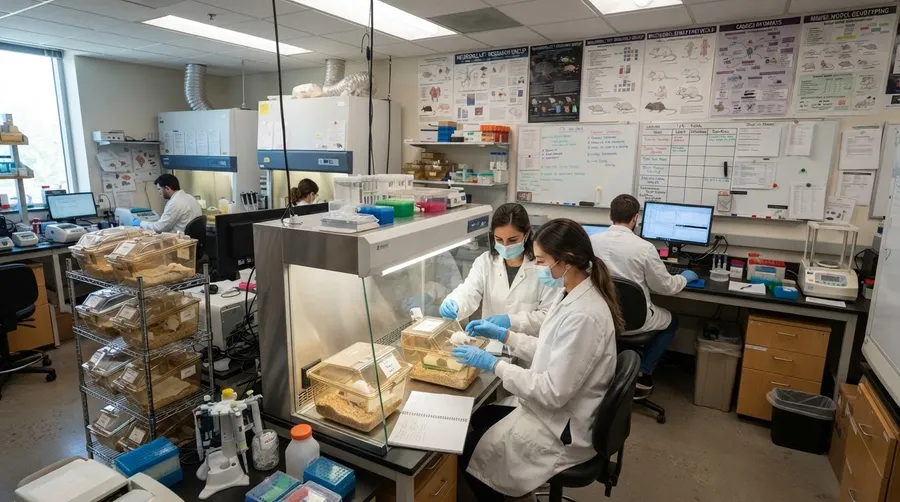
Researchers work with mice models in a lab to study bone loss.
🔗 Related Articles | Artículos Relacionados
Nuestro canal transmite datos curiosos de ciencia, IA, espacio y tecnología las 24 horas. | Our channel streams science facts, AI, space and technology around the clock.
▶ Ver transmisión | Watch liveOPEN YOUR MIND
Source: Source
Join the conversation