Worms and Microbes Nature’s Pollution Fighters
Worms and Microbes Nature’s Pollution Fighters
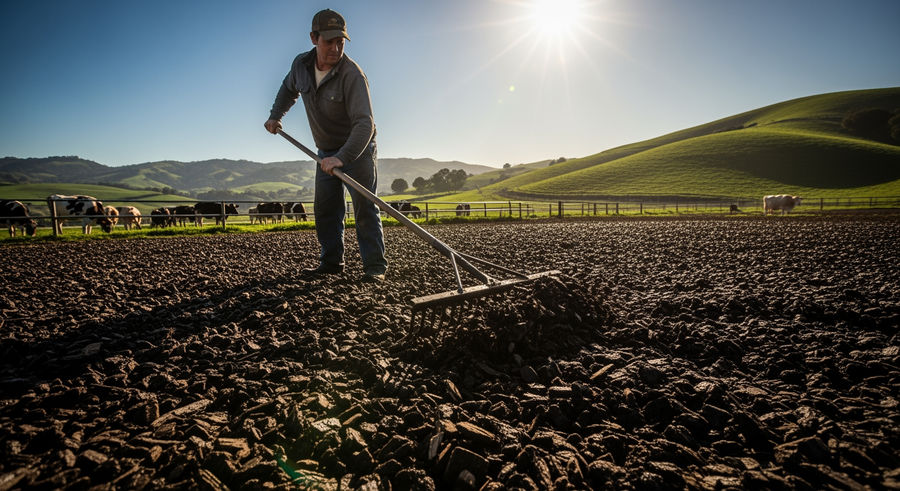
A farmer turns wood chips at a California dairy farm to manage pollution.
🇺🇸 Worms on the Job
A farmer in California noticed something interesting. He spread some worms over a bed of wood chips mixed with manure. The worms wriggled around and did their thing. Instead of just sitting there, the manure started to break down faster. It was like watching nature clean up after itself. Science folks caught wind of this and got curious about how these little guys could help with pollution from farms. It might not seem like much at first glance, but it got people talking about new ways to manage waste naturally.🇪🇸 Lombrices al Rescate
Un agricultor de California decidió probar algo distinto al esparcir lombrices sobre una cama de virutas de madera mezcladas con estiércol. Al poco tiempo el estiércol comenzó a descomponerse más rápido. Era como si la naturaleza se encargara de su propia limpieza. Los científicos se interesaron por cómo estas lombrices podrían ayudar a combatir la contaminación en las granjas. No parece gran cosa pero este descubrimiento hizo que muchos consideren nuevas formas de gestión natural de residuos.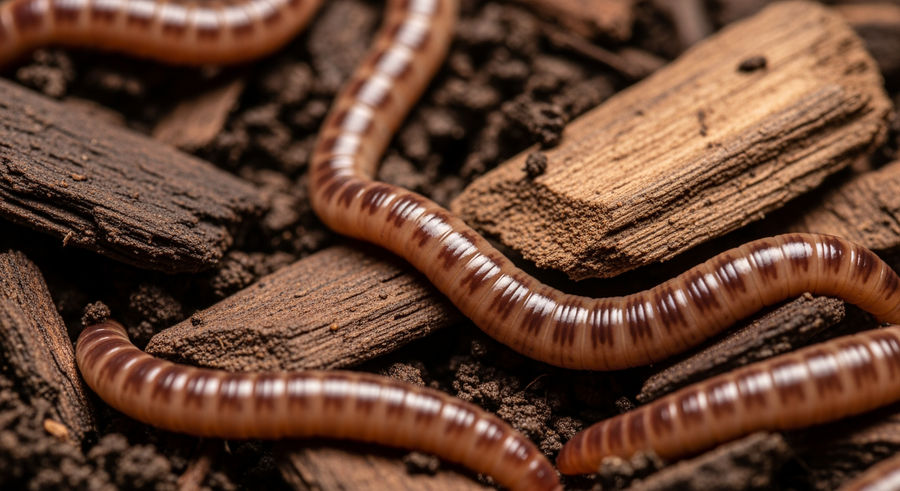
Earthworms are shown in detail as they work through wood chips.
🇺🇸 The Old Ways
Before worms hit the scene, farmers had traditional methods for dealing with manure. Mostly, they'd let it sit in big piles or use it as fertilizer across fields. This wasn't particularly clean or efficient but that's what they knew worked acceptably well enough without too much hassle. Over time, these practices led to various environmental issues including water contamination and greenhouse gases wafting off into the atmosphere which is concerning if you think about it.🇪🇸 Los Métodos Tradicionales
Antes de que las lombrices entraran en juego los agricultores usaban métodos tradicionales para manejar el estiércol como dejarlo en montones grandes o extenderlo como fertilizante en los campos. Aunque no era muy limpio o eficiente funcionaba sin complicaciones mayores según lo que sabían hacer bien hasta ahora. Con el tiempo estas prácticas causaban problemas ambientales como contaminación del agua y emisiones de gases efecto invernadero que generan preocupación.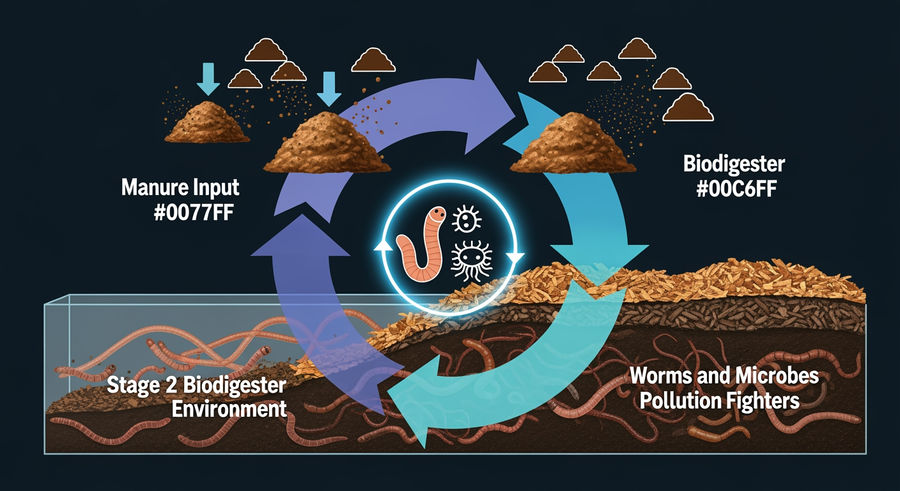
Steps in using worms and microbes for manure pollution control.
🇺🇸 Tiny Workers in Action
So here's how it works mechanically, more or less: the worms dig through the earth eating whatever organic material they find including manure mixed with those wood chips I mentioned earlier which helps break everything down faster than usual where microbes then jump in decomposing leftovers even further into nutrients that can be absorbed again by plants but honestly keeping track of all those interactions gets complicated fast if you really dive into each detail plus there's still stuff we don't fully understand yet like exactly why they're so efficient at this job.🇪🇸 Pequeños Trabajadores en Acción
Entonces mecánicamente funciona así más o menos: las lombrices excavan comiendo materia orgánica incluyendo estiércol mezclado con virutas acelerando su descomposición mientras los microbios completan la tarea transformándolo todo en nutrientes reutilizables por plantas aunque es complicado seguir cada interacción entre todos estos procesos además hay cosas que todavía no entendemos bien por qué son tan eficientes haciendo esta labor aún nos queda mucho por descubrir.
Wood chips and earthworms are spread over manure to control pollution.
🇺🇸 The Real Impact on Farms
For farmers like Anthony Agueda this means a potential shift in how they handle waste management on their properties because instead of investing heavily in industrial solutions they can adopt worm-based strategies maybe reducing costs while also improving soil health one bonus is possibly cutting down harmful runoffs into nearby waterways benefitting local ecosystems without needing significant investments though there are challenges too such as scaling this method effectively for large operations which is another hurdle altogether when thinking long-term farm sustainability plans.🇪🇸 El Impacto Real en las Granjas
Para agricultores como Anthony Agueda esto podría significar un cambio importante en cómo manejan los residuos agrícolas pues podrían adoptar estrategias basadas en lombrices ahorrando costos y mejorando la salud del suelo además existe la posibilidad de disminuir escorrentías dañinas hacia corrientes cercanas beneficiando ecosistemas locales sin requerir grandes inversiones aunque también hay desafíos como expandir este método suficientemente para operaciones grandes lo cual es otro obstáculo cuando se consideran planes sostenibles a largo plazo para granjas.
Traditional manure management compared to worm and microbe methods.
🇺🇸 What We Still Don't Know
One part that remains elusive is quantifying how effective these processes are compared to traditional methods especially over extended periods who knows what happens if you scale up massively plus there's always that looming question about unforeseen side effects since every solution comes with its own unique quirks let's not forget we're essentially introducing new elements into an old system which can lead to unpredictable outcomes I'm just saying it's important to keep observing testing and learning as we go along because nature often surprises us doesn't it?🇪🇸 Lo Que Aún Ignoramos
Un aspecto que sigue siendo incierto es cómo medir exactamente cuán efectivos son estos procesos comparado con métodos tradicionales especialmente a largo plazo nadie sabe qué pasaría al escalarlos masivamente además siempre está esa inquietante cuestión sobre efectos secundarios imprevistos ya que toda solución trae sus peculiaridades no olvidemos estamos introduciendo nuevos elementos en un sistema viejo lo cual puede causar resultados inesperados simplemente digo es fundamental seguir observando probando aprendiendo porque la naturaleza suele sorprendernos verdad?
The dairy farm's manure management areas are shown in a wide view.
🔗 Related Articles | Artículos Relacionados
Ciencia en vivo 24/7 | Science Live 24/7
Nuestro canal transmite datos curiosos de ciencia, IA, espacio y tecnología las 24 horas. | Our channel streams science facts, AI, space and technology around the clock.
▶ Ver transmisión | Watch liveOPEN YOUR MIND
Source: Source
Support Open Your Mind
If this article helped you, consider buying me a coffee.
Buy me a coffee
Join the conversation