Solar eclipse: myth vs fact
Solar eclipse: myth vs fact

The total solar eclipse with the sun's corona visible.
🇺🇸 Discovering the Solar Eclipse
A solar eclipse is one of those things that can make people stop in their tracks and just stare at the sky. But how did we even figure out what was really happening up there? It started way before telescopes. Ancient astronomers were watching the skies long enough to notice patterns. They saw that sometimes the sun got eaten up by a shadow but it came back shortly after, like clockwork. That made them start keeping track. Over time, they found out these events weren’t random at all. Not magic or chaos from angry gods but predictable alignments of celestial bodies.🇪🇸 Descubriendo el Eclipse Solar
Un eclipse solar es uno de esos fenómenos que puede dejar a la gente boquiabierta mirando al cielo. Pero ¿cómo se descubrió realmente lo que ocurría allá arriba? Mucho antes de los telescopios, los antiguos astrónomos ya miraban las estrellas y notaban patrones en el cielo. Se dieron cuenta de que a veces el sol se oscurecía pero luego volvía a brillar como si nada hubiera pasado, como una rutina cósmica que seguía su curso. Al cabo del tiempo, llegaron a entender que estos eventos no eran aleatorios ni obra de dioses iracundos sino alineaciones de cuerpos celestes.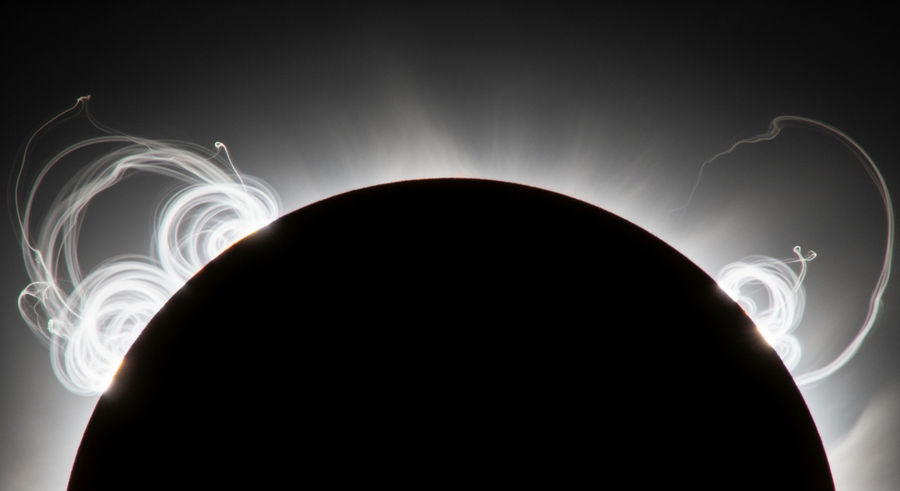
Close-up of the sun's corona during the eclipse.
🇺🇸 What We Already Knew
People have been fascinated with eclipses for thousands of years and many cultures had stories about them long before scientists figured it out on paper. The Greeks realized that the Earth was round and they used this to predict eclipses using simple geometry tricks which is pretty cool if you think about it especially since they didn’t have electricity running their calculations like today’s folks do with computers.🇪🇸 Lo Que Ya Sabíamos
Durante miles de años las personas han estado fascinadas con los eclipses y muchas culturas tenían sus propias historias mucho antes de que los científicos lograran descifrarlos en papel. Los griegos entendieron que la Tierra era redonda usando trucos geométricos para predecirlos lo cual es impresionante considerando que no disponían de electricidad o computadoras como hoy para hacer sus cálculos.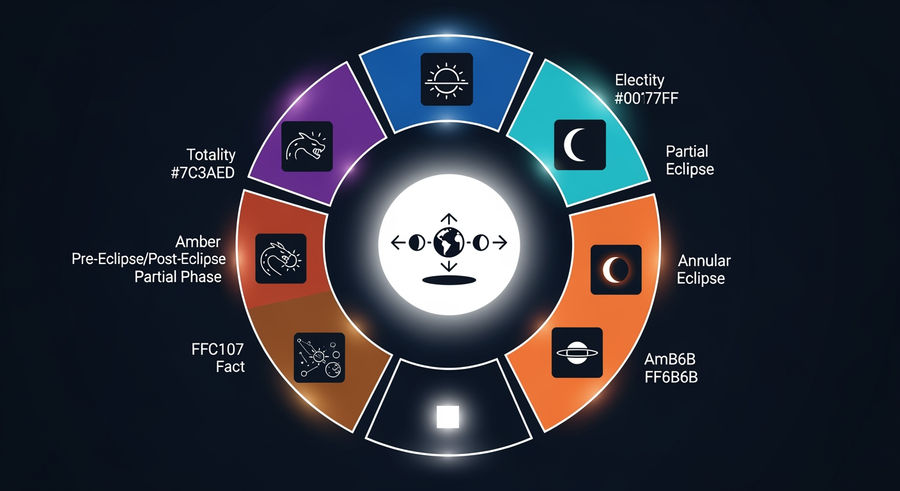
Diagram showing phases of a solar eclipse.
🇺🇸 The Mechanics of Eclipses
So here's the basic idea: The moon moves between Earth and the sun and when everything lines up just right boom you get an eclipse. Simple right Well sort of because the moon's orbit isn’t a perfect circle it's tilted which means you don't get an eclipse every month even though that's how often we see full moons or new moons It’s all about angles and timing.🇪🇸 La Mecánica del Eclipse
Aquí va la idea básica: La luna se mueve entre la Tierra y el sol y cuando todo está alineado perfectamente ocurre un eclipse Así de sencillo ¿No Bueno más o menos porque la órbita lunar no es un círculo perfecto está inclinada lo que significa que no vemos un eclipse cada mes aunque haya lunas llenas o nuevas Es cuestión de ángulos y tiempos precisos.
Observers adjust telescopes to view the eclipse.
🇺🇸 The Real-world Consequences
Eclipses can mess with animals’ sense of time because they rely on light cues to tell day from night Also some people take these cosmic events as signs Some stay indoors Others throw parties So while eclipses don’t change our daily lives in tangible ways for many cultures they're more than just scientific phenomena They're part of folklore tradition community bonding moments🇪🇸 Las Consecuencias Reales
Los eclipses pueden alterar el sentido del tiempo en los animales porque dependen de señales lumínicas para distinguir el día y la noche Además algunas personas ven estos eventos cósmicos como señales Algunos prefieren quedarse en casa Otros organizan fiestas Entonces aunque los eclipses no transformen nuestra vida diaria palpable son para muchas culturas más que simples fenómenos científicos Forman parte del folclore tradición momentos comunitarios
Timeline of myths and facts about solar eclipses.
🇺🇸 What Remains Unknown
Even though we've got lots of data there are still questions When exactly did humans first understand what an eclipse was Was it gradual or did someone suddenly have an aha moment Plus there are physical aspects Scientists continue to study atmospheric effects during totality The truth With nature there's always more to learn No certainty only exploration🇪🇸 Lo Que Aún Desconocemos
A pesar de tener mucha información todavía quedan preguntas ¿Cuándo exactamente empezaron los humanos a entender qué era un eclipse Fue gradual o alguien tuvo una iluminación repentina Además hay aspectos físicos Los científicos continúan estudiando efectos atmosféricos durante la totalidad La verdad Con la naturaleza siempre hay más por descubrir Ninguna certeza solo exploración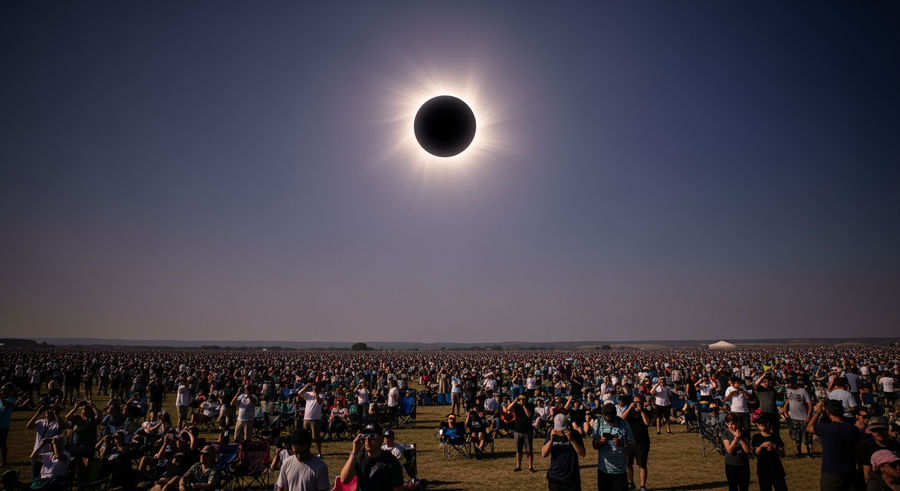
A crowd gathers to witness the solar eclipse.
🔗 Related Articles | Artículos Relacionados
Ciencia en vivo 24/7 | Science Live 24/7
Nuestro canal transmite datos curiosos de ciencia, IA, espacio y tecnología las 24 horas. | Our channel streams science facts, AI, space and technology around the clock.
▶ Ver transmisión | Watch liveOPEN YOUR MIND
Source: Source
Support Open Your Mind
If this article helped you, consider buying me a coffee.
Buy me a coffee
Join the conversation